Solomon Islands · Oceania
Gizo
A Japanese Zero fighter plane still rests on the seafloor a short swim from Gizo's shore, one of dozens of World War II wrecks scattered through the Western Province after some of the Pacific theater's fiercest naval battles, now colonized by coral in water clear enough to see the whole fuselage from the surface.
The Western Province around Gizo saw some of the most intense naval fighting of the entire Pacific campaign, the 1942-1943 battles for the Solomon Islands leaving behind a scattered undersea record that's still being explored today. A Japanese Zero fighter plane rests close enough to shore for a short swim to reach it, largely intact and now wrapped in decades of coral growth, one entry point among dozens of wrecks, ships and aircraft both, spread across the surrounding waters.
That density of wartime wreckage has made Gizo one of the Pacific's more serious wreck-diving destinations, without the crowds or polished dive-tourism infrastructure found at better-marketed sites elsewhere in the region. Local operators run trips to specific wrecks with genuine historical detail attached, not generic reef tours retrofitted with a wartime label, a distinction divers who've done both tend to notice quickly.
Kennedy Island, known locally as Kasolo, adds a specific, well-documented piece of history to the area. Future U.S. President John F. Kennedy swam ashore here in 1943 after his patrol boat, PT-109, was rammed and sunk by a Japanese destroyer nearby, and the island, small enough to walk around in minutes, remains a popular half-day trip from Gizo combining that history with an essentially empty stretch of sand.
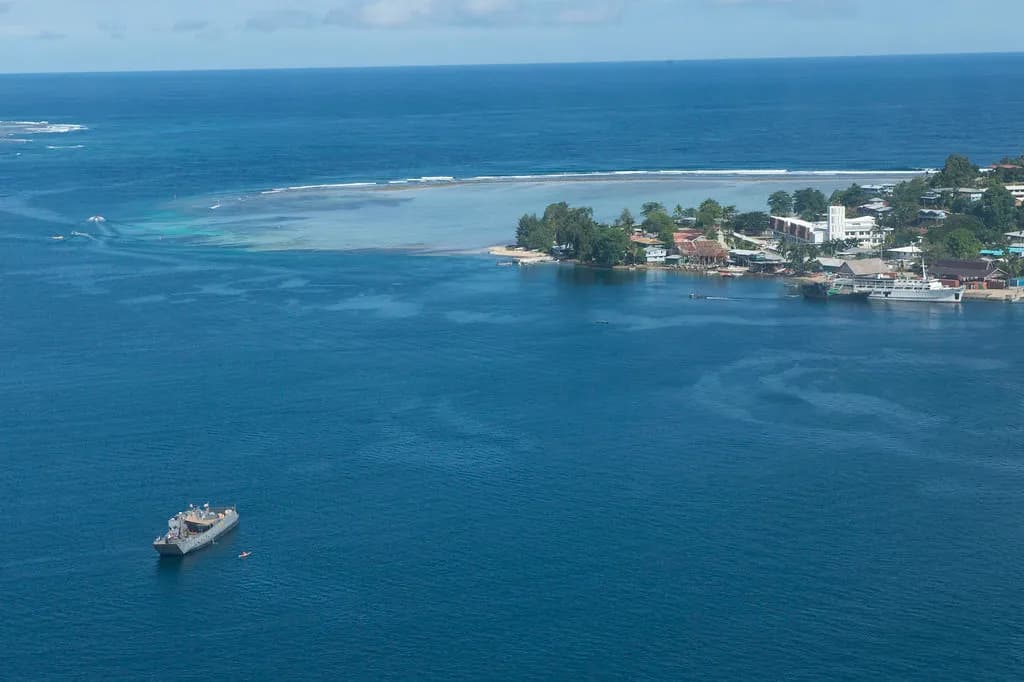
Gizo town itself functions as the practical hub for the wider Western Province, a market, guesthouses, and dive operators clustered around a compact waterfront, with day trips reaching outlying islands like Kolombangara, a near-perfect volcanic cone visible from town, and Ranongga, where village visits offer a more direct look at Solomon Islands life away from any tourism infrastructure at all.
Getting to Gizo takes a domestic flight from Honiara or a considerably longer ferry crossing, and once there, infrastructure stays genuinely modest, guesthouses rather than resorts, limited medical facilities, and a pace shaped more by fishing and local commerce than by tourism. For travelers drawn to WWII history and diving specifically, that modesty is largely the point, wrecks left in place rather than roped into a museum experience.
What a trip here actually costs
$130 / day avg.
- Guesthouse or small dive resort
- Two-tank wreck or reef dive
- Local restaurant meals
- Boat transport to nearby islands
What to do at this tier
- • Zero fighter plane wreck dive
- • Kennedy Island (Kasolo) boat excursion
- • Reef snorkeling around Gizo lagoon
- • Village visit on nearby Ranongga or Kolombangara
These are average estimates for planning purposes, not real-time prices — actual costs vary by season, availability, and how far ahead you book.
How to get there
Click anywhere on the world map — any airport works, not just our main hubs.
Click anywhere on the map above — any airport in the world works — to see estimated travel time and cost from there.
Times and prices are planning estimates, not live fares — always check a booking site before you commit. See the full Transport Comparison guide for the general tradeoffs of each mode.
Best time to visit
May-October is the drier season with calmer seas for diving and boat trips; the wet season runs roughly November-April.
Safety notes
Medical facilities are limited; divers with health concerns should carry appropriate insurance and confirm operator safety standards before booking.
Visa & currency
Solomon Islands dollar (SBD). Many nationalities receive visa-free entry for short stays; confirm based on passport before booking.
Questions people ask before visiting
What World War II wrecks can you see near Gizo?
The waters around Gizo and the wider Western Province hold numerous wrecks from the fierce 1942-1943 naval battles fought here, including a Japanese Zero fighter plane resting largely intact close to shore, along with several ships, now coral-encrusted dive sites reachable on day trips from town.
Is Gizo worth visiting?
For divers and travelers interested in WWII history combined with genuinely undeveloped Pacific island scenery, yes. Gizo serves as the main gateway to the Western Province's wreck diving, coral reefs, and nearby islands like the Kennedy-linked Kasolo, known locally as Kennedy Island.
What is Kennedy Island near Gizo?
A small island, locally called Kasolo, where future U.S. President John F. Kennedy swam ashore after his patrol boat PT-109 was sunk nearby in 1943. It's a short boat trip from Gizo and a popular half-day excursion combining history with a genuinely tiny, empty beach.
How do you get to Gizo?
Domestic flights connect from Honiara, the Solomon Islands' capital, taking about an hour to Gizo's small airport. Ferries also run between the islands but on a much slower and less predictable schedule.
Nearby destinations
 Honiara
Honiara
Solomon Islands
The waters off Honiara earned the nickname "Iron Bottom Sound" from the sheer number of warships sunk during the WWII Battle of Guadalcanal, a turning point in the Pacific campaign, and rusted wrecks, planes, and battle sites from that fighting still surface around a capital spread across nearly 1,000 islands and over 70 distinct languages.
See full guide → Espiritu Santo
Espiritu Santo
Vanuatu
When a US troopship called the SS President Coolidge struck two of its own country's mines in 1942, the captain deliberately ran it aground to save nearly the entire crew, and the wreck now sits close enough to shore that divers can swim into its cargo holds and officers' quarters, making it one of the largest and most accessible wreck dives anywhere in the world.
See full guide →Comparing more than one route? See the full transport comparison guide.