French Polynesia · Oceania
Fakarava
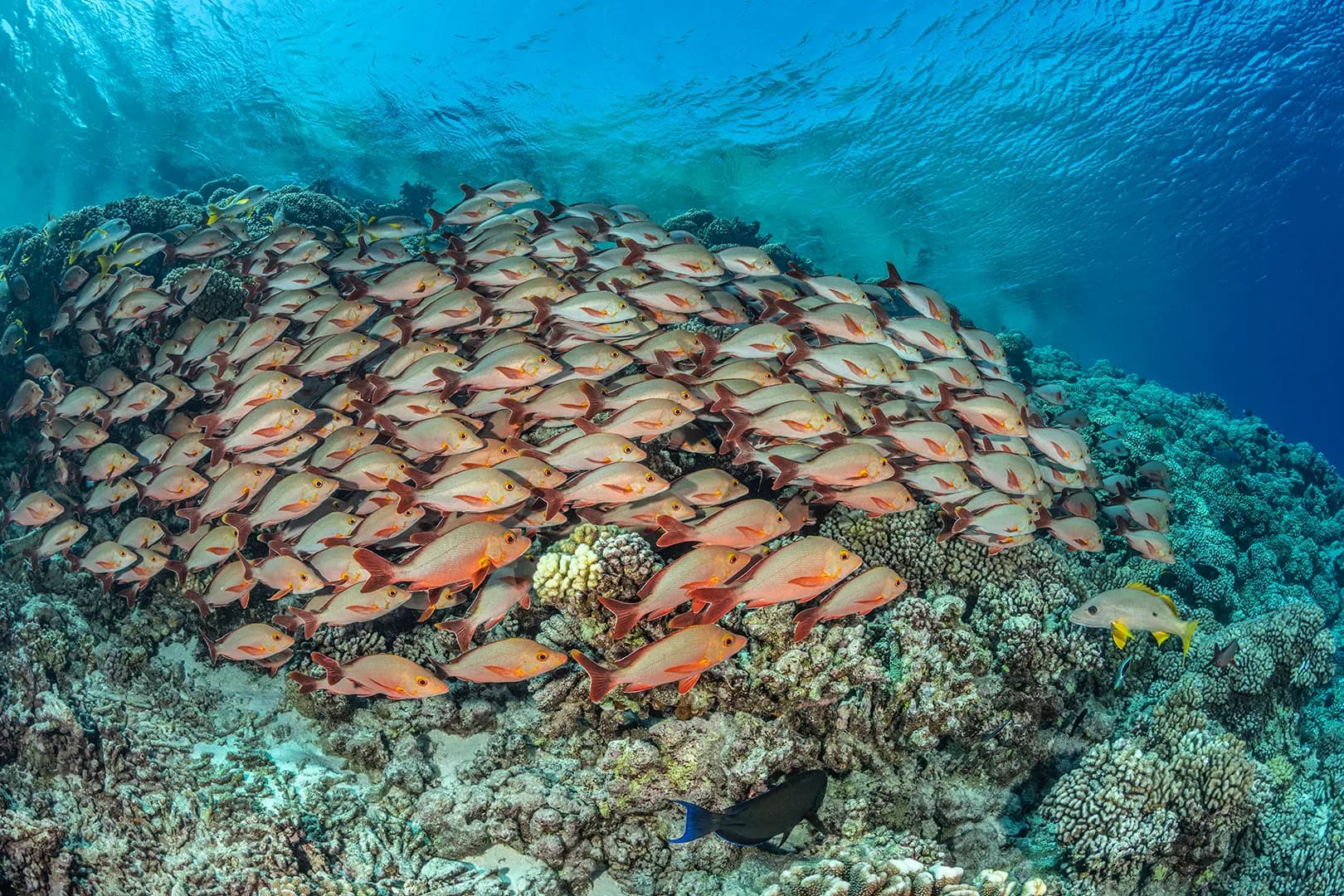
Every July, tens of thousands of camouflage grouper cram into Fakarava's south pass to spawn in a single synchronized event, drawing a predictable wall of hundreds of sharks that turns one narrow channel into one of the most concentrated shark encounters anywhere on the planet.
The numbers involved sound engineered rather than natural. Each June and July, tens of thousands of camouflage grouper converge on Fakarava's south pass, Tumakohua, to spawn in a tightly synchronized event tied to the lunar cycle, and that concentration of fish predictably draws several hundred gray reef sharks to feed, turning one narrow channel into one of the most reliable large-shark aggregations documented anywhere on Earth. Divers who plan around the right lunar window can descend into what looks less like a dive site than a wall of sharks stacked through the water column.
Fakarava earned UNESCO Biosphere Reserve status in 1977, a designation that's kept development on the atoll deliberately restrained compared to French Polynesia's more famous islands. There are no overwater bungalow mega-resorts here, no cluster of luxury chains competing for the same lagoon view; accommodation runs to small guesthouses and dive lodges built around the atoll's actual draw, which has never really been about beachfront glamour.
The atoll's two passes, north and south, offer genuinely different diving experiences within the same ring of coral. The south pass delivers the shark spectacle; the north pass, closer to Rotoava village, offers a calmer drift dive through healthy coral gardens with a wider range of reef fish, a useful counterpoint for visitors who want variety rather than repeating the same high-adrenaline dive.
Pink Sand Beach, on the atoll's eastern side, gets its color from crushed coral and shell fragments mixed into the sand, a subtler, less-photographed alternative to Fakarava's underwater reputation, and one that requires a boat trip to reach, keeping it free of the crowds that pink-sand beaches elsewhere in the world tend to attract once discovered.
Reaching Fakarava takes more effort than reaching Tahiti's better-known neighbors, a short flight from Faa'a followed by arrival at a small, single-runway airstrip, and most visitors build it into a longer Tuamotu itinerary rather than a standalone trip. That extra effort has, so far, kept the atoll's defining experience, hundreds of sharks moving through a single pass in broad daylight, from being diluted by the kind of mass tourism infrastructure that reshapes destinations once word gets out.
What a trip here actually costs
$280 / day avg.
- Guesthouse or dive lodge
- Two-tank guided dive
- Half-board meals
- Snorkeling gear rental
What to do at this tier
- • South pass shark dive at Tumakohua
- • North pass drift snorkel
- • Pink Sand Beach visit
- • Traditional pearl farm tour
These are average estimates for planning purposes, not real-time prices — actual costs vary by season, availability, and how far ahead you book.
How to get there
Click anywhere on the world map — any airport works, not just our main hubs.
Click anywhere on the map above — any airport in the world works — to see estimated travel time and cost from there.
Times and prices are planning estimates, not live fares — always check a booking site before you commit. See the full Transport Comparison guide for the general tradeoffs of each mode.
Best time to visit
June-August for the grouper spawning aggregation and peak shark density; year-round diving remains excellent outside that window with lower shark concentrations.
Safety notes
Pass dives involve strong currents; only dive with certified local operators experienced in Fakarava's specific conditions.
Visa & currency
CFP franc (XPF), pegged to the euro. Standard French Polynesia visa requirements apply based on passport.
Questions people ask before visiting
Why does Fakarava have so many sharks?
The south pass, Tumakohua, sits along a narrow channel where strong currents concentrate marine life, and each June and July, tens of thousands of camouflage grouper gather there to spawn in a synchronized event that draws several hundred gray reef sharks to feed, one of the most reliable large-shark aggregations documented anywhere.
Is Fakarava safe for diving with that many sharks?
Yes, gray reef sharks in this environment are not typically aggressive toward divers, and the dive is conducted with experienced local operators familiar with the pass's currents and shark behavior. It ranks among the more closely monitored high-shark-density dive sites in the world.
How is Fakarava different from Bora Bora?
Fakarava is a UNESCO Biosphere Reserve atoll built around diving and a slower, less developed pace, with modest guesthouses rather than overwater bungalow resorts. Bora Bora offers more polished luxury infrastructure; Fakarava offers a wilder, diving-focused alternative with far fewer visitors.
How do you get to Fakarava?
Flights connect from Tahiti's Faa'a airport, roughly 45 minutes, landing at a small airstrip near Rotoava, the atoll's main village. Most visitors combine Fakarava with other Tuamotu atolls or a Tahiti stopover given the flight connections required.
Nearby destinations
 Tahiti
Tahiti
French Polynesia
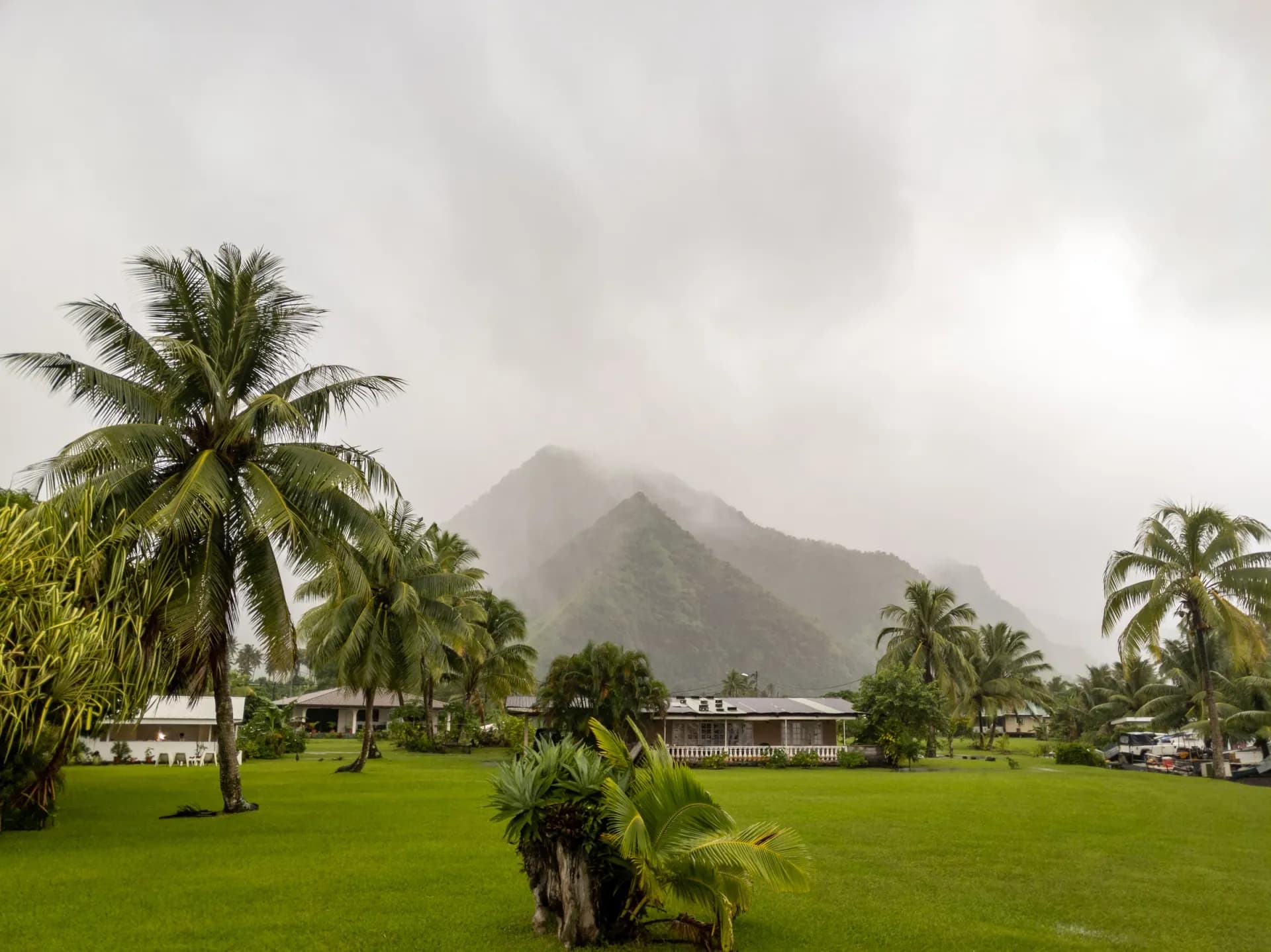
Tahiti's beaches run black, not white, the volcanic sand a constant reminder that this is the island everyone flies into on the way to Bora Bora or Moorea rather than the postcard image itself — and yet it's also where Captain Cook watched the transit of Venus in 1769 and where the Bounty mutineers first made landfall, a working island with more actual history than its more photogenic neighbors.
See full guide →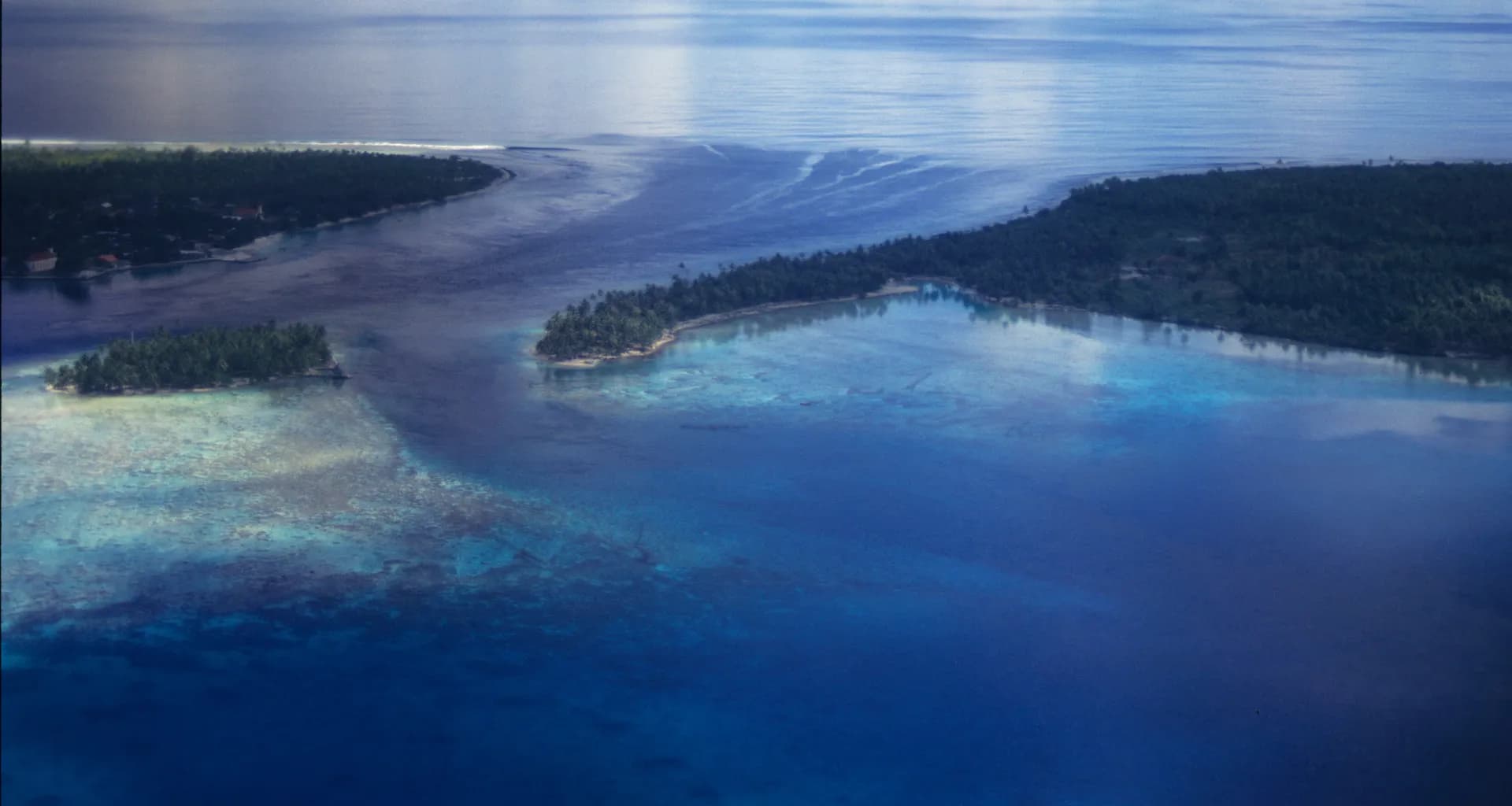 Rangiroa
Rangiroa
French Polynesia
Tiputa Pass, the channel connecting Rangiroa's massive lagoon to the open ocean, funnels hundreds of grey reef sharks past divers on every outgoing tide, a drift dive intense enough that it's built the atoll's entire reputation, and Rangiroa also holds the only vineyard in French Polynesia, grapevines somehow thriving on a strip of coral sand.
See full guide →Comparing more than one route? See the full transport comparison guide.