Curaçao · North America
Willemstad
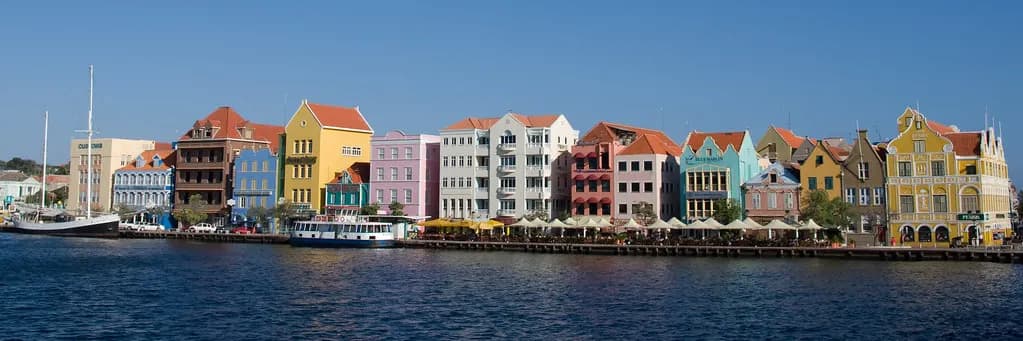
The candy-colored Dutch buildings lining Willemstad's Handelskade waterfront weren't always so bright — legend holds a 19th-century governor blamed white facades for his migraines and ordered the entire harbor front repainted, and it's stayed colorful ever since.
Willemstad's Handelskade waterfront is one of the most photographed stretches of colonial architecture in the Caribbean, a row of narrow Dutch gabled buildings painted in saturated pinks, yellows, blues, and oranges. According to a frequently repeated island legend, a 19th-century governor blamed the glare from the original white facades for his migraines and ordered the harbor front repainted in color — whether or not the story is entirely accurate, the tradition of brightly painted buildings has stuck for generations, and UNESCO recognized the historic center as a World Heritage Site in 1997.
The Queen Emma Bridge, a pedestrian pontoon bridge floating directly on the harbor water, connects the Handelskade side of the city, Punda, to the Otrobanda district across the channel. It swings open regularly to let ships in and out of the harbor, at which point a free passenger ferry takes over until the bridge swings back into place — a small piece of everyday harbor logistics that's also become one of the city's more distinctive sights.
Curaçao's position close to the Venezuelan coast, well south of the main Caribbean hurricane track, sets it apart from many of its Caribbean neighbors and makes it a comparatively reliable choice during the region's official hurricane season, when islands further north carry real storm risk.
The island also gave its name to Blue Curaçao, the vividly colored orange liqueur, originally made from the dried peel of the laraha citrus fruit, a bitter local variant of the Valencia orange that adapted to the island's arid soil after being introduced by Spanish settlers. The original distillery still operates near Willemstad and offers tours and tastings.
As part of the Kingdom of the Netherlands rather than an independent nation, Curaçao also has its own distinct local language, Papiamento, a Portuguese- and Spanish-rooted creole blended with Dutch, English, and West African influences, spoken alongside Dutch and English throughout the island.
What a trip here actually costs
$55 / day avg.
- Guesthouse in or near Willemstad
- Local Curaçaoan meals of stobá and keshi yena
- Walking the historic Handelskade and Otrobanda districts
- Public bus fares
What to do at this tier
- • Walk the Handelskade waterfront and cross the Queen Emma pontoon bridge, free
- • Explore Otrobanda's street art and colonial architecture
- • Marshe Bieuw (Old Market) for local Curaçaoan food
$130 / day avg.
- 3-star hotel near the harbor or a west coast beach
- Snorkeling trip to one of Curaçao's protected reef sites
- Sit-down dinners in Willemstad
- Rental car for a day exploring the island
What to do at this tier
- • Snorkeling or diving at one of Curaçao's protected marine park reef sites
- • Landhuis (plantation house) tour for insight into the island's Dutch colonial history
- • Day trip to Shete Boka National Park's dramatic blowholes
$320 / day avg.
- Beachfront resort on the west coast
- Private boat and snorkeling charter
- Fine dining reservations
- Distillery tour and tasting at the original Blue Curaçao producer
What to do at this tier
- • Private boat charter to a quiet reef or beach cove
- • Tour and tasting at the original Curaçao distillery, source of the blue liqueur
- • Fine dining at a restaurant inside a restored colonial building
These are average estimates for planning purposes, not real-time prices — actual costs vary by season, availability, and how far ahead you book.
How to get there
Click anywhere on the world map — any airport works, not just our main hubs.
Click anywhere on the map above — any airport in the world works — to see estimated travel time and cost from there.
Times and prices are planning estimates, not live fares — always check a booking site before you commit. See the full Transport Comparison guide for the general tradeoffs of each mode.
Best time to visit
Curaçao has a fairly stable, dry climate year-round given its position outside the main hurricane belt, though January-September avoids the small window of elevated risk.
Safety notes
Generally safe with a well-developed tourism sector; standard city precautions apply, particularly in busy nightlife areas after dark.
Visa & currency
Netherlands Antillean guilder (ANG), though US dollars are widely accepted. As part of the Kingdom of the Netherlands, most nationalities that can enter the Schengen area or the Netherlands visa-free can also enter Curaçao without a visa for tourist stays — worth confirming current requirements before booking.
Questions people ask before visiting
What is the Queen Emma Bridge?
A pontoon bridge floating on pontoons across Willemstad's harbor entrance, connecting the Punda and Otrobanda districts. It swings open regularly to let ships pass in and out of the harbor, at which point pedestrians switch to a free ferry service until it swings back into place.
Is Curaçao outside the hurricane belt?
Largely, yes. Curaçao sits far enough south, close to the Venezuelan coast, that it avoids most of the direct hurricane track that affects islands further north, making it a comparatively safer bet for a trip planned during the Caribbean's official hurricane season.
Is Curaçao safe?
Generally safe, with a well-developed tourism infrastructure and low rates of violent crime against visitors. Standard city precautions apply in Willemstad, particularly around busy market and nightlife areas after dark.
How is Curaçao different from Aruba?
Both are part of the Dutch Caribbean and share a similarly dry, cactus-dotted landscape and near-constant trade winds. Curaçao has a larger, more historically rich capital in Willemstad, with a UNESCO-listed colonial waterfront, while Aruba is generally more resort- and beach-focused with a bigger concentration of large hotels.
Nearby destinations
 Aruba
ArubaAruba
Aruba
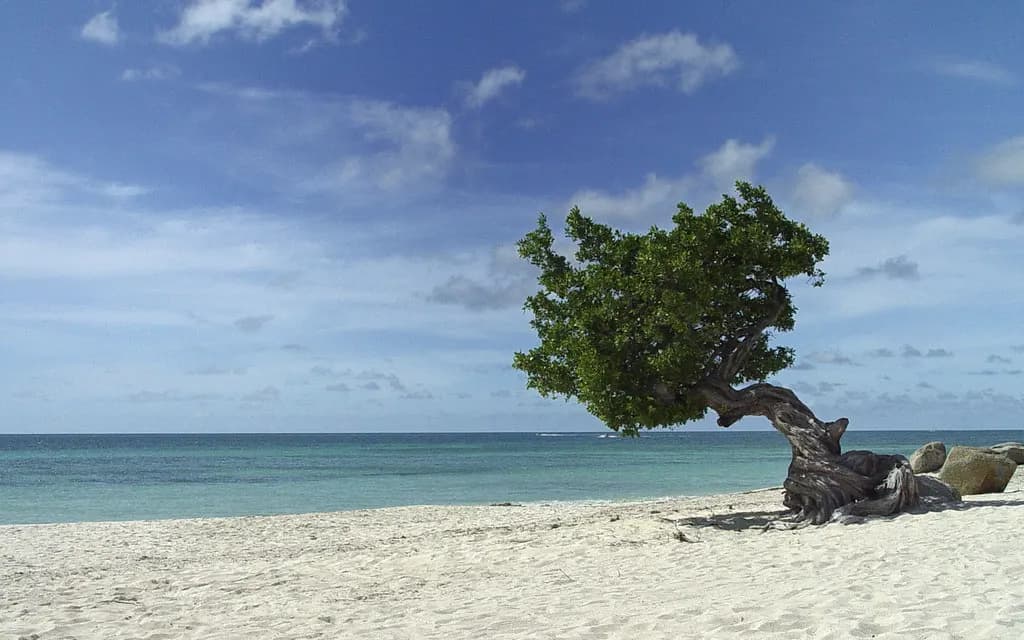
Aruba sits just outside the Caribbean hurricane belt and gets some of the lowest rainfall of any Caribbean island — locals call it "One Happy Island," and the arid, cactus-dotted landscape looks more like a desert than the lush jungle most people picture when they think Caribbean.
See full guide →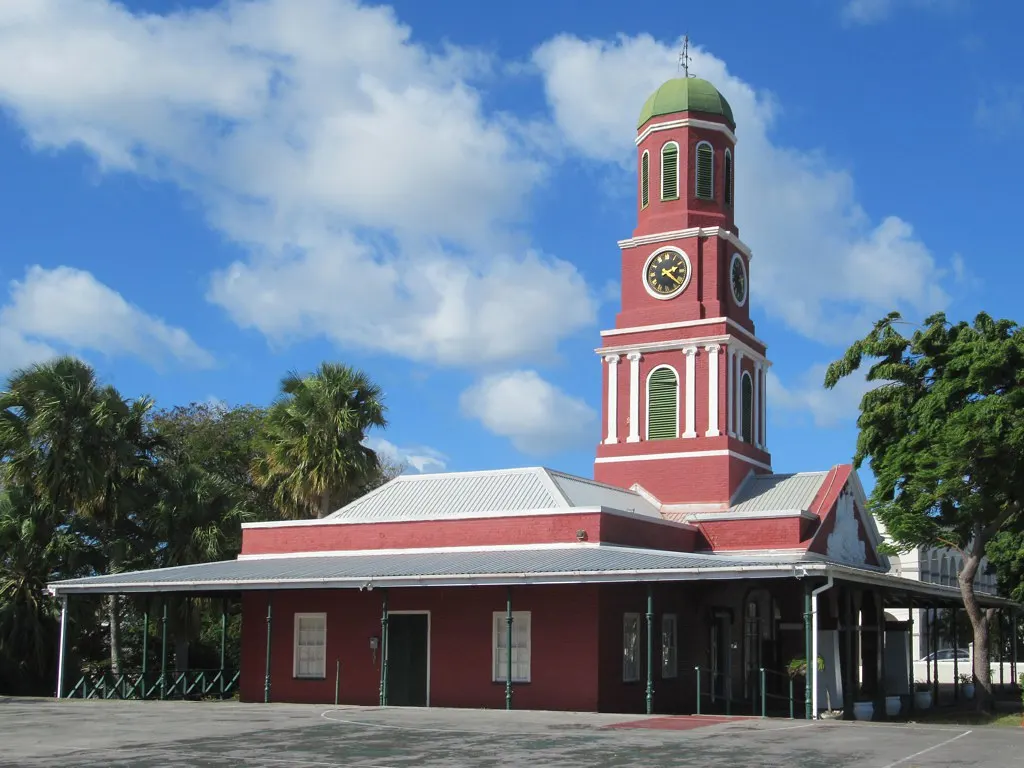 Bridgetown
Bridgetown
Barbados
Barbados is the birthplace of rum — Mount Gay, founded in 1703 on the island and still producing today, holds the Guinness World Record as the oldest rum brand still in existence, and Bridgetown's historic garrison is now a UNESCO World Heritage Site built partly on that trade.
See full guide →Comparing more than one route? See the full transport comparison guide.