Honduras · North America
Roatán
Roatán sits along the Mesoamerican Barrier Reef, the second largest barrier reef system on Earth after Australia's, and the island's English-speaking Afro-Caribbean and Cayman-descended communities give it a culture genuinely distinct from mainland Honduras, a legacy of British colonial control and pirate history that never fully faded after Spain's claim to the islands went largely unenforced.
Roatán sits directly along the Mesoamerican Barrier Reef, which stretches roughly 1,000 kilometers along the coasts of Mexico, Belize, Guatemala, and Honduras, making it the second largest barrier reef system in the world after Australia's Great Barrier Reef. That position has made the island one of the more significant diving destinations in the Caribbean basin, its dramatic wall dives and generally healthy coral drawing divers at a fraction of the cost found at many other world-class reef destinations.
The island's culture stands genuinely apart from mainland Honduras, shaped by a long period of British colonial influence and settlement by English-speaking Cayman Islanders and Afro-Caribbean communities, some descended from formerly enslaved people who settled the Bay Islands independent of Spanish colonial control, which never fully enforced its claim over the islands despite holding it on paper. That history has left Roatán with English still widely spoken alongside Spanish, and a distinctly Caribbean cultural identity that surprises many visitors expecting a more uniformly Honduran experience.
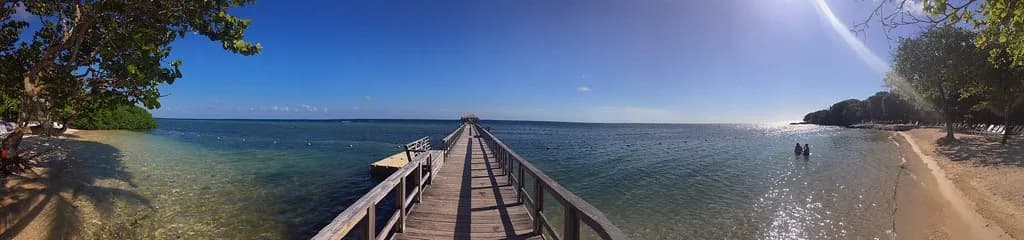
West Bay Beach, a stretch of white sand backed by calm, clear water, anchors much of the island's tourism, and its position at the sheltered western tip of Roatán gives it some of the calmest, most swimmable conditions found anywhere on the island, a straightforward complement to the more adventure-focused diving and snorkeling that draws much of the island's visitor traffic.
Roatán's diving industry has developed a reputation for offering some of the most affordable open-water certification courses in the Caribbean, drawing a steady stream of visitors specifically looking to get certified while also enjoying genuinely world-class reef conditions, a combination that's built the island's identity as much around learning to dive as around diving itself.
While Roatán is generally considered notably safer than some parts of mainland Honduras, most visitors stay within the established tourist areas of West Bay and West End, a practical approach that reflects the island's somewhat separate development and reputation from the country's broader safety situation.
What a trip here actually costs
$150 / day avg.
- 3-star beachfront hotel
- Two-tank dive package
- Casual and sit-down restaurant meals
- West Bay Beach, free
What to do at this tier
- • West Bay Beach, free public access
- • Two-tank dive package along the Mesoamerican Barrier Reef
- • Snorkeling excursion to nearby reef sites
$380 / day avg.
- 4-5 star beach resort
- Private dive charter
- Fine dining at a top island restaurant
- Full open-water diving certification course
What to do at this tier
- • Private dive charter to less-visited reef sections
- • Full open-water scuba certification course
- • Fine dining at a top island resort restaurant
These are average estimates for planning purposes, not real-time prices — actual costs vary by season, availability, and how far ahead you book.
How to get there
Click anywhere on the world map — any airport works, not just our main hubs.
Click anywhere on the map above — any airport in the world works — to see estimated travel time and cost from there.
Times and prices are planning estimates, not live fares — always check a booking site before you commit. See the full Transport Comparison guide for the general tradeoffs of each mode.
Best time to visit
March-September brings the calmest seas and best diving visibility; the wetter season runs roughly October-January.
Safety notes
Generally safe in the main tourist areas of West Bay and West End with standard precautions; Roatán is considered notably safer than some parts of mainland Honduras.
Visa & currency
Honduran lempira (HNL), though US dollars are widely accepted. Many nationalities can enter visa-free for tourism, worth confirming based on passport before booking.
Questions people ask before visiting
Is Roatán worth visiting?
Yes — Roatán, part of Honduras's Bay Islands, sits directly along the Mesoamerican Barrier Reef, the second largest barrier reef system in the world, offering world-class diving and snorkeling, along with West Bay Beach and a genuinely distinct English-speaking Afro-Caribbean island culture.
Why does Roatán have English-speaking communities?
The Bay Islands, including Roatán, came under British colonial influence and were long controlled more by English-speaking settlers, including Cayman Islanders and formerly enslaved communities, than by mainland Spanish colonial administration, leaving a lasting Afro-Caribbean, English-speaking culture distinct from the rest of Honduras.
How good is diving in Roatán?
Genuinely excellent — Roatán sits directly on the Mesoamerican Barrier Reef, the second largest barrier reef system in the world after Australia's Great Barrier Reef, with dramatic wall dives, healthy coral, and a well-established diving industry offering certification courses at some of the most affordable rates in the Caribbean region.
How many days do you need in Roatán?
Four to five days lets you fit in several dives or snorkeling trips, beach time at West Bay, and time to explore the island's distinct local culture, a reasonable pace for a dedicated beach-and-reef trip.
Nearby destinations
 San Pedro
San Pedro
Belize
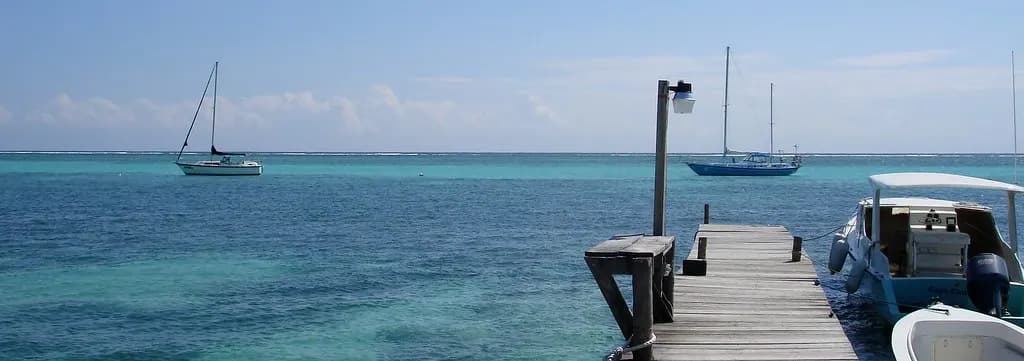
San Pedro, the only town on Ambergris Caye, still gets around mainly by golf cart — the island never built out a real road network for cars, and it sits directly against the Belize Barrier Reef, the second-largest barrier reef system on Earth after Australia's Great Barrier Reef.
See full guide →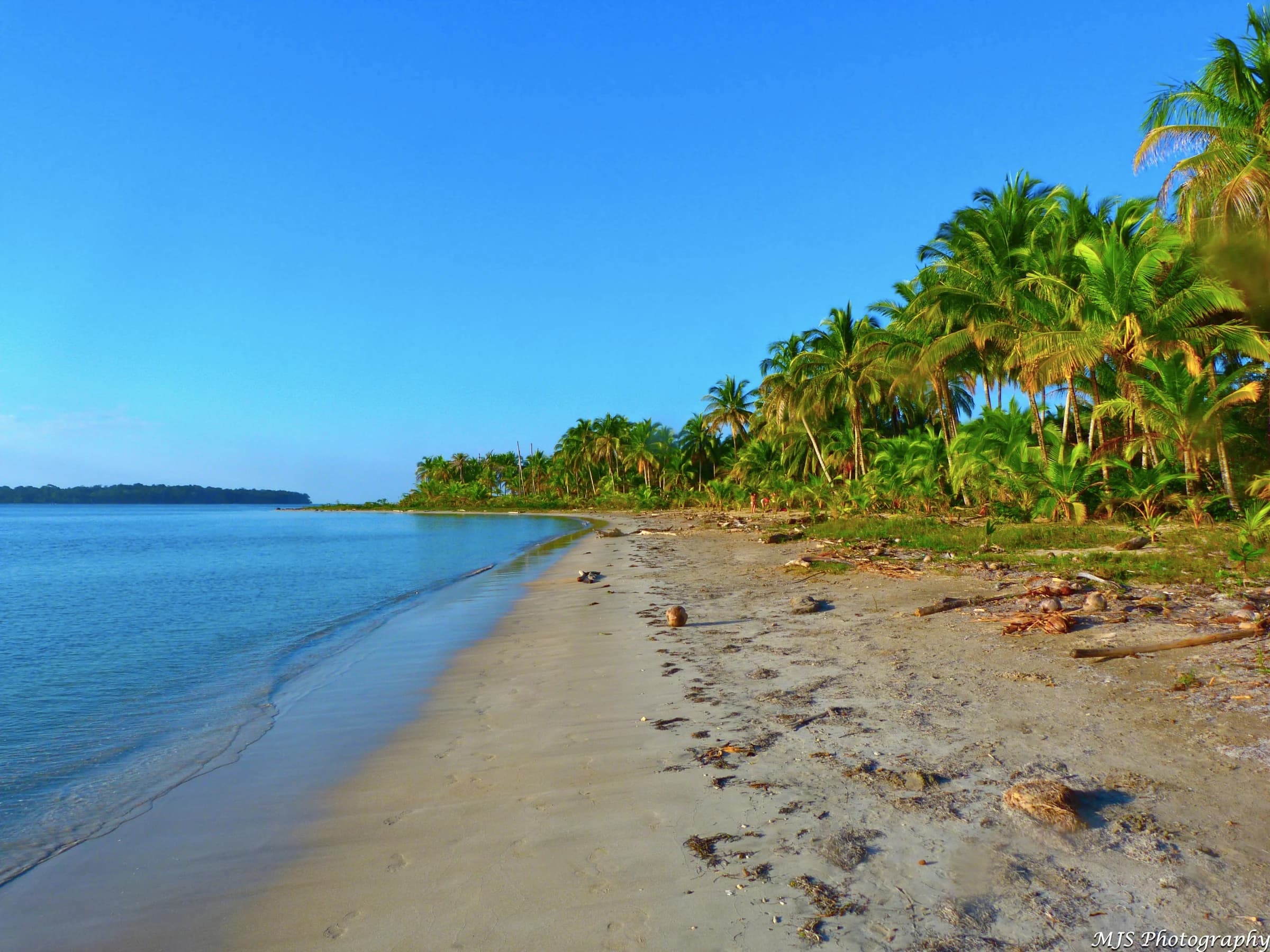 Bocas del Toro
Bocas del Toro
Panama
Red Frog Beach on Bastimentos Island is named for a strawberry poison dart frog barely the size of a thumbnail — bright red, genuinely toxic to predators, and one of the more improbable mascots for what's otherwise a laid-back surf-and-sailboat archipelago on Panama's Caribbean side.
See full guide →Comparing more than one route? See the full transport comparison guide.