United States · North America
Honolulu
Hawaii was an independent, internationally recognized kingdom until 1893, when a group of American and European businessmen backed by US Marines overthrew Queen Liliʻuokalani, and the islands weren't annexed as US territory until 1898 — a history still genuinely present in Honolulu today, from ʻIolani Palace's throne room to a Native Hawaiian cultural identity that predates statehood by well over a century.
Hawaii operated as an internationally recognized independent kingdom for most of the 19th century, with its own monarchy, diplomatic relations, and government, until 1893, when a group of American and European businessmen, backed by US Marines, overthrew Queen Liliʻuokalani in a coup that the United States government itself later formally apologized for in a 1993 congressional resolution. The islands were annexed as US territory in 1898 and didn't become the 50th state until 1959, a relatively recent chapter that remains genuinely present in Native Hawaiian cultural and political identity today, visible directly at ʻIolani Palace, the only royal palace on US soil, where the queen was later held under house arrest.
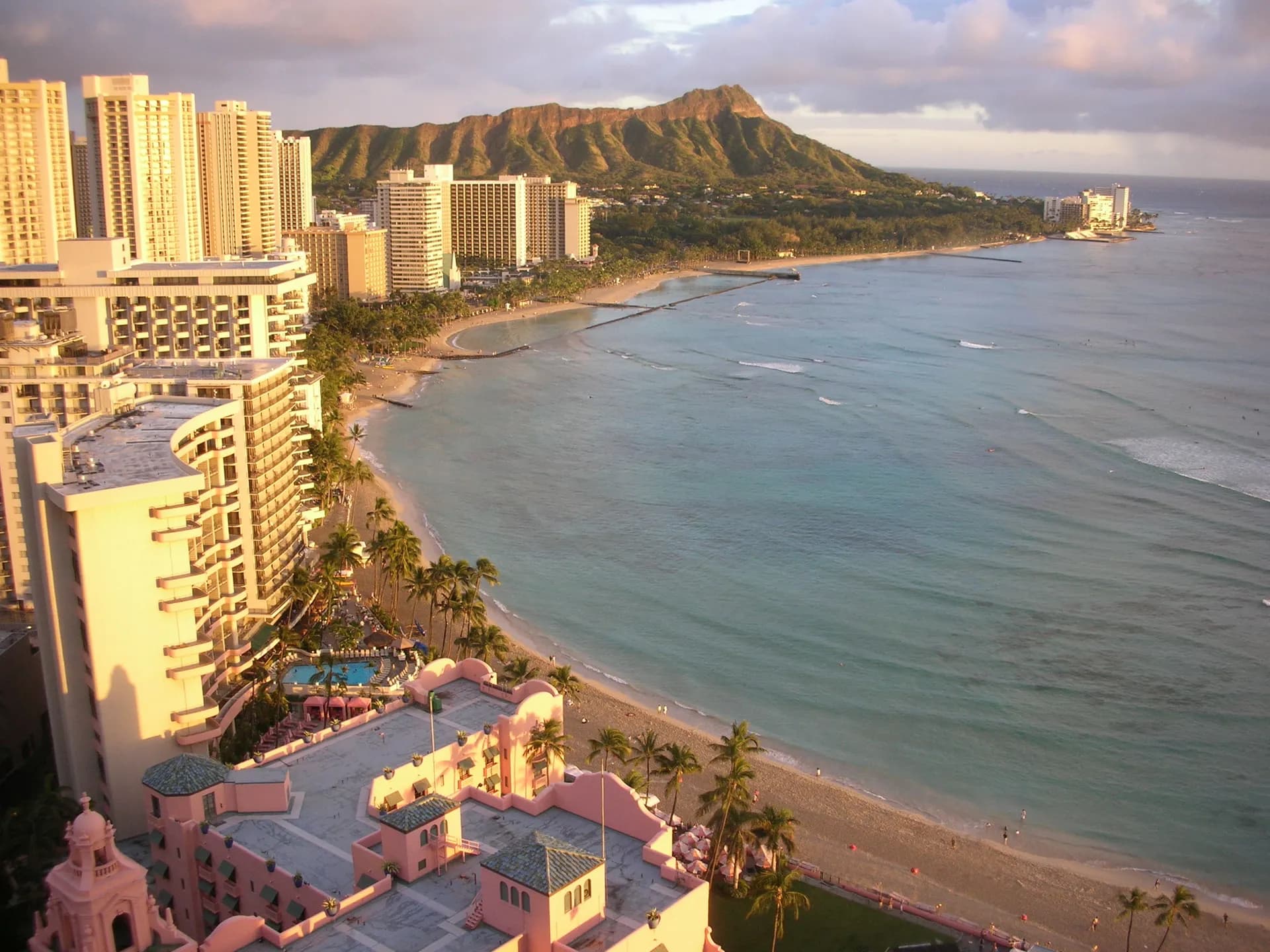
Waikiki Beach helped launch the modern global popularity of surfing, largely through the influence of Duke Kahanamoku, a Native Hawaiian Olympic swimmer who traveled internationally in the early 20th century demonstrating the sport and is widely credited with introducing it to audiences far beyond Hawaii. That legacy still shapes Waikiki's identity, and surf lessons along the same stretch of beach remain one of the most popular visitor activities on the island.
Pearl Harbor holds the USS Arizona Memorial, built directly over the sunken battleship where more than 1,100 crew members died during the December 7, 1941 Japanese attack that brought the United States into WWII. Visitors reach the memorial by boat as part of a free, timed-entry program, and the site remains one of the most visited and significant historical memorials in the country.
Diamond Head, a volcanic tuff cone overlooking Waikiki, offers one of the more accessible hikes on the island, climbing through a former military bunker system built in the early 20th century before opening onto sweeping views back over Honolulu and the coastline.
Honolulu's identity today genuinely holds both threads together, a major US resort destination built around Waikiki's beaches and hotels, and a Native Hawaiian cultural and political history that continues to shape ongoing conversations about land rights, language revitalization, and sovereignty, a depth that rewards visitors willing to look beyond the beach.
What a trip here actually costs
$220 / day avg.
- 3-star hotel near Waikiki
- Rental car for island exploration
- Casual and sit-down restaurant meals
- Diamond Head hike, low entry fee
What to do at this tier
- • Waikiki Beach, free public access
- • Pearl Harbor and USS Arizona Memorial, free timed entry ticket
- • Diamond Head crater hike, low entry fee
$500 / day avg.
- 4-5 star beachfront resort
- Private guided Pearl Harbor and history tour
- Fine dining at a top Honolulu restaurant
- Private surf lesson at Waikiki
What to do at this tier
- • Private guided Pearl Harbor and Hawaiian history tour
- • Private surf lesson at Waikiki Beach
- • Fine dining tasting menu featuring contemporary Hawaiian cuisine
These are average estimates for planning purposes, not real-time prices — actual costs vary by season, availability, and how far ahead you book.
How to get there
Click anywhere on the world map — any airport works, not just our main hubs.
Click anywhere on the map above — any airport in the world works — to see estimated travel time and cost from there.
Times and prices are planning estimates, not live fares — always check a booking site before you commit. See the full Transport Comparison guide for the general tradeoffs of each mode.
Best time to visit
April-October brings slightly drier conditions and lower crowds than winter's peak season, though Hawaii's climate stays warm and pleasant nearly year-round.
Safety notes
Very safe with low crime; strong ocean currents at some beaches require checking local conditions and lifeguard flags before swimming.
Visa & currency
US dollar (USD). Most international visitors need a visa or ESTA authorization arranged in advance, worth confirming based on passport before booking.
Questions people ask before visiting
Is Honolulu worth visiting?
Yes — Honolulu combines Waikiki Beach, the birthplace of modern surfing's global popularity, Pearl Harbor's USS Arizona Memorial, and Diamond Head's volcanic crater, alongside a genuine Native Hawaiian cultural and political history that predates and continues alongside its status as a US state.
What happened to the Kingdom of Hawaii?
Hawaii operated as an internationally recognized independent kingdom until 1893, when American and European businessmen, backed by US Marines, overthrew Queen Liliʻuokalani. The islands were annexed as a US territory in 1898 and became the 50th state in 1959, a history that remains a significant, actively discussed part of Native Hawaiian identity today.
What is the USS Arizona Memorial?
A memorial built directly over the sunken USS Arizona battleship at Pearl Harbor, honoring the more than 1,100 crew members who died there during the December 7, 1941 Japanese attack that brought the United States into WWII. Visitors reach it by boat as part of the Pearl Harbor National Memorial.
How many days do you need in Honolulu?
Five to seven days covers Waikiki Beach, Pearl Harbor, Diamond Head, and time to explore beyond the immediate tourist core, a comfortable pace given how much of Oahu rewards a slower, less rushed visit.
Nearby destinations
 Los Angeles
Los Angeles
United States
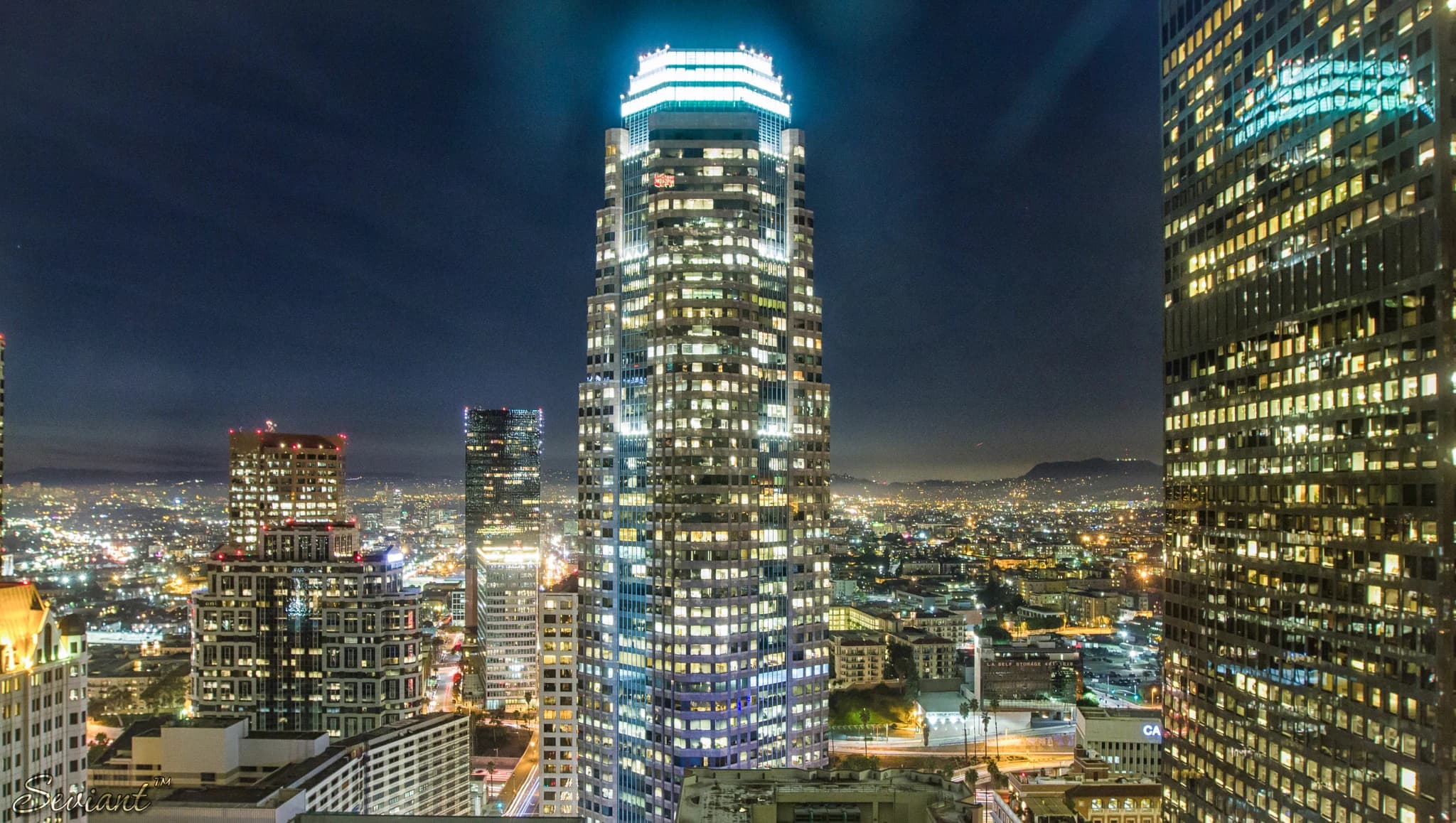
The Hollywood sign originally read HOLLYWOODLAND and was built in 1923 purely as a temporary real estate advertisement for a housing development in the hills — it was only meant to stand for about a year and a half, and the LAND was removed for good in 1949.
See full guide →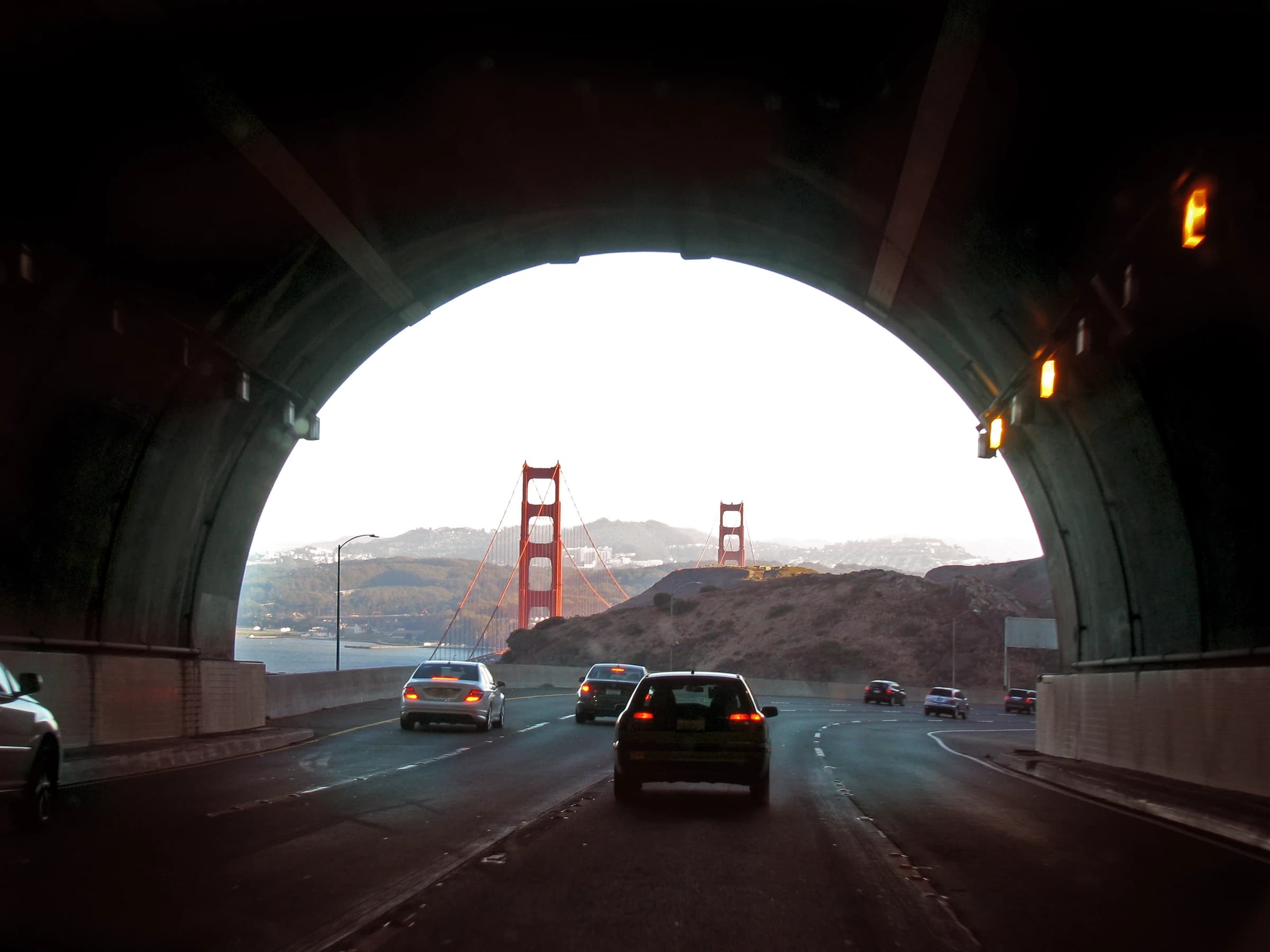 San Francisco
San Francisco
United States
The Golden Gate Bridge isn't painted safety orange for visibility reasons alone — the color, officially called International Orange, was chosen by the consulting architect specifically because it complements the bridge's natural surroundings and stands out against both the blue-grey bay water and San Francisco's famous fog.
See full guide →Comparing more than one route? See the full transport comparison guide.