France · Europe
Marseille
France's oldest city was founded by Greek sailors around 600 BC, more than a thousand years before Paris existed in any recognizable form — and it still runs on a rougher, more Mediterranean rhythm than the rest of the country.
Marseille has a real claim to being France's oldest city, founded around 600 BC by Greek sailors from Phocaea as the trading colony of Massalia — more than a millennium before Paris existed as anything resembling a city. That deep, layered history, combined with over two thousand years as a working Mediterranean port absorbing waves of trade and migration, gives Marseille a rougher, more genuinely diverse character than the polished Riviera towns further along the coast.
Le Panier, the city's oldest neighborhood, sits on the hill overlooking the Old Port and has become one of Marseille's most visually distinctive areas — narrow, winding lanes dense with street art and murals, a deliberate contrast to the more formal architecture found in central Marseille.
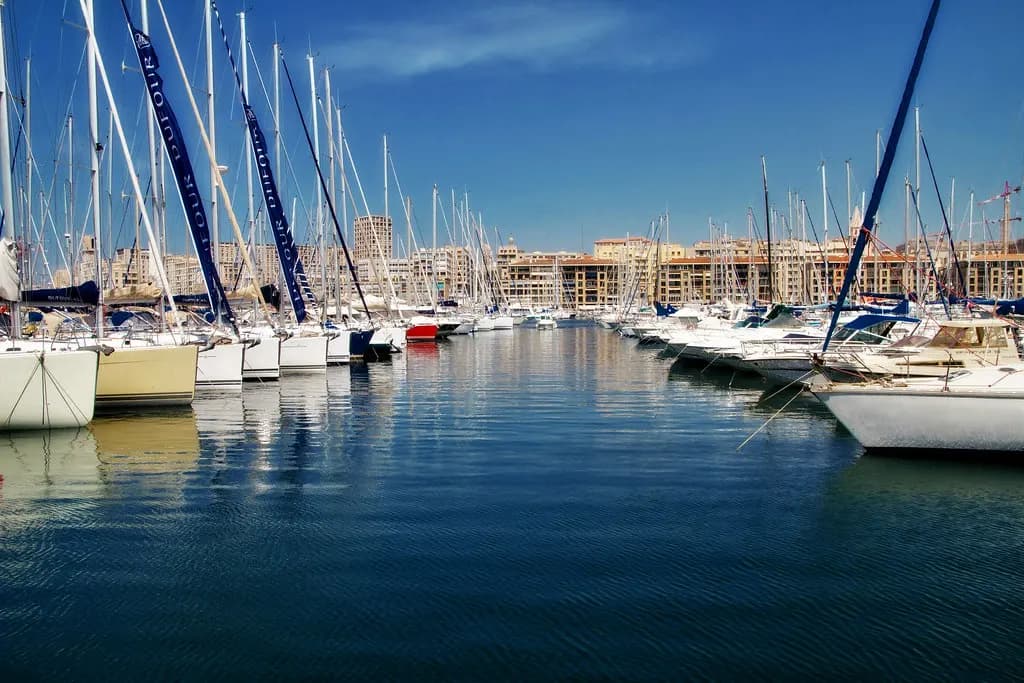
The Old Port itself has functioned as a harbor continuously since the city's ancient Greek founding, and while cruise ships and fishing boats have replaced ancient triremes, the daily fish market still operating along the quay connects directly back to that original trading-post identity.
Just outside the city, the Calanques — a stretch of narrow, steep-walled limestone inlets with startlingly turquoise water, protected as a national park — give Marseille a coastal landscape that looks more like a Mediterranean island chain than mainland France. Several are reachable directly by hiking trail from the city's southern edge, while boat tours reach inlets that hiking alone can't access.
Notre-Dame de la Garde, a 19th-century basilica crowning the city's highest point, gives a sweeping view that ties the whole geography together — the Old Port, Le Panier's rooftops, and, on a clear day, the first of the Calanques inlets visible along the coastline stretching south.
What a trip here actually costs
$50 / day avg.
- Hostel near the Old Port or Le Panier
- Metro and tram day pass
- Market lunches and casual Provençal food
- Free wander through Le Panier and the Old Port
What to do at this tier
- • Le Panier, Marseille's oldest neighborhood, dense with street art and narrow lanes, free
- • Old Port wander, a working harbor since ancient Greek times, free
- • Calanques hiking trail to Calanque de Sormiou or Morgiou, free beyond transit to the trailhead
$110 / day avg.
- 3-star hotel near the Old Port
- Notre-Dame de la Garde and MuCEM museum entry
- Sit-down bouillabaisse dinner
- Calanques boat tour
What to do at this tier
- • Notre-Dame de la Garde, a hilltop basilica with a full panoramic city and sea view
- • MuCEM, a striking modern museum covering Mediterranean civilizations, at the harbor entrance
- • Sit-down bouillabaisse, Marseille's signature seafood stew, at a traditional restaurant
$240 / day avg.
- 4-5 star hotel with harbor views
- Private guided Old Port and Le Panier history tour
- Multi-course seafood tasting menu
- Private Calanques boat charter
What to do at this tier
- • Private guided history tour connecting the ancient Greek port to the modern city
- • Private boat charter into the Calanques, reaching inlets inaccessible by land
- • Multi-course seafood tasting menu at a well-regarded Marseille restaurant
These are average estimates for planning purposes, not real-time prices — actual costs vary by season, availability, and how far ahead you book.
How to get there
Click anywhere on the world map — any airport works, not just our main hubs.
Click anywhere on the map above — any airport in the world works — to see estimated travel time and cost from there.
Times and prices are planning estimates, not live fares — always check a booking site before you commit. See the full Transport Comparison guide for the general tradeoffs of each mode.
Best time to visit
April-June and September-October bring warm, comfortable weather without the intense summer heat and the heaviest Calanques crowds.
Safety notes
Generally safe in the main tourist areas (Old Port, Le Panier, Calanques); standard urban caution is enough, with extra awareness around the main train station, Saint-Charles, at night.
Visa & currency
Euro. Standard Schengen 90-day visa-free rule applies for most Western passport holders.
Questions people ask before visiting
Is Marseille worth visiting?
Yes, and it's a genuinely different experience from the polished French Riviera towns nearby — France's oldest and second-largest city, with over 2,600 years of continuous history, a real working port, and direct access to the Calanques, a stretch of dramatic limestone fjord-like inlets most visitors don't expect to find this close to a major city.
Is Marseille safe?
Yes for the vast majority of visitors sticking to the main tourist areas — the Old Port, Le Panier, and the Calanques — though Marseille has a reputation for higher crime rates in certain outer neighborhoods that aren't typically part of a visitor's itinerary anyway. Normal urban caution, especially around the train station at night, is enough for most trips.
What are the Calanques?
A series of narrow, steep-walled limestone inlets stretching along the coast between Marseille and Cassis, protected as a national park, with turquoise water that looks more like the Mediterranean's southern reaches than mainland France. Several are reachable by hiking trail, boat tour, or a combination of both directly from the city.
Marseille or Nice — which should I visit?
Nice is more polished, more tourist-oriented, and the classic Riviera base. Marseille is grittier, more ethnically diverse, historically deeper, and offers more dramatic, less crowded coastal scenery via the Calanques. Many travelers pair the two, given the roughly two-and-a-half-hour train connection.
How many days do you need in Marseille?
Two days covers the Old Port, Le Panier, and Notre-Dame de la Garde. A third day allows a proper Calanques hike or boat trip, which realistically needs at least half a day on its own.
Nearby destinations
 Nice
NiceNice
France
The city's most famous seafront promenade is named after the English aristocrats who funded it in the 1820s, not the French — Nice has been a foreign winter retreat for longer than it's been a French tourist destination.
See full guide →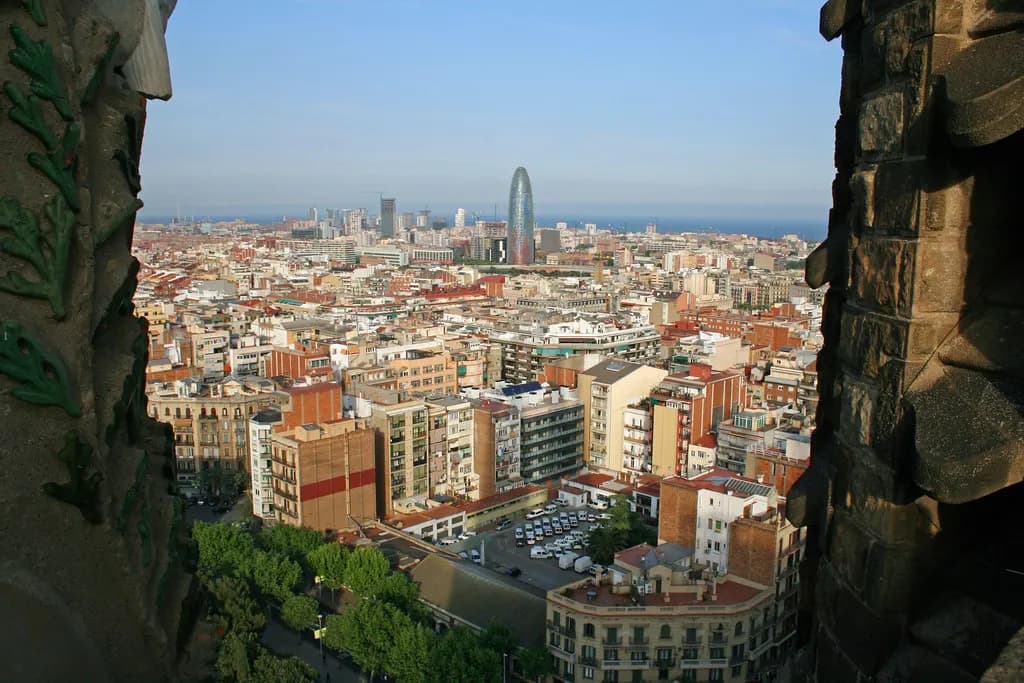 Barcelona
Barcelona
Spain
Gaudí spent over a decade on a church that's still not finished, and somehow that unfinished cathedral is now the thing everyone plans their trip around.
See full guide →Comparing more than one route? See the full transport comparison guide.