Spain · Europe
Bilbao
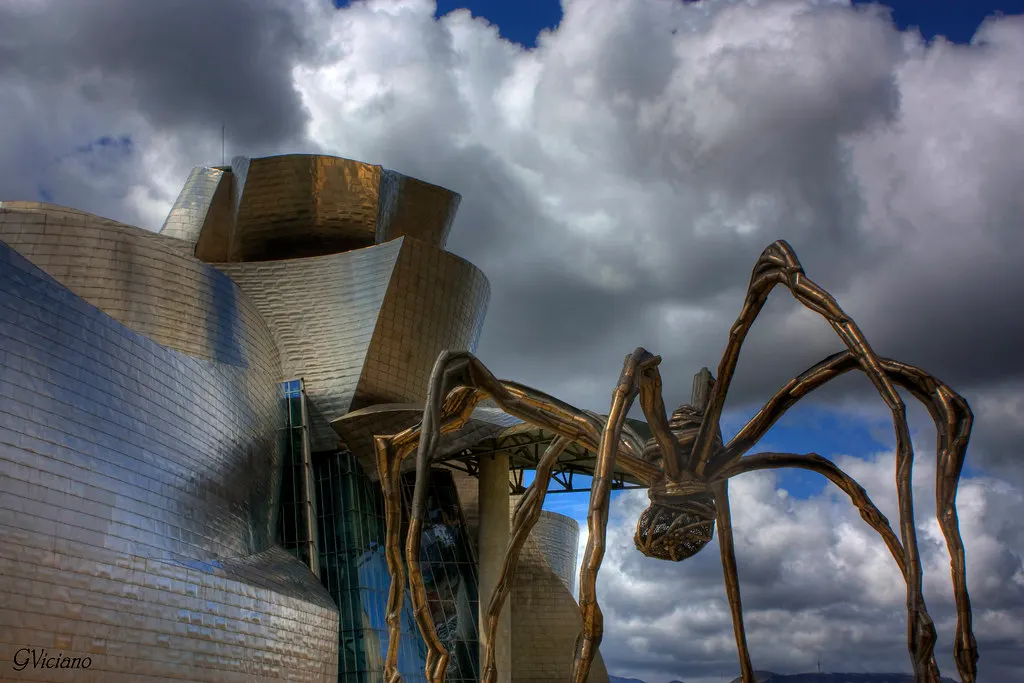
One museum single-handedly turned a declining industrial port city into one of Europe's most visited cultural destinations — the "Bilbao Effect" is now a genuine term urban planners use to describe what the Guggenheim did here in 1997.
Bilbao's modern identity traces back almost entirely to a single building. Through the 1980s, the city's economy, built for over a century on shipbuilding and steel, collapsed alongside those industries, leaving Bilbao with high unemployment and a badly polluted river running through its center. The 1997 opening of the Guggenheim Museum — Frank Gehry's swooping, titanium-clad structure along that same river — triggered a transformation so dramatic that "the Bilbao Effect" became a standard term in urban planning literature, describing how a single landmark can reshape a city's economy and global image.
The museum's exterior alone draws visitors who never step inside: the curving titanium panels shift color and texture depending on the light and angle, deliberately designed to interact with Bilbao's overcast Atlantic weather rather than fight against it. Inside, the collection focuses on contemporary and modern art, with large-scale installations that take advantage of the building's unconventional, non-rectangular gallery spaces.
Casco Viejo, Bilbao's old town, sits along the river's opposite bank from the Guggenheim and reflects a completely different era — seven medieval streets (Las Siete Calles) that formed the city's original core before Bilbao's industrial expansion, now dense with pintxos bars serving Basque Country's distinctive bar-food culture: small, often elaborately constructed snacks eaten standing up, paid for per item rather than through a set menu.
The Artxanda funicular, running since 1915, climbs a hill overlooking the city and gives a full view over how thoroughly Bilbao's riverside has transformed — modern museums and redeveloped waterfront on one side, the historic old town on the other, the whole layout readable from above in a way it isn't at street level.
Bilbao pairs naturally with San Sebastián, under an hour away and one of the most food-obsessed small cities in Europe, making the Basque Country a genuinely strong regional pairing for travelers who've already covered Spain's more obvious stops.
What a trip here actually costs
$45 / day avg.
- Hostel near Casco Viejo
- Metro and tram day pass
- Pintxos bar-hopping for meals
- Guggenheim exterior and riverside wander, free
What to do at this tier
- • Guggenheim Museum exterior and the riverside promenade, free
- • Casco Viejo, the old town's seven original streets, free to wander
- • Pintxos crawl through several bars, paying per small plate
$100 / day avg.
- 3-star hotel near the river or old town
- Guggenheim Museum entry
- Sit-down Basque dinners
- Funicular ride up Artxanda for a city view
What to do at this tier
- • Guggenheim Museum interior, a rotating contemporary and modern art collection
- • Artxanda funicular for a panoramic view over the city and river
- • Sit-down dinner featuring Basque specialties like bacalao (salt cod) and txuleta (rib steak)
$220 / day avg.
- 4-5 star hotel near the Guggenheim
- Private guided art and architecture tour
- Multi-course Basque tasting menu
- Private day trip to San Sebastián
What to do at this tier
- • Private guided tour covering the Guggenheim's architecture and Bilbao's industrial-to-cultural transformation
- • Multi-course Basque tasting menu at a well-regarded Bilbao restaurant
- • Private day trip to San Sebastián, under an hour away
These are average estimates for planning purposes, not real-time prices — actual costs vary by season, availability, and how far ahead you book.
How to get there
Click anywhere on the world map — any airport works, not just our main hubs.
Click anywhere on the map above — any airport in the world works — to see estimated travel time and cost from there.
Times and prices are planning estimates, not live fares — always check a booking site before you commit. See the full Transport Comparison guide for the general tradeoffs of each mode.
Best time to visit
May-June and September-October bring mild, comfortable weather without the heaviest summer crowds.
Safety notes
Very safe overall. Standard urban caution is enough almost everywhere in the city.
Visa & currency
Euro. Standard Schengen 90-day visa-free rule applies for most Western passport holders.
Questions people ask before visiting
Is Bilbao worth visiting?
Yes — the Guggenheim Museum's striking titanium architecture is worth seeing even without going inside, and the city backs it up with a genuinely strong Basque food scene, a walkable riverside old town, and a real post-industrial transformation story that's become a case study for urban planners worldwide.
What is the 'Bilbao Effect'?
A term urban planners and economists use to describe how a single landmark building — the Guggenheim Museum, opened in 1997 — can transform a struggling industrial city's economy and global reputation almost overnight. Bilbao's shipbuilding and steel industries had collapsed in the 1980s, and the museum's success sparked a broader riverside redevelopment that continues today.
Is the Guggenheim Bilbao worth visiting inside, or just for the exterior photos?
Both — Frank Gehry's titanium-and-glass exterior is genuinely striking and free to photograph from outside, but the interior galleries house a serious rotating collection of contemporary and modern art that rewards a dedicated few hours, not just a quick walk-around.
Is Bilbao expensive?
Moderate — cheaper than Barcelona or Madrid, and the pintxos bar-hopping style of eating (small snacks paid per item) makes it easy to eat well without a big sit-down restaurant bill.
How many days do you need in Bilbao?
Two days covers the Guggenheim, the old town (Casco Viejo), and a pintxos crawl. A third day allows a day trip to nearby San Sebastián or the coastal town of Getxo.
Nearby destinations
 San Sebastián
San Sebastián
Spain
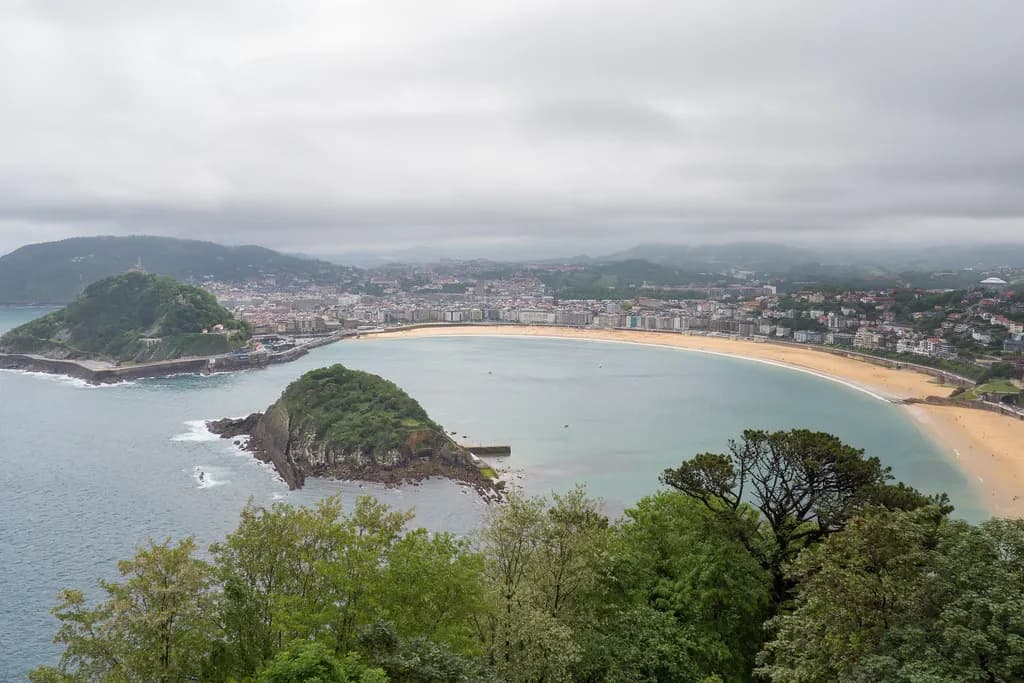
This city of under 200,000 people holds more Michelin stars per capita than almost anywhere on earth, and its everyday pintxos bars serve food that would be fine dining anywhere else.
See full guide →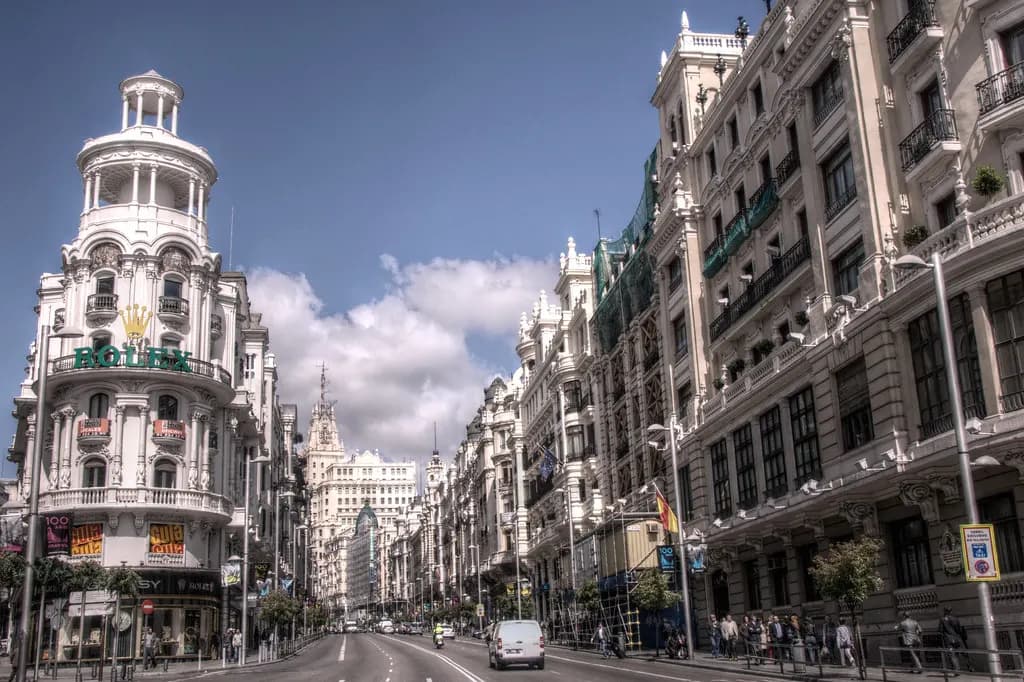 Madrid
Madrid
Spain
Dinner reservations before 9pm are considered early here — Madrid runs on a schedule shifted so late that the city's nightlife doesn't really start until other European capitals are already closing down.
See full guide →Comparing more than one route? See the full transport comparison guide.