Belgium · Europe
Antwerp
About 84% of the world's rough diamonds pass through Antwerp's diamond district at some point — a four-block area that quietly moves more diamond value in a year than most countries' entire GDP.
Antwerp's diamond district, a tightly concentrated four-block area near the city's central train station, handles a genuinely outsized share of the global diamond trade — an estimated 84% of the world's rough diamonds and roughly half of all polished diamonds pass through it at some point, a level of concentration built on more than 500 years of continuous trading history dating back to the city's peak as a major Renaissance-era commercial hub.
That same Renaissance wealth shaped much of Antwerp's historic center, and no single figure looms larger over the city's artistic legacy than Peter Paul Rubens, the most influential Flemish Baroque painter, who lived and worked in Antwerp for most of his career. The Rubens House, his actual preserved home and studio, gives a rare, intimate look at how a major 17th-century artist genuinely lived, and the Cathedral of Our Lady holds several of his most significant altarpieces in the settings they were originally created for.
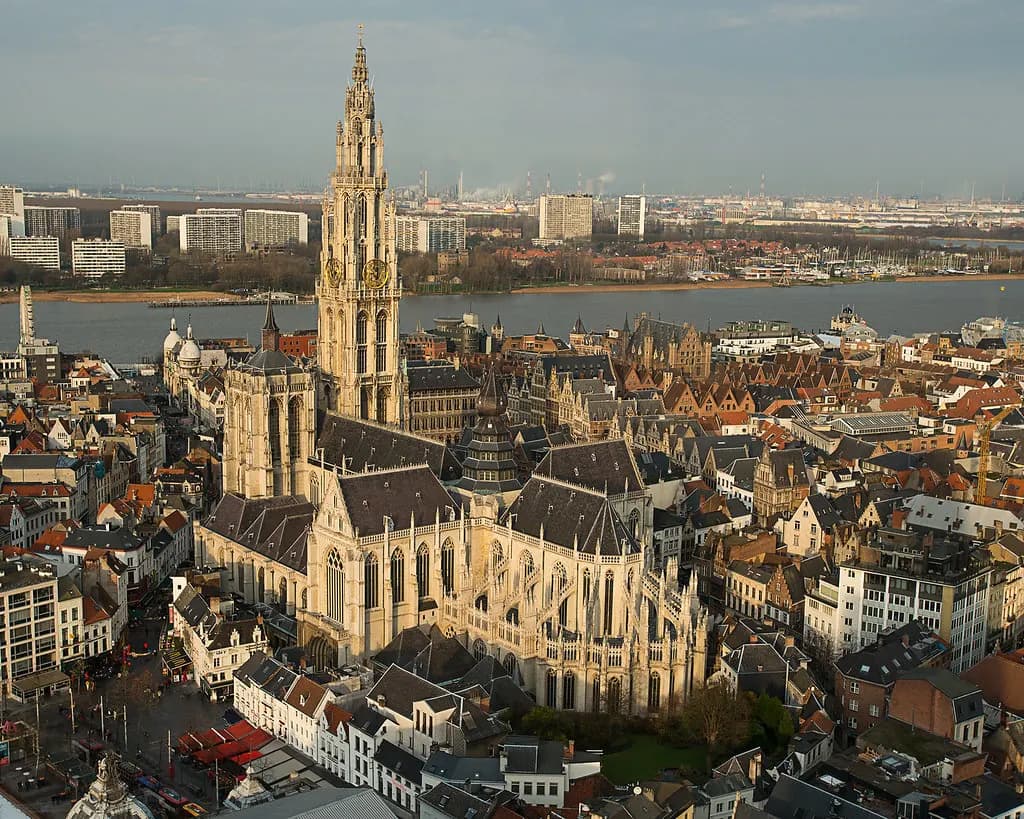
The cathedral itself, a Gothic structure begun in the 14th century and never fully completed as originally planned, remains one of the largest and most architecturally significant Gothic churches in the Low Countries, its single completed spire visible across much of the city.
Along the waterfront, the MAS (Museum aan de Stroom), a striking modern building completed in 2011, gives Antwerp a contemporary counterpoint to its historic core — its free public rooftop terrace offers one of the better panoramic views over the city and the Scheldt river without an entry fee.
Antwerp has also built a genuine reputation as a fashion and design hub since the 1980s, when a group of graduates from the city's Royal Academy of Fine Arts — later dubbed the "Antwerp Six" — gained international recognition, and that design identity continues to shape the city's shopping streets and cultural scene today, giving Antwerp a distinctly different character from the more purely historic old towns found elsewhere in Belgium.
What a trip here actually costs
$50 / day avg.
- Hostel near the center
- Tram day pass
- Frites and casual Belgian lunches
- Free wander through the historic center and diamond district streets
What to do at this tier
- • Grote Markt and the historic center's guild houses, free
- • Diamond district exterior streets near the central station, free to walk
- • MAS (Museum aan de Stroom) exterior and free rooftop viewing terrace
$110 / day avg.
- 3-star hotel near the center
- Cathedral and Rubens House entry
- Sit-down Belgian dinners with local beer pairings
- MAS museum entry
What to do at this tier
- • Cathedral of Our Lady, holding several major Rubens paintings, entry fee
- • Rubens House, the artist's preserved home and studio
- • Sit-down dinner pairing Belgian dishes with Antwerp's local beers
$240 / day avg.
- 4-5 star hotel near the historic center
- Private guided diamond district and Rubens history tour
- Multi-course tasting menu
- Private fashion and design district walking tour
What to do at this tier
- • Private guided tour covering the diamond trade's 500-year history and Rubens' influence on the city
- • Private fashion and design district tour, reflecting Antwerp's role as a major European fashion hub
- • Multi-course tasting menu at a well-regarded Antwerp restaurant
These are average estimates for planning purposes, not real-time prices — actual costs vary by season, availability, and how far ahead you book.
How to get there
Click anywhere on the world map — any airport works, not just our main hubs.
Click anywhere on the map above — any airport in the world works — to see estimated travel time and cost from there.
Times and prices are planning estimates, not live fares — always check a booking site before you commit. See the full Transport Comparison guide for the general tradeoffs of each mode.
Best time to visit
April-June and September-October bring mild, comfortable weather for walking the historic center.
Safety notes
Very safe overall. Standard urban caution is enough almost everywhere in the city.
Visa & currency
Euro. Belgium is in the Schengen area; standard 90-day visa-free rule applies for most Western passport holders.
Questions people ask before visiting
Is Antwerp worth visiting?
Yes — it combines one of Europe's most significant Gothic cathedrals, a genuine and historically deep diamond trading district, strong ties to painter Peter Paul Rubens, and a real fashion and design scene, all within a compact, walkable city center.
Why is Antwerp such a major diamond trading center?
Antwerp's diamond trade dates back over 500 years, and the city remains the world's largest diamond hub today, with an estimated 84% of the world's rough diamonds and roughly half of polished diamonds passing through its diamond district at some point in the supply chain, largely handled by a compact, tightly regulated four-block area near the central train station.
Antwerp or Brussels — which should I visit?
Brussels is the larger capital with the EU institutions and the famous Grand Place. Antwerp is calmer, has a stronger fashion and design identity, and holds deeper ties to Rubens and the diamond trade. The two are only about 45 minutes apart by train, making it easy to combine both.
Is the Rubens House worth visiting?
Yes — it's the actual home and studio of painter Peter Paul Rubens, one of the most influential Baroque artists in European history, preserved with period furnishings and a selection of his and his contemporaries' work, giving genuine insight into how a major 17th-century artist actually lived and worked.
How many days do you need in Antwerp?
Two days covers the cathedral, the Rubens House, and the diamond district's exterior streets. A third day allows the MAS museum on the waterfront or a deeper look at Antwerp's fashion district.
Nearby destinations
 Amsterdam
Amsterdam
Netherlands
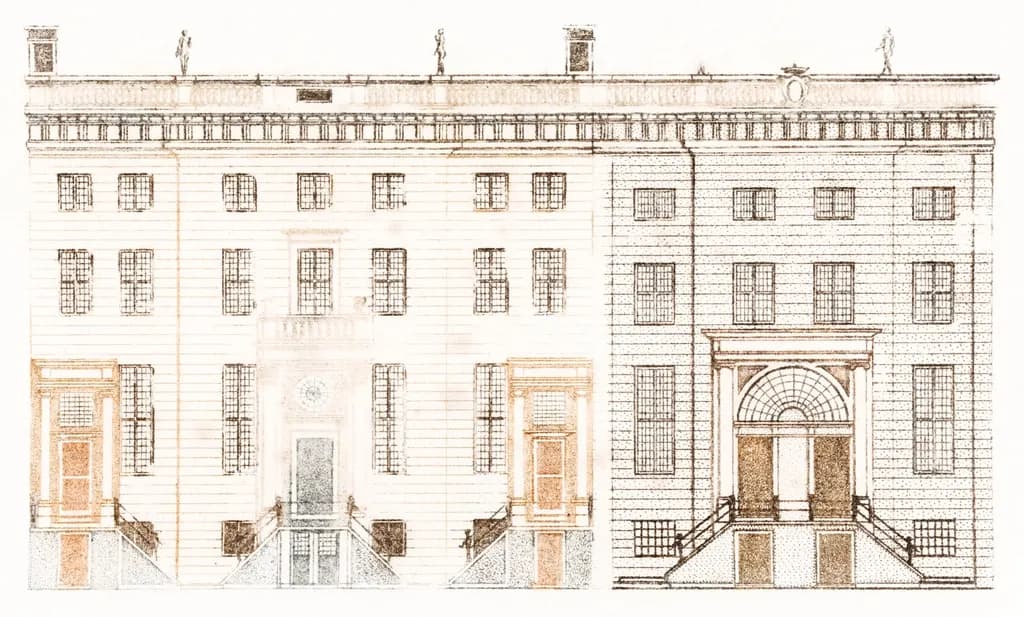
There are more bikes than people registered in this city, and the bike lanes are enforced with more consequence than the actual roads — step into one without looking and you'll hear about it.
See full guide →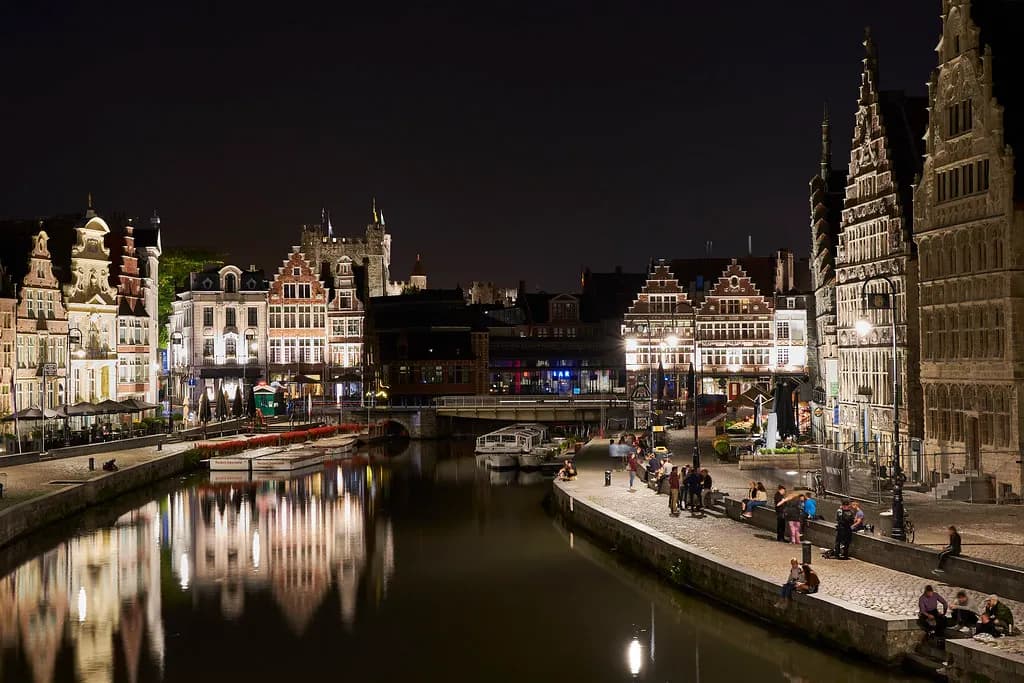 Ghent
GhentGhent
Belgium
Ghent has nearly the same medieval canal-and-guild-house scenery as Bruges, minus the crowds, because most travelers only ever hear about the smaller city twenty minutes down the road.
See full guide →Comparing more than one route? See the full transport comparison guide.