Malaysia · Asia
Penang
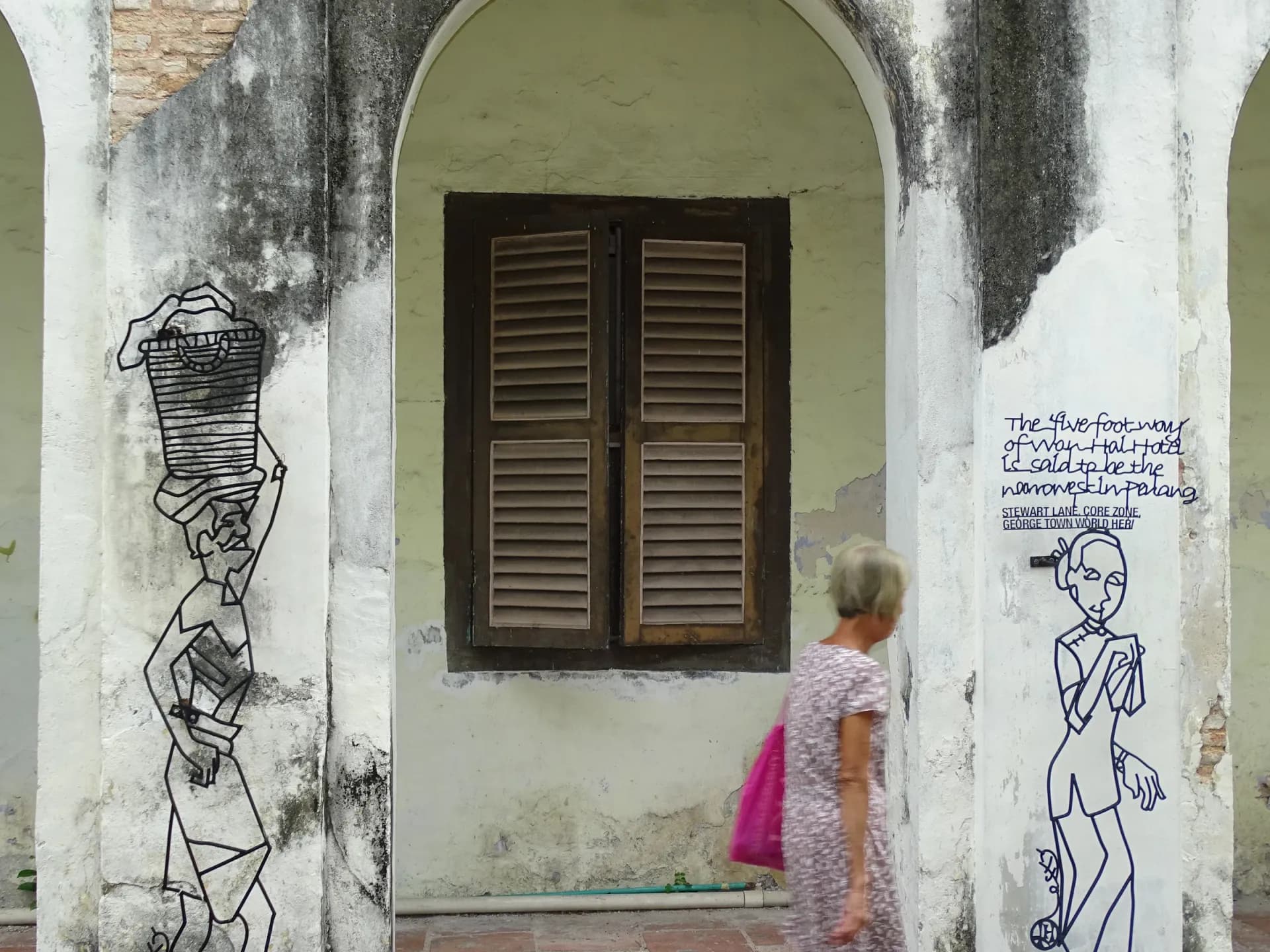
George Town, Penang's capital, earned UNESCO World Heritage status for a streetscape that layers British colonial shophouses, Chinese clan temples, and Indian Hindu shrines within a few blocks of each other, and in the years since, the same walls have become an open-air gallery for murals that turned the old trading port into one of Southeast Asia's most photographed cities.
George Town, Penang's capital, earned UNESCO World Heritage status in 2008 for an urban core that layers British colonial shophouses, Chinese clan association buildings, and Indian Hindu temples within walking distance of each other, a physical record of the city's history as a major British trading port drawing migrants from across Asia starting in the late 18th century.
That layered history took on a new visual dimension starting around 2012, when murals by artists including Lithuanian painter Ernest Zacharevic began appearing on the old town's weathered shophouse walls, often incorporating real objects, a painted child on a real bicycle, painted hands reaching toward a real window ledge, into the artwork itself. The initiative grew well beyond its original scope, and George Town's street art has since become one of its most photographed draws, sitting directly alongside its more formal UNESCO heritage.
Penang's food culture, built on generations of Malay, Chinese, and Indian trading-port influence, is widely regarded as among the best in Malaysia, with dishes like char kway teow, stir-fried flat noodles, and assam laksa, a sour, fish-based noodle soup, considered essential local specialties. Hawker stalls throughout George Town serve these dishes with a level of specialization, some vendors making only one dish for decades, that reflects a genuinely serious food culture rather than a tourist-facing simplification.
The clan jetties, a set of stilted settlements built by different Chinese clan groups along the waterfront, still house descendants of the original 19th-century settlers who organized themselves by surname and dialect group. Walking through them offers a direct look at a form of community organization that shaped much of Penang's early Chinese immigrant history and remains visible today rather than just documented in a museum.
Kek Lok Si Temple, one of the largest Buddhist temple complexes in Southeast Asia, sits on a hillside outside George Town, its multi-tiered pagoda and towering bronze Guanyin statue drawing pilgrims and visitors alike. Combined with Penang Hill's funicular railway, offering cooler air and sweeping views back over George Town and the strait, it gives Penang a range beyond just its old town's colonial streets.
What a trip here actually costs
$28 / day avg.
- Guesthouse in George Town's old quarter
- Local bus or trishaw rides
- Hawker stall meals
- Street art walking tour, free
What to do at this tier
- • George Town street art walking tour, free
- • Clan jetties and Chinese clan temples, free to walk
- • Hawker stall food crawl, low cost per dish
$70 / day avg.
- 3-star boutique heritage hotel
- Penang Hill funicular and viewpoint
- Guided food tour through George Town
- Sit-down restaurant meals
What to do at this tier
- • Penang Hill funicular railway and viewpoint
- • Guided George Town food and heritage tour
- • Kek Lok Si Temple, one of the largest Buddhist temples in Southeast Asia
These are average estimates for planning purposes, not real-time prices — actual costs vary by season, availability, and how far ahead you book.
How to get there
Click anywhere on the world map — any airport works, not just our main hubs.
Click anywhere on the map above — any airport in the world works — to see estimated travel time and cost from there.
Times and prices are planning estimates, not live fares — always check a booking site before you commit. See the full Transport Comparison guide for the general tradeoffs of each mode.
Best time to visit
December-March brings the driest conditions; Penang sees rain year-round as a tropical island, with the wetter monsoon season roughly April-November.
Safety notes
Very safe with low crime; George Town's old town is highly walkable, though traffic requires normal caution when crossing streets.
Visa & currency
Malaysian ringgit (MYR). Many nationalities can enter visa-free for tourism, worth confirming based on passport before booking.
Questions people ask before visiting
Is Penang worth visiting?
Yes — George Town holds UNESCO World Heritage status for its uniquely layered mix of British colonial, Chinese, and Indian architecture, alongside a street art scene that's turned old shophouse walls into some of Southeast Asia's most photographed murals, and a food scene widely considered among Malaysia's best.
What is George Town's street art scene?
Starting around 2012, murals by artists including Lithuanian painter Ernest Zacharevic began appearing on George Town's old shophouse walls, often interacting playfully with real objects like bicycles or window ledges. The initiative grew into one of the city's biggest draws, with dozens of murals now scattered through the old town.
Why is Penang known for food?
Penang's mix of Malay, Chinese, and Indian culinary traditions, refined over generations of trading-port history, has made it widely regarded as having some of the best street food in Malaysia, if not Southeast Asia, with dishes like char kway teow and assam laksa considered local specialties.
How many days do you need in Penang?
Three to four days covers George Town's UNESCO core, its street art, and a proper amount of food exploration at a relaxed pace, with time for a trip up Penang Hill for city views.
Nearby destinations
 Kuala Lumpur
Kuala Lumpur
Malaysia
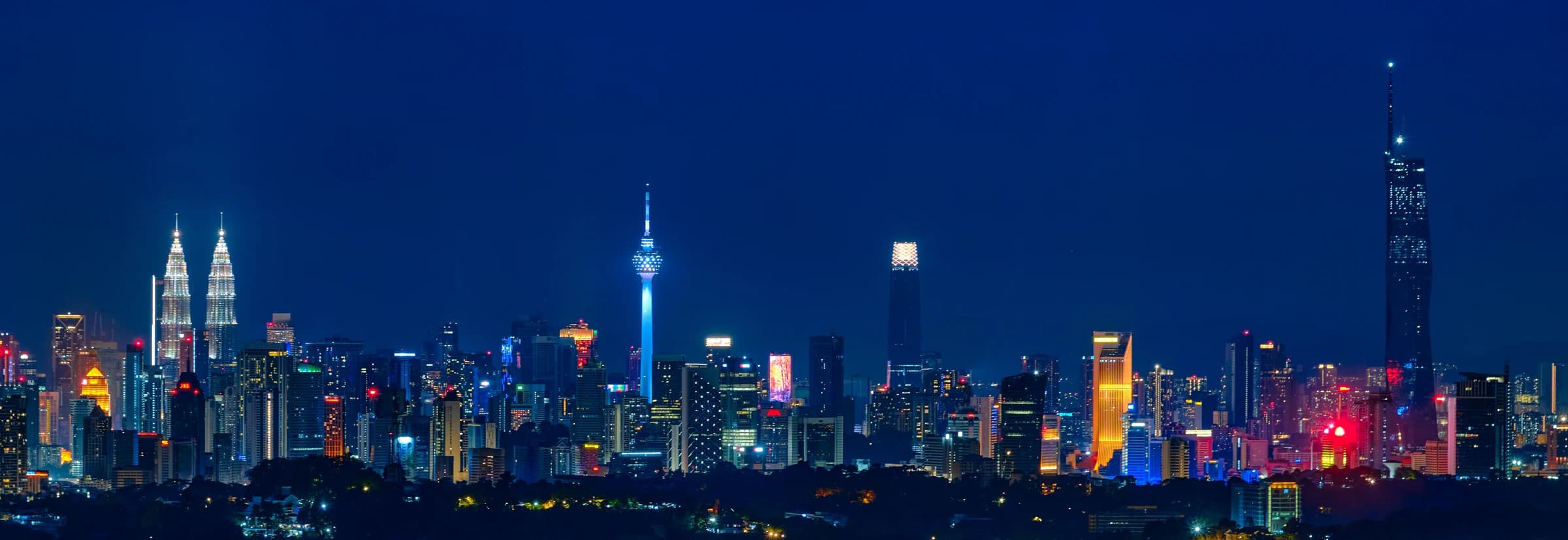
The Petronas Twin Towers held the title of world's tallest building until 2004 and remain the tallest twin towers on Earth today, rising over a city where Malay, Chinese, and Indian communities have shaped the same streets for generations — visible in Batu Caves' 42.7-meter golden statue, Chinatown's temples, and Little India's markets, all a short ride apart.
See full guide →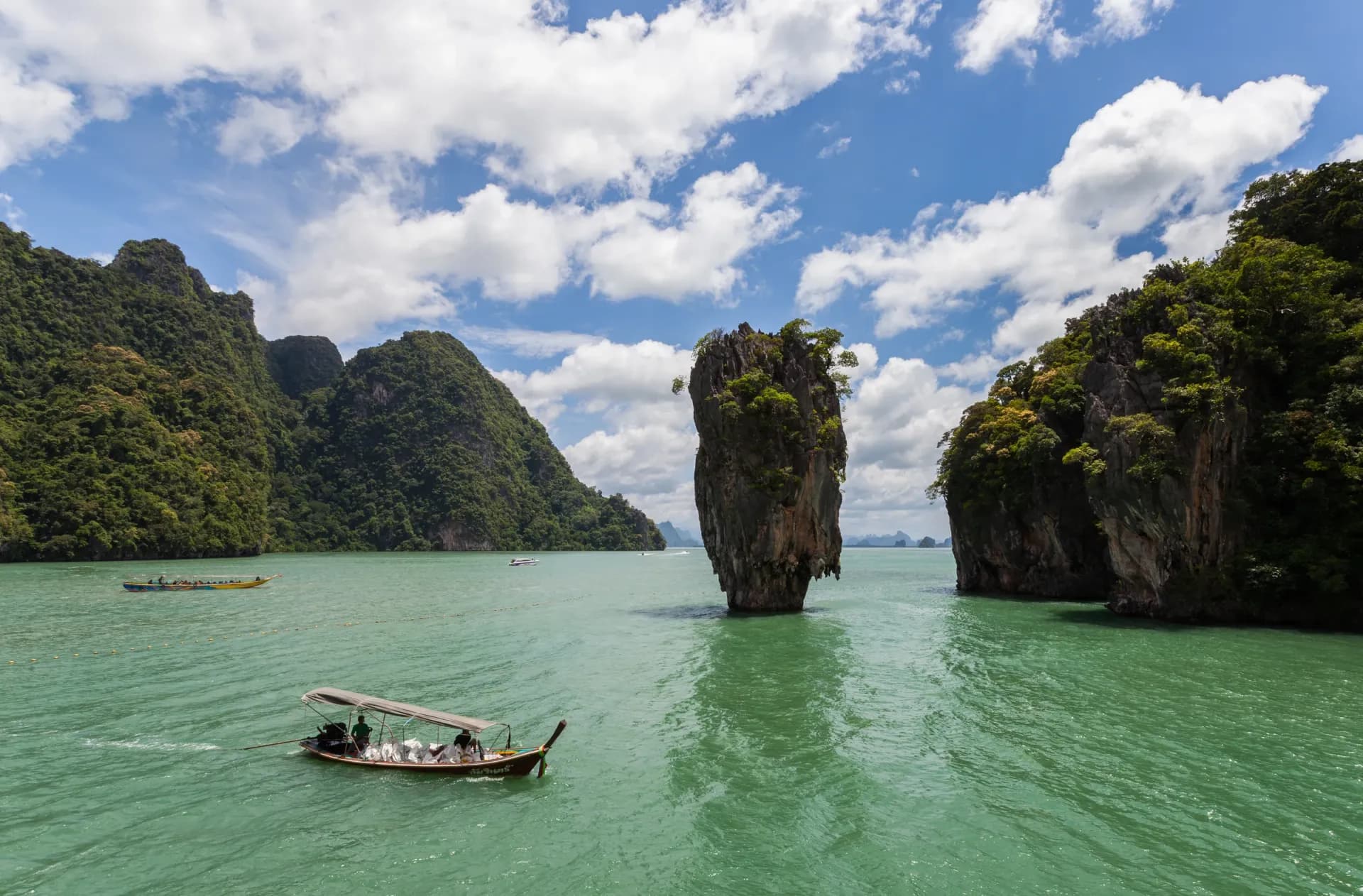 Phuket
Phuket
Thailand
Thailand's largest island turned a former tin-mining economy into Southeast Asia's most developed beach destination, and today Phuket runs the full range in a single trip — limestone karsts rising out of Phang Nga Bay, world-class dive sites reached by speedboat, and a nightlife strip on Patong Beach that never really slows down.
See full guide →Comparing more than one route? See the full transport comparison guide.