Tunisia · Africa
Tunis
The ruins of ancient Carthage, once Rome's most feared rival and powerful enough to nearly conquer the Roman Republic under Hannibal, sit within Tunis' modern suburbs today — a short tram ride from downtown gets you from a 21st-century capital to the remains of a civilization the Romans worked for over a century to fully erase.
Ancient Carthage sits within Tunis' modern suburbs, a short ride on the city's TGM light rail line from downtown. Founded by Phoenician settlers around the 9th century BCE, Carthage grew into a maritime power that rivaled and eventually fought Rome directly across three brutal wars, most famously under the general Hannibal, who marched an army, elephants included, across the Alps to invade Italy directly. Rome finally destroyed the city in 146 BCE, ending the Third Punic War so thoroughly that the site was reportedly salted to prevent regrowth, though historians debate how literally that specific detail should be taken.
Rome later rebuilt Carthage as a major provincial city, and most of what visitors see on-site today, including the Antonine Baths, dates from that Roman-era reconstruction rather than the earlier Phoenician city, since the original Phoenician remains were largely destroyed or built over. Byrsa Hill, Carthage's ancient citadel, now holds a museum surveying both layers of the city's history side by side.
The Bardo Museum, housed in a former Ottoman-era palace in Tunis, holds one of the largest collections of Roman mosaics anywhere in the world, pulled from villas and public buildings across Tunisia's extensive Roman-era archaeological sites. The scale and preservation of the mosaics, some covering entire room-sized floors, reflects just how thoroughly Romanized this part of North Africa became after Carthage's fall.
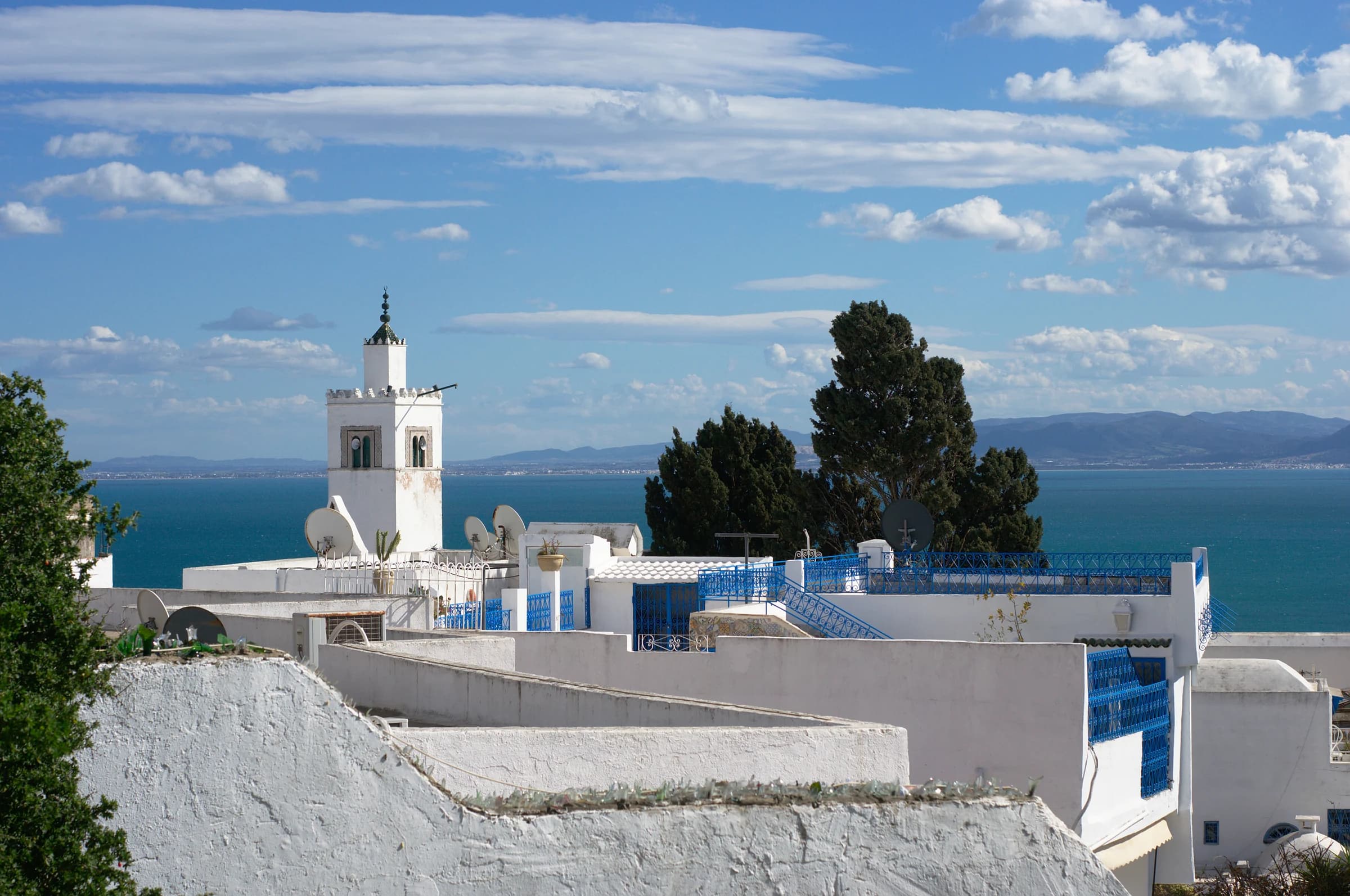
Sidi Bou Said, a clifftop village a short trip from central Tunis, enforces a strict blue-and-white building code that gives it a genuinely distinct look, and its Mediterranean views and narrow, flower-lined streets have drawn artists for over a century, including the painter Paul Klee, whose 1914 visit is often credited with helping put the village on the international art map.
Tunisia holds a distinct place in recent history as the birthplace of the Arab Spring: the self-immolation of street vendor Mohamed Bouazizi in the town of Sidi Bouzid in December 2010 sparked protests that toppled Tunisia's government within weeks and set off a wave of uprisings across the wider Arab world the following year, a legacy Tunisians reference directly when discussing the country's more recent political history.
What a trip here actually costs
$28 / day avg.
- Guesthouse in the Tunis medina
- TGM light rail fares to Carthage and Sidi Bou Said
- Casual Tunisian meals
- Medina wander, free
What to do at this tier
- • Tunis medina wander, UNESCO-listed since 1979, free
- • TGM light rail ride out to Sidi Bou Said and La Marsa along the coast, low-cost fare
- • Zitouna Mosque exterior, one of the oldest and most significant mosques in North Africa
$65 / day avg.
- 3-star hotel in central Tunis
- Bardo Museum and Carthage ruins entry
- Sit-down Tunisian dinners
- Guided Sidi Bou Said half-day tour
What to do at this tier
- • Bardo Museum, holding one of the largest collections of Roman mosaics anywhere in the world
- • Carthage archaeological sites, including the Antonine Baths and Byrsa Hill
- • Guided half-day tour of Sidi Bou Said's blue-and-white streets and clifftop cafes
$170 / day avg.
- 4-5 star hotel in central Tunis
- Private guided Carthage and Bardo Museum tour
- Multi-course dinners at top Tunis restaurants
- Private Sidi Bou Said and coastal day trip
What to do at this tier
- • Private guided full-day tour combining Carthage, the Bardo Museum, and Sidi Bou Said
- • Multi-course dinner at a leading Tunis restaurant blending Tunisian and French technique
- • Private driver for a coastal day trip along the northern Cap Bon peninsula
These are average estimates for planning purposes, not real-time prices — actual costs vary by season, availability, and how far ahead you book.
How to get there
Click anywhere on the world map — any airport works, not just our main hubs.
Click anywhere on the map above — any airport in the world works — to see estimated travel time and cost from there.
Times and prices are planning estimates, not live fares — always check a booking site before you commit. See the full Transport Comparison guide for the general tradeoffs of each mode.
Best time to visit
March-May and September-November avoid the intense summer heat and bring the most comfortable temperatures for walking the medina and Carthage's exposed ruins.
Safety notes
Generally safe for tourists in central Tunis, the medina, and coastal suburbs with standard urban caution; check current travel advisories given Tunisia's periodic political developments since the 2011 revolution.
Visa & currency
Tunisian dinar (TND), a restricted currency that cannot legally be taken out of the country, so plan to spend or reconvert it before departure. Many Western passport holders can enter visa-free for short stays, worth confirming before booking.
Questions people ask before visiting
Is Tunis worth visiting?
Yes, particularly for ancient history — the ruins of Carthage sit within easy reach of the city, the Bardo Museum holds one of the world's largest Roman mosaic collections, and Tunis' own UNESCO-listed medina adds a well-preserved Islamic old city on top of that ancient layer.
What happened to ancient Carthage?
Carthage was a powerful Phoenician city-state that fought Rome across three major wars, including Hannibal's famous campaign crossing the Alps with elephants. Rome finally destroyed the city in 146 BCE at the end of the Third Punic War, then later rebuilt it as a major Roman city — the ruins visible today are mostly from that later Roman period, with earlier Phoenician remains harder to find.
Is Sidi Bou Said worth visiting from Tunis?
Yes — this blue-and-white village on a clifftop overlooking the Mediterranean, a short trip from central Tunis, has drawn artists for over a century, including Paul Klee in 1914, and its strict blue-and-white building code gives it a genuinely distinct look from Tunis itself.
How many days do you need in Tunis?
Three days covers the Tunis medina, the Bardo Museum, and a half-day each for Carthage and Sidi Bou Said, both easily reached by the city's light rail line.
Nearby destinations
 Marrakech
Marrakech
Morocco
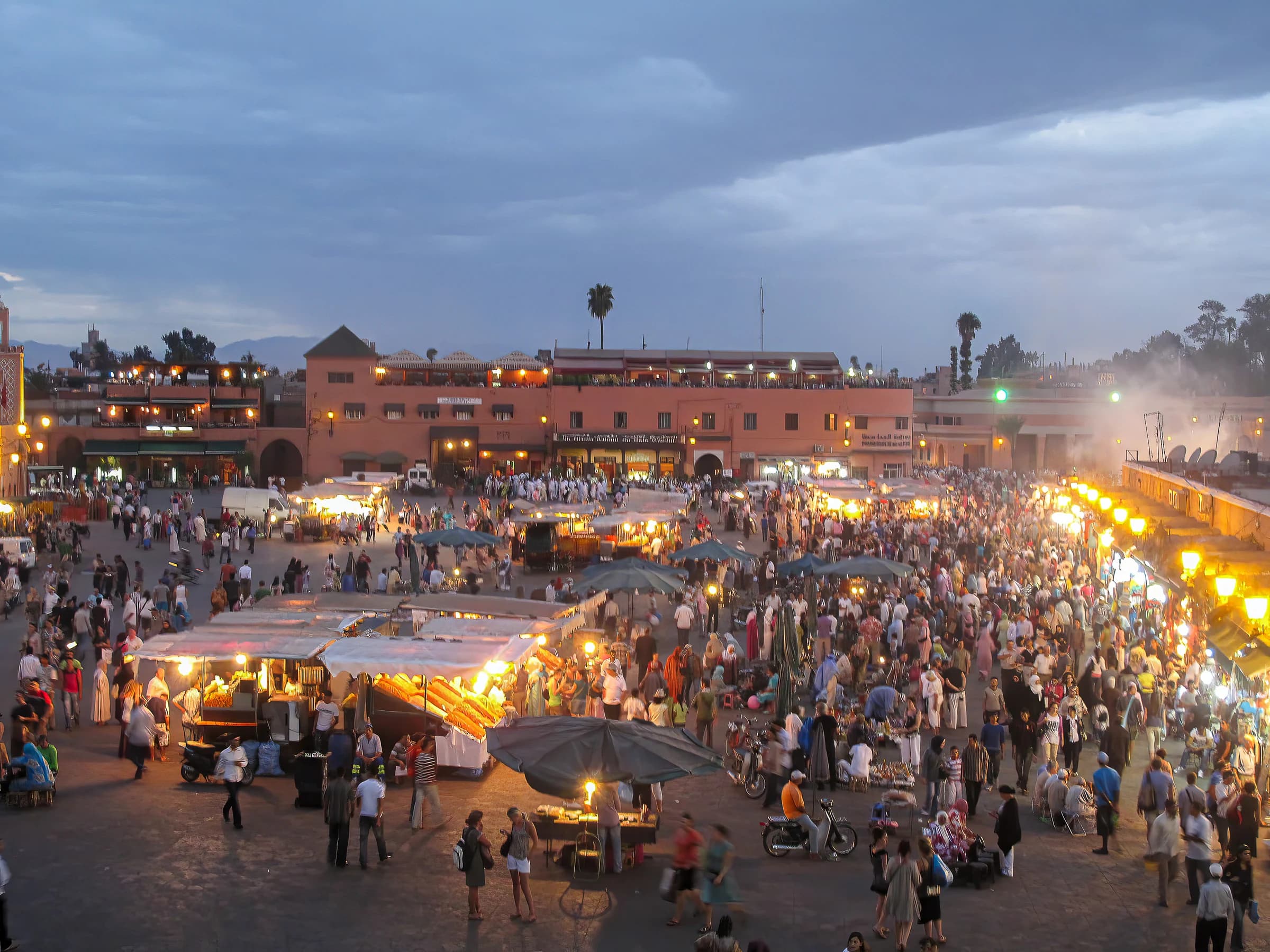
Marrakech's central square, Jemaa el-Fnaa, is recognized by UNESCO not as a building or monument but as a piece of living heritage — the storytellers, musicians, and food stalls that fill it every night are protected the same way a historic building would be.
See full guide →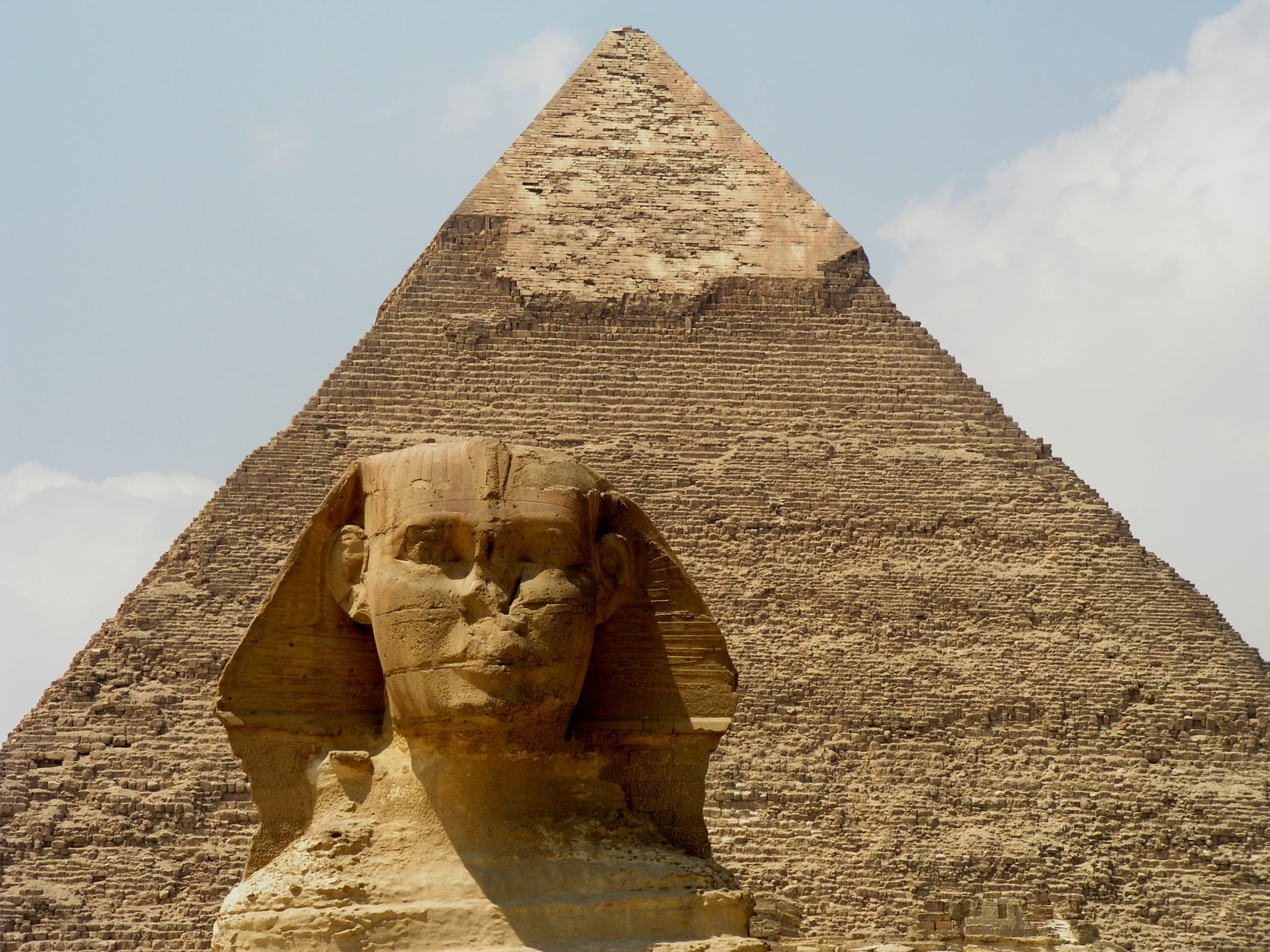 Cairo
CairoCairo
Egypt
The Great Pyramid of Giza sits close enough to Cairo that it functions almost like a city landmark rather than a remote ruin — it's the only one of the ancient world's Seven Wonders still standing, built roughly 4,500 years ago and finished more than two millennia before the Parthenon.
See full guide →Comparing more than one route? See the full transport comparison guide.