Mauritius · Africa
Mauritius
The dodo lived nowhere on Earth except Mauritius, and nowhere else on Earth ever will again — the flightless bird went extinct within a century of the island's first permanent settlement, and it's now more famous globally as a symbol of extinction itself than most people realize it was ever a real, living animal from this one specific island.
The dodo existed nowhere on Earth except Mauritius, and it went extinct within roughly a century of the island's first permanent Dutch settlement in the 1600s. Ground-nesting and flightless, with no natural predators before humans arrived, the bird had no defense against the pigs, rats, and monkeys that settlers introduced, and by the late 17th century it was gone entirely — a species that now exists almost more as a global symbol of extinction than as the real, once-living animal it was.
Le Morne Brabant, a striking basalt mountain rising from the island's southwest coast, carries a very different kind of history. Escaped slaves, known as maroons, used the mountain's caves and inaccessible slopes as refuge through the 18th and early 19th centuries, and UNESCO listed it as a World Heritage Site in 2008 specifically as a monument to that resistance, one of relatively few sites anywhere recognized primarily for a history of slaves actively evading rather than enduring their circumstances.
Mauritius' population reflects centuries of colonial rule under the Dutch, French, and British, plus large-scale indentured labor migration from India after slavery's abolition in 1835, and the result is one of the more genuinely mixed societies anywhere in the world. Hindu temples, Catholic churches, mosques, and Chinese pagodas often sit within a few streets of each other, and the food carries that same layered influence, blending Indian spicing, Chinese stir-fry technique, and French and Creole cooking into something distinctly Mauritian.
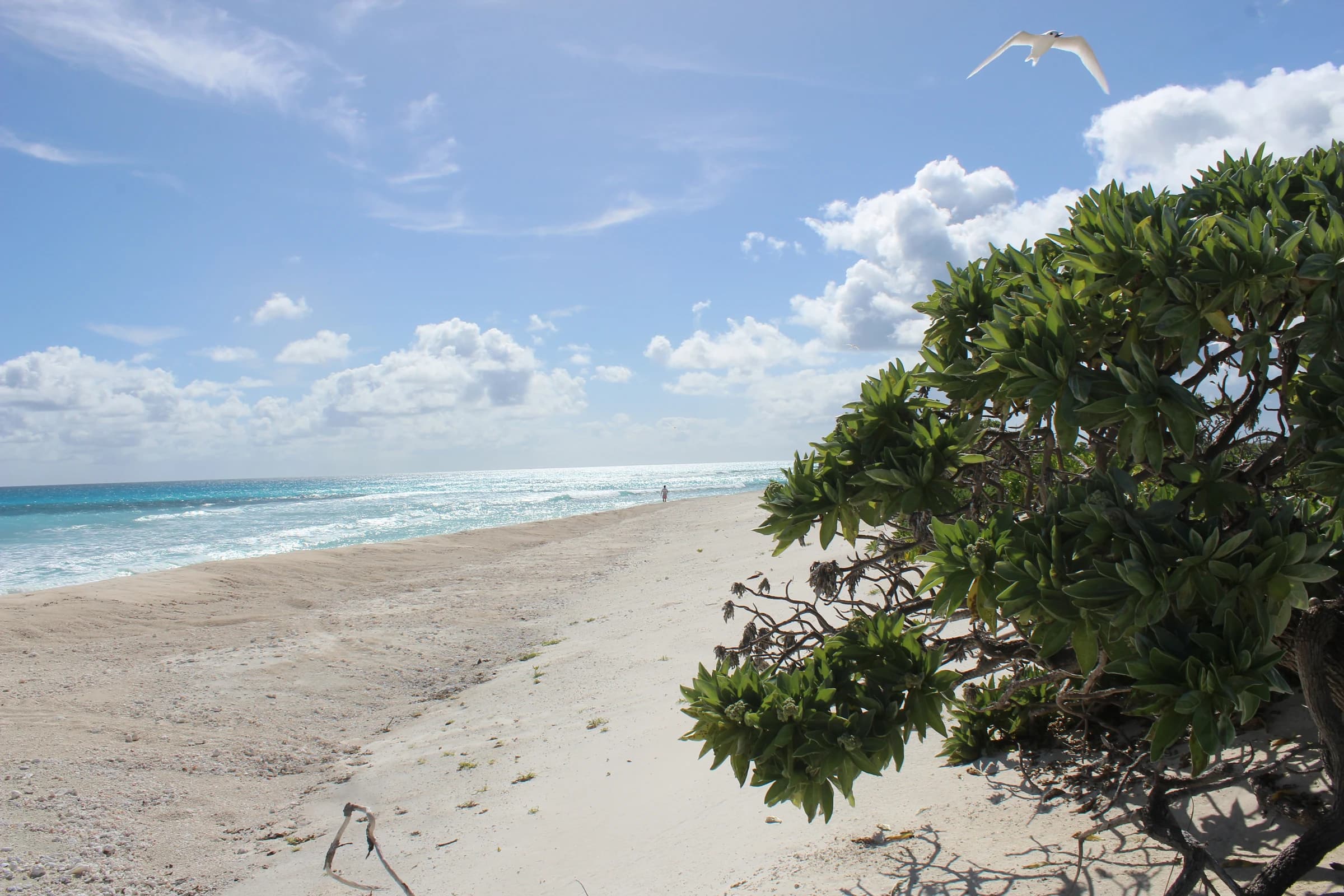
The island's outer reef, encircling most of Mauritius, creates calm, shallow lagoons close to shore that are part of why it's built such a strong reputation for honeymoon and resort travel specifically, offering swimmable, protected water without the stronger currents open-ocean beaches elsewhere often carry.
Inland, the Chamarel Seven Coloured Earths, a small dune area where volcanic soil has weathered into distinct bands of red, brown, violet, and green, and the adjacent Black River Gorges National Park give visitors a reason to leave the coast, at least for an afternoon, in an island itinerary that otherwise centers heavily on the beach.
What a trip here actually costs
$140 / day avg.
- 3-star beachfront hotel
- Rental car or arranged transfers
- Casual Mauritian and Indian-influenced meals
- Chamarel Seven Coloured Earths and waterfall entry
What to do at this tier
- • Chamarel Seven Coloured Earths, a natural dune formation with distinct bands of colored volcanic soil
- • Black River Gorges National Park, hiking trails through Mauritius' largest remaining native forest
- • Public beach access at Flic en Flac or Belle Mare
$380 / day avg.
- 4-5 star beachfront resort
- Private catamaran day trip to Île aux Cerfs
- Multi-course dinners at resort or independent restaurants
- Guided Le Morne Brabant hike
What to do at this tier
- • Guided hike up Le Morne Brabant, the UNESCO-listed mountain tied to Mauritius' maroon slave-resistance history
- • Private catamaran day trip to Île aux Cerfs, a small island off the east coast with a protected lagoon
- • Deep-sea fishing or diving excursion along the island's outer reef
These are average estimates for planning purposes, not real-time prices — actual costs vary by season, availability, and how far ahead you book.
How to get there
Click anywhere on the world map — any airport works, not just our main hubs.
Click anywhere on the map above — any airport in the world works — to see estimated travel time and cost from there.
Times and prices are planning estimates, not live fares — always check a booking site before you commit. See the full Transport Comparison guide for the general tradeoffs of each mode.
Best time to visit
May-December avoids the cyclone season, which runs roughly January-March; the cooler, drier months of May-October are generally considered the most comfortable.
Safety notes
Very safe overall, among the more stable and low-crime destinations covered in this guide, with standard precautions around valuables at beaches and markets.
Visa & currency
Mauritian rupee (MUR). Many nationalities, including most Western passport holders, can enter visa-free for tourism stays of up to several months, worth confirming the exact duration before booking.
Questions people ask before visiting
Is Mauritius worth visiting?
Yes, particularly for beach-focused and honeymoon travelers — the island combines calm, reef-protected lagoons with a genuinely distinct multi-ethnic culture, blending Indian, Creole, Chinese, and French influences that show up clearly in the food and daily life, not just the resorts.
What happened to the dodo?
The dodo, a flightless bird found only on Mauritius, went extinct by the late 1600s, within roughly a century of the island's first permanent Dutch settlement, hunted and outcompeted by introduced animals including pigs, rats, and monkeys that raided its ground-level nests. No dodo has existed anywhere on Earth since.
What is Le Morne Brabant?
A dramatic basalt mountain on Mauritius' southwest coast, UNESCO-listed in 2008 as a symbol of resistance to slavery — escaped slaves, known as maroons, hid in caves on the mountain's slopes and summit through the 18th and early 19th centuries, using its isolation as protection.
How many days do you need in Mauritius?
A week allows real time on the beach alongside a few excursions, including Le Morne, the Chamarel Seven Coloured Earths, and a day trip to Île aux Cerfs. Mauritius sits far enough from most departure points that a shorter trip rarely justifies the flight time.
Nearby destinations
Comparing more than one route? See the full transport comparison guide.