South Africa · Africa
Durban
Durban has the largest population of people of Indian descent of any city outside India itself, a legacy of 19th-century indentured sugar plantation labor — and that history gave South Africa one of its own defining dishes, bunny chow, a hollowed-out loaf of bread filled with curry that Durban's Indian community invented and the whole country has since claimed.
Durban holds the largest population of people of Indian descent anywhere outside India itself, a direct legacy of British colonial policy starting in 1860, when Natal's colonial government began bringing indentured laborers from India to work the region's expanding sugar cane plantations. Many stayed on after their contracts expired, building communities that grew and deepened over generations into one of the most significant Indian diaspora populations anywhere in the world.
That history produced one of South Africa's most distinctive dishes. Bunny chow, a hollowed-out loaf of bread filled with curry, was invented within Durban's Indian community, originally as a practical, portable way to serve and eat curry without cutlery, and it's since become closely associated with the city specifically even as it's spread across the wider country as a recognized South African staple.
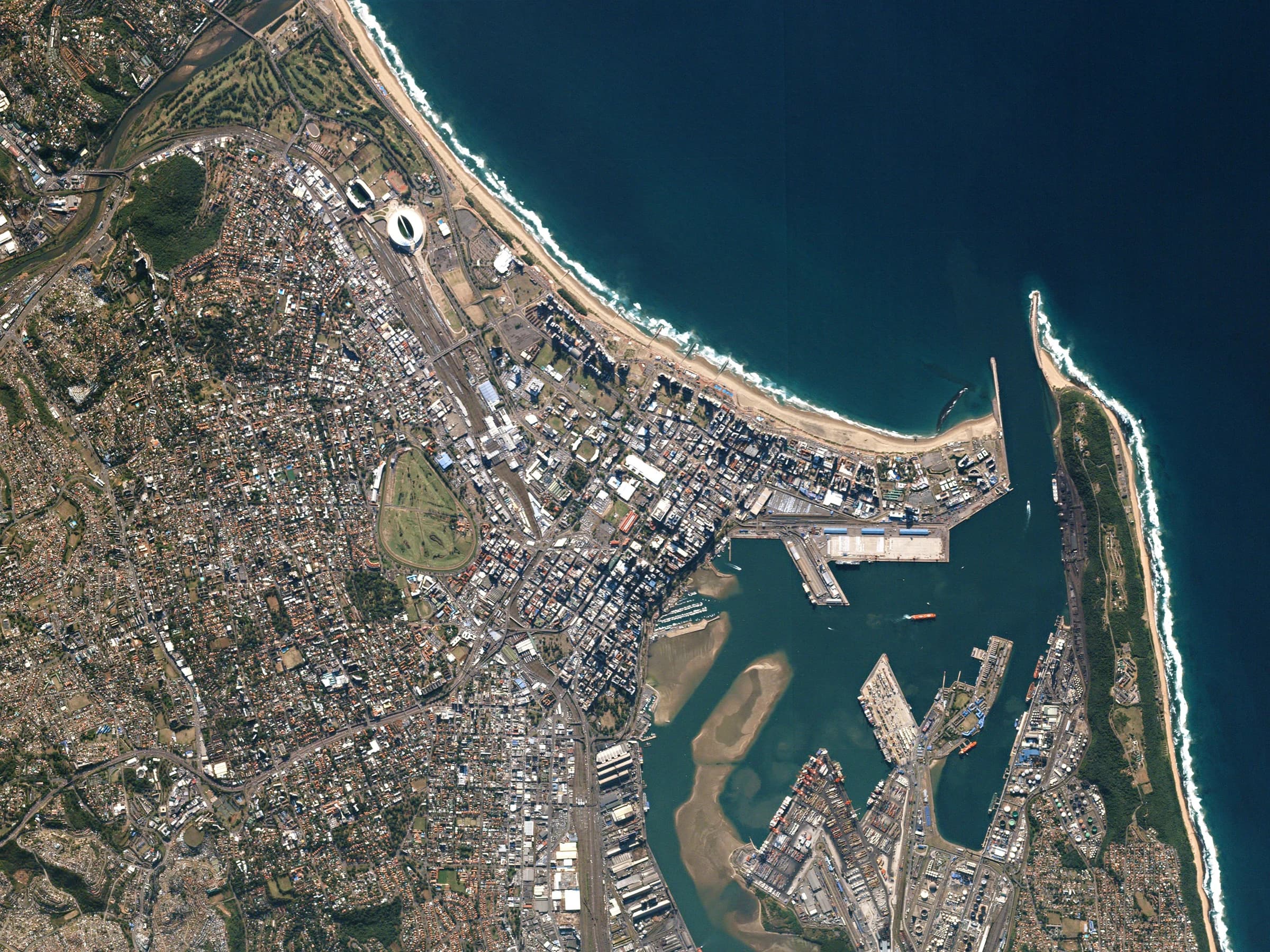
As Africa's largest and busiest port, Durban's economy and layout have long centered on shipping and trade, but its subtropical climate and warm Indian Ocean waters have equally shaped it into one of South Africa's most established beach destinations. The Golden Mile, a beachfront promenade stretching along the city's main swimming beaches, draws both surfers and casual beachgoers year-round given how mild the city's winters stay compared to Cape Town or Johannesburg.
Victoria Street Market, at the heart of Durban's historic Indian quarter, remains a genuine, actively used market rather than a tourist recreation, its stalls selling spices, textiles, and goods much as they have for generations, giving visitors direct, unfiltered access to the culture that shaped so much of the city's identity.
Durban also functions as the practical gateway to KwaZulu-Natal province's wider attractions, including significant Zulu cultural and historical sites and the Drakensberg mountain range, a UNESCO World Heritage Site inland from the city known for dramatic peaks and ancient San rock art, both commonly added as extensions to a Durban-based trip.
What a trip here actually costs
$30 / day avg.
- Guesthouse near the beachfront
- Local minibus taxi fares
- Bunny chow and casual meals
- Golden Mile beach access, free
What to do at this tier
- • Golden Mile beachfront promenade and beach access, free
- • Victoria Street Market, a dense market for spices, textiles, and Indian goods, free to wander
- • Bunny chow at a local eatery, a genuine everyday Durban meal
$75 / day avg.
- 3-star hotel on or near the beachfront
- Victoria Street Market guided visit
- Sit-down Durban curry dinners
- uShaka Marine World entry
What to do at this tier
- • uShaka Marine World, a large aquarium and marine park on the beachfront
- • Guided tour of Durban's Indian quarter and colonial-era architecture
- • Moses Mabhida Stadium, including its cable car to a viewing platform over the city
$190 / day avg.
- 4-5 star beachfront hotel
- Private guided city and cultural history tour
- Multi-course dinners at top Durban restaurants
- Day trip toward the Drakensberg mountains
What to do at this tier
- • Private guided city history tour covering Zulu, Indian, and colonial layers of Durban's past
- • Multi-course dinner at a leading Durban restaurant blending Zulu, Indian, and coastal South African cuisine
- • Private day trip into the Drakensberg mountains, a UNESCO World Heritage Site inland from the city
These are average estimates for planning purposes, not real-time prices — actual costs vary by season, availability, and how far ahead you book.
How to get there
Click anywhere on the world map — any airport works, not just our main hubs.
Click anywhere on the map above — any airport in the world works — to see estimated travel time and cost from there.
Times and prices are planning estimates, not live fares — always check a booking site before you commit. See the full Transport Comparison guide for the general tradeoffs of each mode.
Best time to visit
March-May and September-November avoid the most intense summer humidity; Durban's subtropical climate stays warm year-round, making it a viable beach destination even in winter.
Safety notes
Generally safe within the beachfront and main tourist areas with standard urban caution; use registered transport rather than walking long distances at night, similar precautions to other major South African cities.
Visa & currency
South African rand (ZAR). Many Western passport holders can enter visa-free for short stays, worth confirming before booking.
Questions people ask before visiting
Is Durban worth visiting?
Yes — as Africa's largest and busiest port city, Durban combines a genuine subtropical beach culture with a distinctly layered Zulu, Indian, and colonial history that shows up clearly in its food, architecture, and neighborhoods, giving it a different character from Cape Town or Johannesburg.
Why does Durban have such a large Indian population?
Britain brought indentured laborers from India to Natal starting in 1860 to work the region's sugar cane plantations, and many stayed on after their contracts ended, building communities that grew over generations. Durban today holds the largest population of people of Indian descent of any city outside India itself.
What is bunny chow?
A South African dish invented by Durban's Indian community, consisting of a hollowed-out loaf of bread filled with curry, originally developed as a practical, portable way to serve and eat curry without utensils. It's become one of South Africa's most recognizable dishes, closely associated with Durban specifically.
How many days do you need in Durban?
Two to three days covers the Golden Mile beachfront, the Victoria Street Market's Indian quarter, and uShaka Marine World. Durban also works as a gateway to the KwaZulu-Natal region's Zulu cultural sites and the Drakensberg mountains further inland.
Nearby destinations
 Cape Town
Cape Town
South Africa
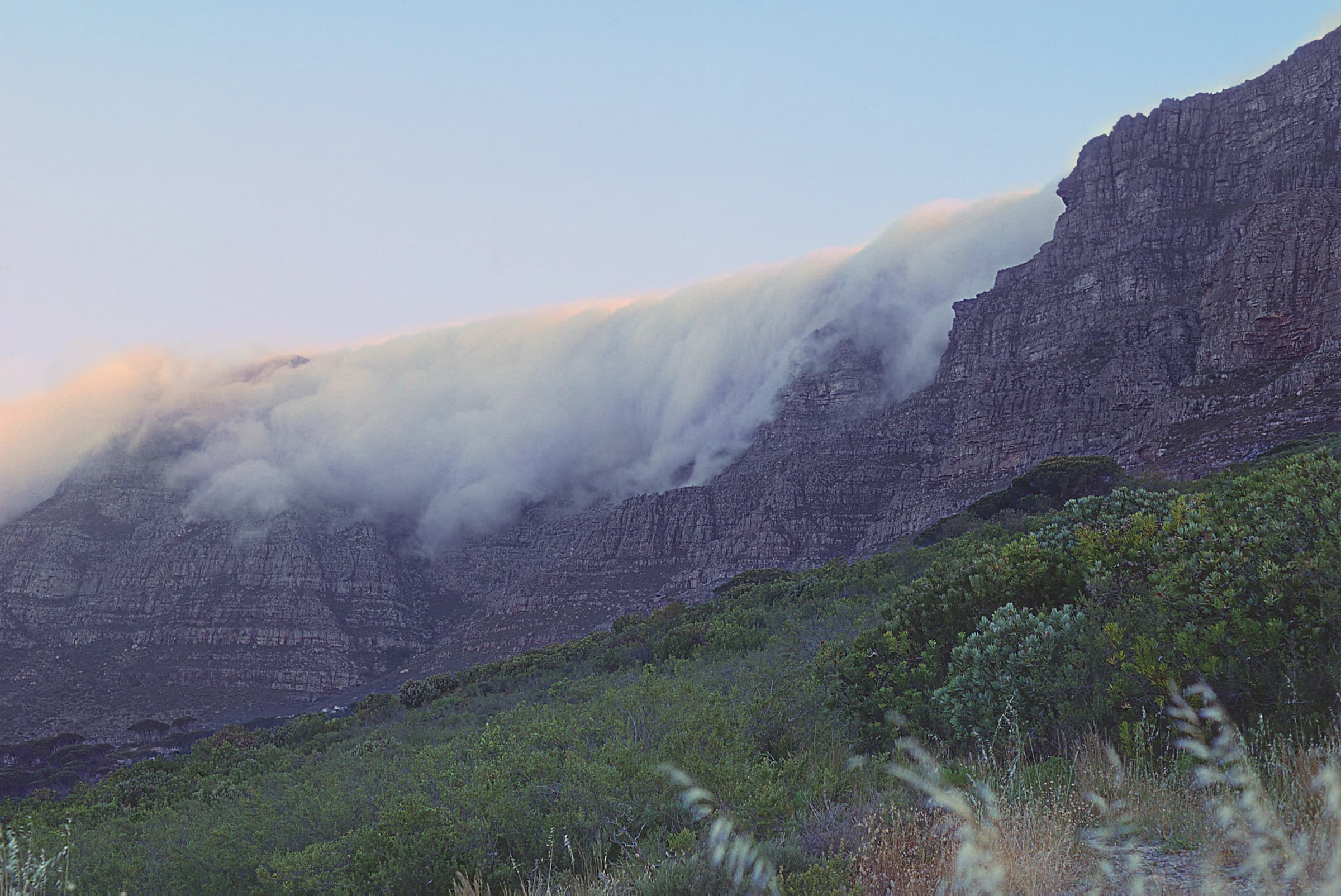
Table Mountain is roughly six times older than the Himalayas, formed over 260 million years before those mountains existed, and it still anchors Cape Town's skyline so completely that the city planned its entire waterfront around keeping the view of it unobstructed.
See full guide →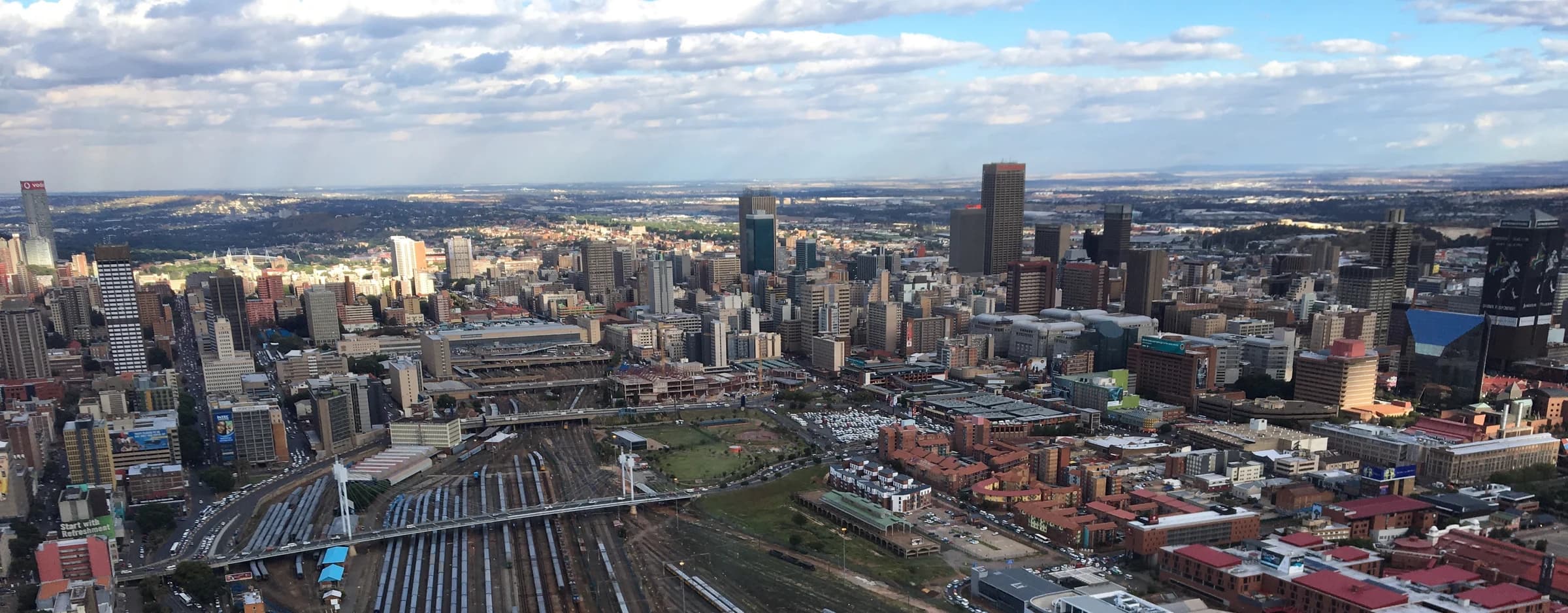 Johannesburg
Johannesburg
South Africa
Johannesburg didn't exist before 1886 — the city was founded almost overnight after gold was discovered on the Witwatersrand ridge, and that gold rush origin still shapes a metropolis with no old colonial core to speak of, built instead around mining wealth and, later, the front lines of the anti-apartheid movement.
See full guide →Comparing more than one route? See the full transport comparison guide.