Ghana · Africa
Cape Coast
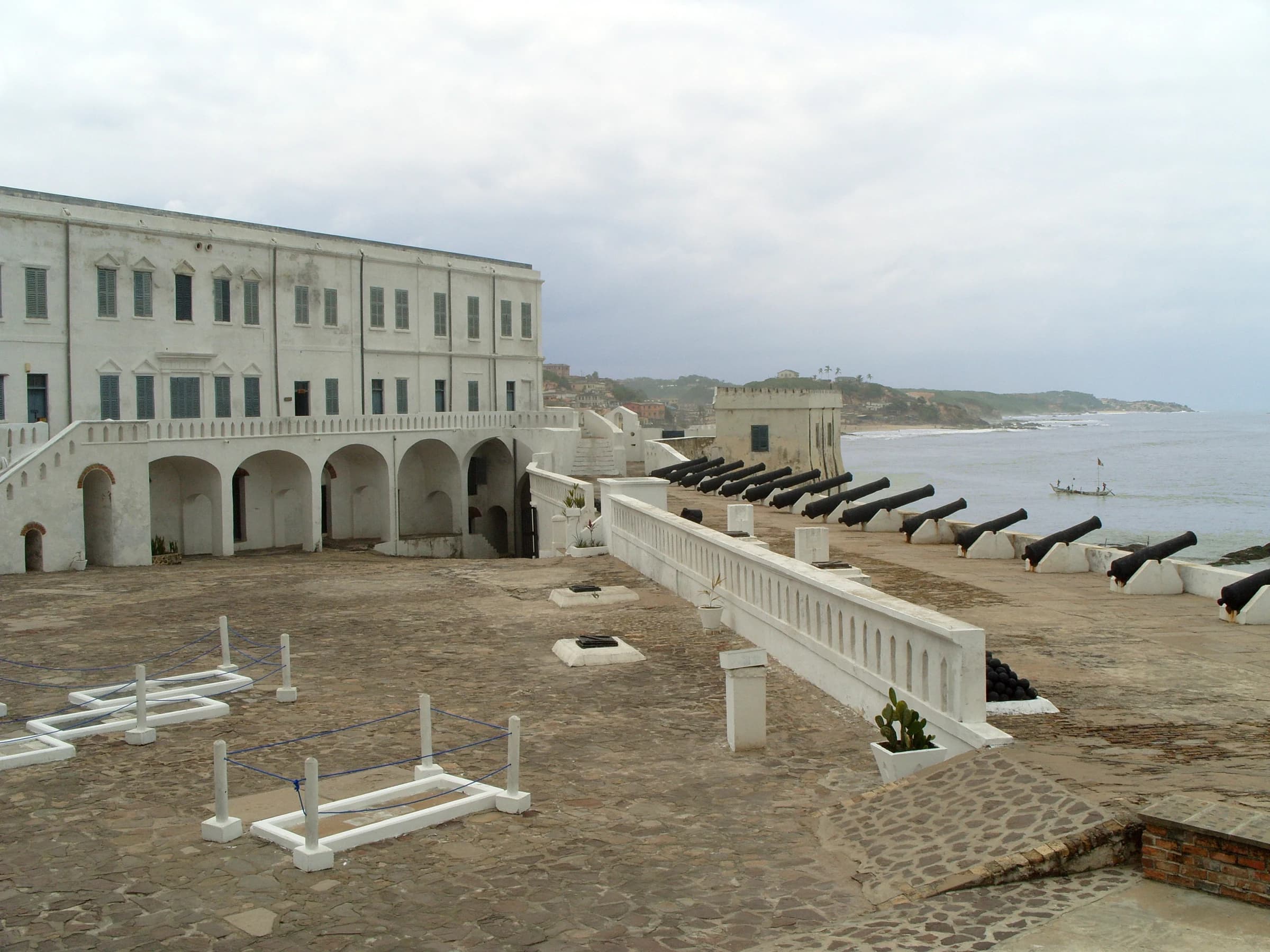
Cape Coast Castle's dungeons, where thousands of enslaved people were held before being forced through the Door of No Return, sit directly beneath what was once a church and living quarters for the fort's traders — a single building holding both routine daily worship and one of history's greatest atrocities, floor by floor.
Cape Coast Castle's physical layout tells its own brutal story before a single guide says a word. The dungeons, where thousands of enslaved people were held in overcrowded, unsanitary conditions for weeks or months awaiting shipment, sit directly beneath what functioned as a church and living quarters for the European traders who ran the fort, a vertical arrangement of routine daily life stacked directly above one of history's great atrocities.
Swedish traders built the original fort in 1653, and control passed through Danish and Dutch hands before Britain took over in 1664, eventually making it the administrative headquarters of British colonial Gold Coast, the territory that later became independent Ghana. Regardless of which European power held it at any given time, the castle functioned continuously as a major node in the transatlantic slave trade, one of roughly 40 such fortified trading posts built along the West African coast.
The Door of No Return, a narrow opening leading from the dungeons directly to the shore, marks the final point on African soil many captives ever touched before being forced onto boats and out to ships bound for the Americas. Walking through it today, in the direction those thousands of people were forced to walk, remains the emotional core of nearly every visitor's experience of the castle, and UNESCO's 1979 World Heritage listing of the site was made specifically to preserve and present this history directly rather than soften it.
Elmina Castle, a short drive from Cape Coast and built by the Portuguese in 1482, predates Cape Coast Castle by well over a century and ranks as the oldest European-built structure still standing anywhere in Sub-Saharan Africa. Many visitors combine both castles into a single day, given how closely they sit together and how directly their histories intertwine.
Cape Coast today functions as a genuine working coastal town, with an active fishing harbor and a university, existing alongside rather than being defined solely by the castle's heavy history, a contrast that visitors often note as they move between the fort's dungeons and the ordinary daily rhythm of the town surrounding it.
What a trip here actually costs
$30 / day avg.
- Guesthouse in central Cape Coast
- Local tro-tro shared-van fares
- Casual Ghanaian meals
- Cape Coast Castle guided tour and entry
What to do at this tier
- • Cape Coast Castle guided tour, covering the dungeons and Door of No Return, entry fee applies
- • Cape Coast fishing harbor, a working harbor giving a sense of the town's ongoing coastal life
- • Cape Coast town center wander, free
$70 / day avg.
- 3-star hotel near the coast
- Guided Cape Coast and Elmina Castle day trip
- Sit-down Ghanaian dinners
- Kakum National Park canopy walk
What to do at this tier
- • Elmina Castle, an even older Portuguese-built fort a short drive from Cape Coast, dating to 1482
- • Kakum National Park canopy walk, a rainforest treetop walkway roughly 30 minutes inland
- • Guided full-day tour combining both castles and their distinct histories
These are average estimates for planning purposes, not real-time prices — actual costs vary by season, availability, and how far ahead you book.
How to get there
Click anywhere on the world map — any airport works, not just our main hubs.
Click anywhere on the map above — any airport in the world works — to see estimated travel time and cost from there.
Times and prices are planning estimates, not live fares — always check a booking site before you commit. See the full Transport Comparison guide for the general tradeoffs of each mode.
Best time to visit
November-March is drier; the rest of the year sees heavier rain typical of Ghana's coastal forest climate.
Safety notes
Generally safe for tourists with standard urban caution; the subject matter of a Cape Coast Castle visit is genuinely heavy, worth preparing for emotionally rather than treating as a casual sightseeing stop.
Visa & currency
Ghanaian cedi (GHS). Most visitors need a visa arranged in advance, though Ghana has moved to ease requirements for fellow African Union nationals in recent years — apply well ahead of the trip.
Questions people ask before visiting
Is Cape Coast Castle worth visiting?
Yes — it's one of the most significant and directly presented sites related to the transatlantic slave trade anywhere in West Africa, a UNESCO World Heritage Site whose dungeons and Door of No Return give visitors an unflinching, physical sense of the trade's mechanics and scale.
Who built Cape Coast Castle?
Swedish traders built the original fort in 1653, and control passed through Danish and Dutch hands before Britain took it over in 1664, using it as the administrative headquarters of British colonial Gold Coast for centuries. Throughout, it functioned as a major hub in the transatlantic slave trade regardless of which European power controlled it.
What is the Door of No Return at Cape Coast Castle?
A narrow doorway leading directly from the castle's dungeons to the shore, through which enslaved people were forced onto boats and out to ships bound for the Americas. It's the final point many captives ever touched on African soil, and it remains the emotional and historical center of a visit to the castle.
How many days do you need in Cape Coast?
One full day covers Cape Coast Castle in depth, and many visitors add nearby Elmina Castle, an even older Portuguese-built fort a short drive away, as part of the same trip.
Nearby destinations
Comparing more than one route? See the full transport comparison guide.