Bermuda · North America
Hamilton
Bermuda sits roughly 1,050 kilometers from the nearest point of mainland North America, closer to New York than most people assume yet genuinely isolated in the open Atlantic, kept safe from the worst hurricane damage by a coral reef system so extensive it's wrecked hundreds of ships over five centuries.
Bermuda sits alone in the open Atlantic, roughly 1,050 kilometers from the nearest point of the North American mainland, closer to New York than most people assume from how the island gets grouped conversationally with the Caribbean, despite sitting considerably further north and outside that region entirely. That isolation, combined with a genuinely extensive surrounding coral reef system, has produced both the island's defining natural hazard and one of its more unusual tourist attractions: the reefs have claimed several hundred documented shipwrecks over roughly five centuries of transatlantic shipping traffic, many now popular snorkeling and dive sites.
The island's cultural shorthand, the "Bermuda Triangle," a supposed zone of mysterious ship and aircraft disappearances, remains a well-known piece of pop culture despite lacking meaningful statistical support; major maritime insurers and safety researchers have found no disproportionate disappearance rate in the region compared to other similarly trafficked stretches of ocean. It persists regardless as a permanent, if largely unserious, part of how outsiders talk about Bermuda.
Hamilton, the capital, anchors an island whose actual character runs closer to reserved British colonial tradition than tropical resort culture, a legacy of Bermuda's status as Britain's oldest remaining overseas territory. Pastel-colored buildings with distinctive white stepped roofs, designed originally to collect rainwater, line the harbor, and the pace throughout the island stays notably more formal than the Caribbean islands it's often mentally lumped in with.
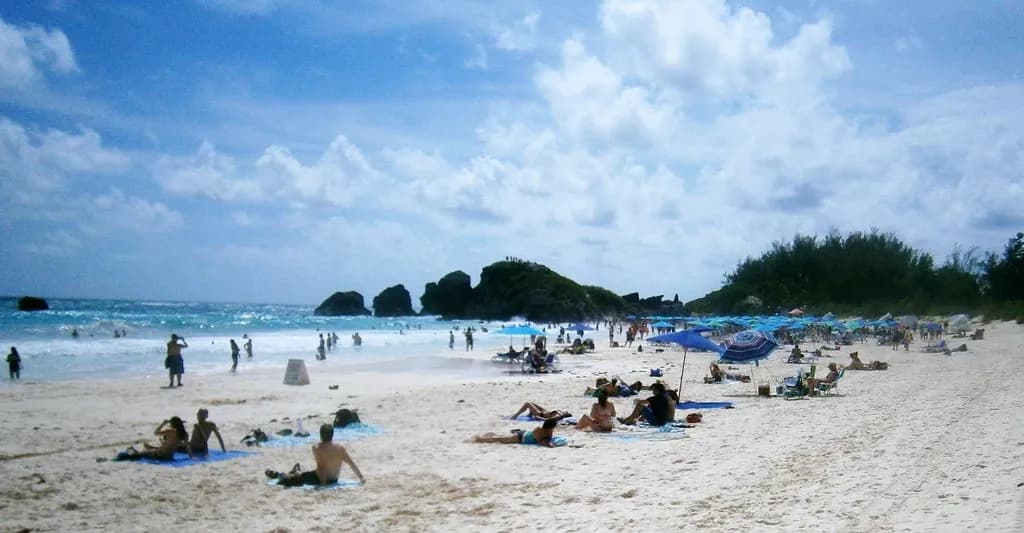
Horseshoe Bay's beach delivers Bermuda's signature natural feature directly: sand with a genuine, if subtle, pink tint, produced by crushed shells of microscopic marine organisms called foraminifera mixing with coral fragments, most visible up close in strong sunlight. The Crystal and Fantasy Caves, a network of limestone caverns discovered by two boys chasing a lost cricket ball in 1907, add a striking underground counterpoint accessible on a straightforward guided tour.
Bermuda's cost of living ranks among the highest anywhere in the world, driven by its remoteness and a wealthy resident population tied to the island's major offshore insurance and reinsurance industry, and that reality shows up directly in travel costs here, worth budgeting for honestly as a premium, rather than a budget-Caribbean-adjacent, destination.
What a trip here actually costs
$400 / day avg.
- Hotel or resort in Hamilton
- Scooter or taxi transport (rental cars are restricted for visitors)
- Restaurant meals
- Crystal Caves guided tour
What to do at this tier
- • Horseshoe Bay pink sand beach, free
- • Crystal and Fantasy Caves guided tour
- • Royal Naval Dockyard historic fortress
- • Snorkeling among shipwrecks in the surrounding reef
These are average estimates for planning purposes, not real-time prices — actual costs vary by season, availability, and how far ahead you book.
How to get there
Click anywhere on the world map — any airport works, not just our main hubs.
Click anywhere on the map above — any airport in the world works — to see estimated travel time and cost from there.
Times and prices are planning estimates, not live fares — always check a booking site before you commit. See the full Transport Comparison guide for the general tradeoffs of each mode.
Best time to visit
May-October offers the warmest water and most reliable weather for beaches; the shoulder months stay mild but cooler for swimming.
Safety notes
Very safe with low crime rates; the main practical consideration is cost rather than security.
Visa & currency
Bermudian dollar (BMD), pegged 1:1 to the US dollar, which is also widely accepted. Many nationalities receive visa-free entry for short stays; confirm current requirements before booking.
Questions people ask before visiting
Is Bermuda expensive?
Yes, consistently among the most expensive travel destinations in the Western Hemisphere, driven by its remote location, high cost of importing nearly everything, and a wealthy resident population tied to the island's significant offshore finance and insurance industry. Budgeting accordingly matters more here than for most Caribbean-adjacent destinations.
Why is Bermuda's sand pink?
Bermuda's beaches get their pink tint from crushed shells of microscopic marine organisms called foraminifera, mixed into the sand along with coral fragments. The effect is most visible up close and in strong sunlight, subtle rather than uniformly bright pink, but genuinely distinct from typical white Caribbean sand.
Is the Bermuda Triangle a real danger?
No, the 'Bermuda Triangle' is a popular myth without meaningful statistical support; the region doesn't show disproportionately higher rates of ship or aircraft disappearance than comparably trafficked ocean areas elsewhere, according to major insurance and maritime safety data. It remains a well-known piece of pop culture attached to the island regardless.
How do you get to Bermuda?
Direct flights connect Bermuda to several major East Coast US cities, typically 2 to 2.5 hours, along with London and a few Canadian cities. There's no ferry or practical boat option from the mainland given the distance across open ocean.
Nearby destinations
 Nassau
Nassau
Bahamas
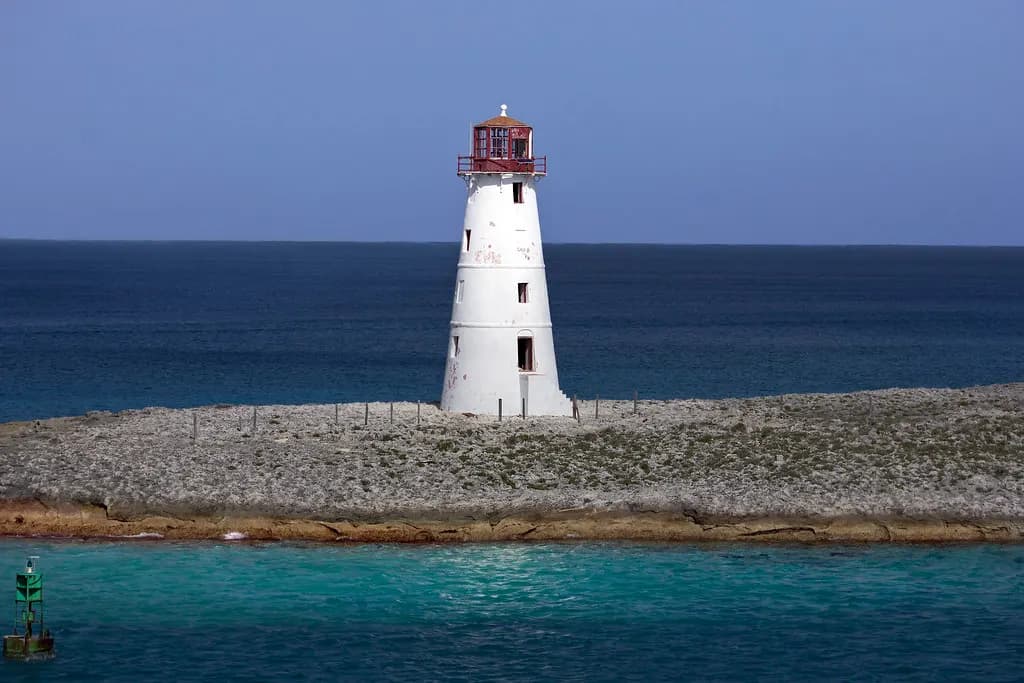
The Bahamas has a beach where wild pigs swim out to greet arriving boats — Exuma's swimming pigs are a short flight from Nassau, and nobody fully agrees on how they got there, though the leading theory is far less romantic than the tourist photos suggest.
See full guide →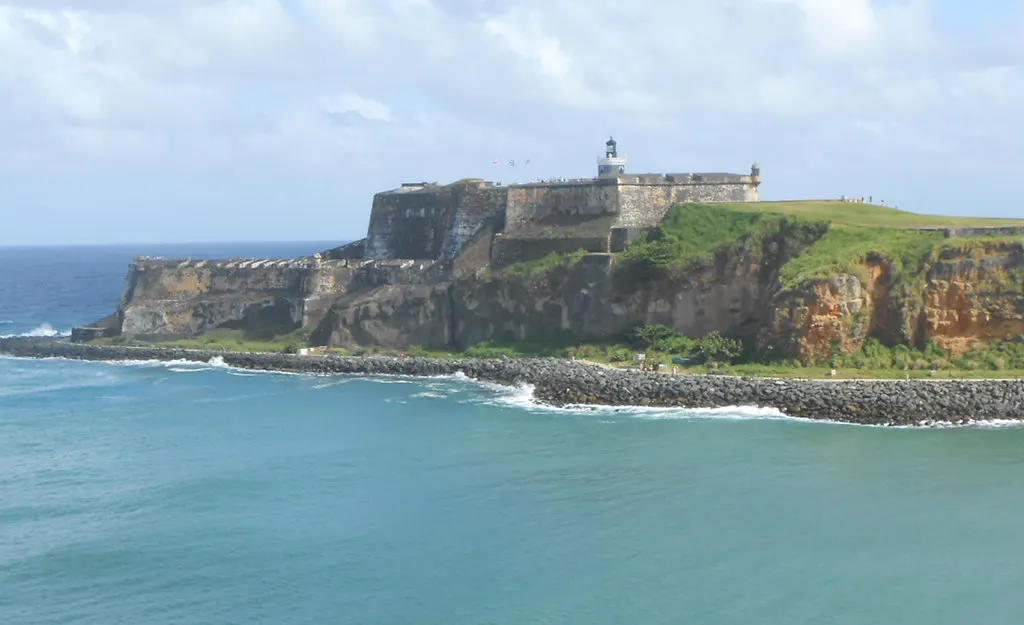 San Juan
San Juan
Puerto Rico
Old San Juan's fortress walls have defended the same seven blocks for over 400 years without ever being taken by force in a direct siege — not by Francis Drake in 1595, not by the Dutch in 1625, not by the British in 1797 — making it one of the most successfully defended cities in the Americas.
See full guide →Comparing more than one route? See the full transport comparison guide.