Italy · Europe
Turin
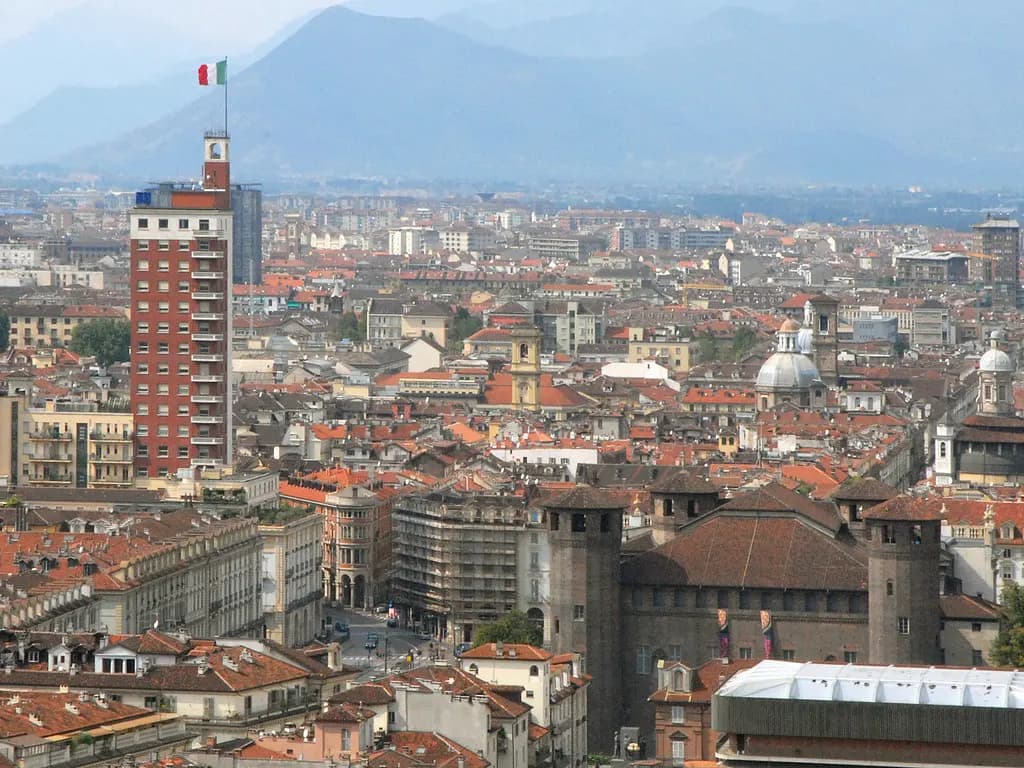
Turin was Italy's first capital, its royal family's former seat, and the birthplace of Fiat and Juventus — and somehow it remains one of the most overlooked major cities in the country.
Turin held a role in Italian history that its current reputation doesn't quite reflect: it was the first capital of unified Italy from 1861 to 1865, seat of the House of Savoy for centuries before that, and later the birthplace of Fiat and Juventus Football Club — a genuine industrial and cultural powerhouse that somehow remains one of the country's more overlooked major cities on international itineraries dominated by Rome, Florence, Venice, and Milan.
The Royal Palace of Turin anchors a wider complex of Savoy residences collectively UNESCO-listed, reflecting the dynasty's centuries of rule — grand enough in scale and preservation that it rivals royal complexes far more commonly associated with European monarchy.
The Egyptian Museum holds the largest collection of Egyptian antiquities anywhere outside Cairo itself, a legacy of 18th- and 19th-century Savoy-funded excavations and acquisitions, and it draws serious Egyptology scholars alongside casual visitors — a genuinely world-class collection in a city most travelers don't associate with ancient Egypt at all.
Turin Cathedral holds the Shroud of Turin, a linen cloth some believe bears the image of Jesus after burial, though it's rarely on public display — expositions happen only occasionally, sometimes years apart. The Holy Shroud Museum nearby keeps a detailed, permanently displayed replica and exhibition for the many visitors who arrive hoping to see the real thing and can't.
Turin's café culture runs deep and specific: the city claims the invention of gianduja chocolate-hazelnut spread (the ancestor of Nutella) and a strong claim to vermouth's popularization, and its grand 19th-century cafés remain genuinely operating institutions rather than tourist-oriented recreations. With the Alps visible from the city on clear days and prices well below Milan's, Turin rewards travelers willing to look past Italy's more obvious first stops.
What a trip here actually costs
$50 / day avg.
- Hostel near the center
- Public transit day pass
- Café lunches and aperitivo snacks
- Free wander through the Royal Palace piazzas
What to do at this tier
- • Piazza San Carlo and the Royal Palace exteriors, free
- • Historic café culture at one of Turin's 19th-century grand cafés, the birthplace of gianduja chocolate and vermouth cocktails
- • Aperitivo hour, a real Turin tradition of free snacks with an evening drink
$110 / day avg.
- 3-star hotel near the center
- Egyptian Museum and Royal Palace entry
- Sit-down Piedmontese dinners
- Mole Antonelliana observation deck ticket
What to do at this tier
- • Egyptian Museum, the largest collection of Egyptian antiquities outside Cairo
- • Royal Palace and the wider Savoy royal residences complex
- • Mole Antonelliana, a striking landmark tower housing Italy's national cinema museum
$240 / day avg.
- 4-5 star hotel near Piazza San Carlo
- Private guided royal history and museum tour
- Multi-course Piedmontese tasting menu with regional wine pairing
- Private day trip into the Alps or Langhe wine region
What to do at this tier
- • Private guided tour connecting Turin's royal history with its industrial-era Fiat legacy
- • Multi-course Piedmontese tasting menu paired with regional Barolo or Barbaresco wine
- • Private day trip into the nearby Alps or the Langhe wine region
These are average estimates for planning purposes, not real-time prices — actual costs vary by season, availability, and how far ahead you book.
How to get there
Click anywhere on the world map — any airport works, not just our main hubs.
Click anywhere on the map above — any airport in the world works — to see estimated travel time and cost from there.
Times and prices are planning estimates, not live fares — always check a booking site before you commit. See the full Transport Comparison guide for the general tradeoffs of each mode.
Best time to visit
April-June and September-October bring mild, comfortable weather with the Alps often visible from the city on clear days.
Safety notes
Very safe overall. Standard urban caution is enough almost everywhere in the city.
Visa & currency
Euro. Standard Schengen 90-day visa-free rule applies for most Western passport holders.
Questions people ask before visiting
Is Turin worth visiting?
Yes, and it's genuinely underrated relative to Rome, Florence, or Venice — it was Italy's first capital after unification, has a real royal palace complex, one of Europe's most significant Egyptian antiquities museums outside Egypt, and an Alpine backdrop most Italian cities can't match.
Turin or Milan — which should I visit?
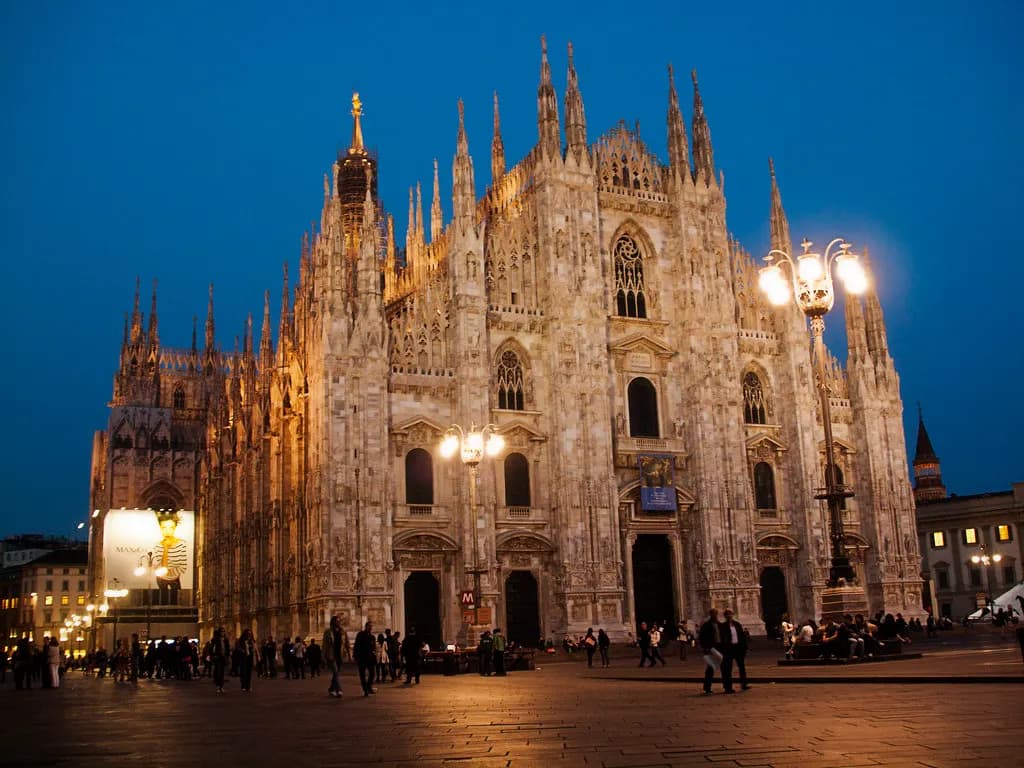
Milan is bigger, more fashion- and business-focused, with more famous individual sights like the Duomo. Turin is calmer, more affordable, and arguably more architecturally cohesive as a former royal capital, with the Alps visible from the city center on a clear day — a real contrast Milan doesn't offer.
Can I see the Shroud of Turin?
Rarely — the shroud itself, a linen cloth some believe bears the image of Jesus, is kept in Turin Cathedral but is only put on public display during infrequent special expositions, sometimes years apart. A high-resolution replica and detailed exhibition are on permanent display at the Holy Shroud Museum nearby.
Is Turin cheap to visit?
Yes, noticeably more affordable than Milan or the major tourist cities like Venice and Florence, while offering a comparable density of museums, architecture, and food culture.
How many days do you need in Turin?
Two days covers the Royal Palace complex, the Egyptian Museum, and the historic cafés. A third day allows the Mole Antonelliana's cinema museum and observation deck, or a day trip into the nearby Alps.
Nearby destinations
 Milan
MilanMilan
Italy
Leonardo da Vinci's Last Supper is painted directly onto a monastery wall, not canvas, which means it can't be moved, can't be restored the normal way, and only lets in 30 visitors at a time for exactly 15 minutes each.
See full guide → Nice
NiceNice
France
The city's most famous seafront promenade is named after the English aristocrats who funded it in the 1820s, not the French — Nice has been a foreign winter retreat for longer than it's been a French tourist destination.
See full guide →Comparing more than one route? See the full transport comparison guide.