France · Europe
Lyon
Silk workers built hidden passageways straight through Lyon's apartment buildings so bolts of fabric would never get rained on between workshop and warehouse — locals still use them as shortcuts today.
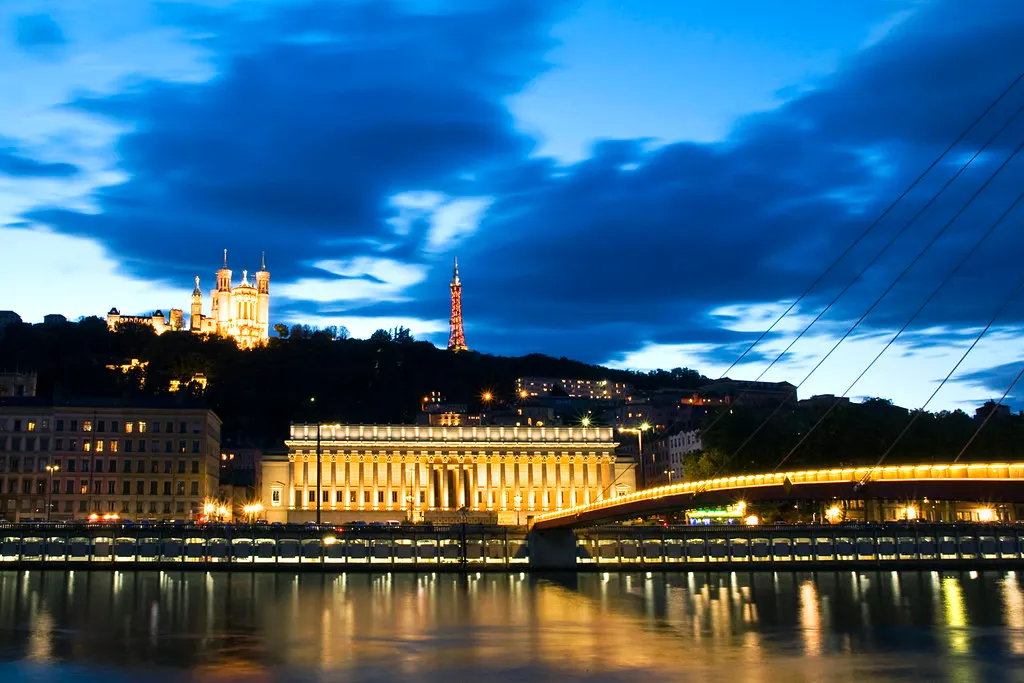
Lyon's traboules are the city's most distinctive architectural quirk: hidden passageways cutting straight through buildings and courtyards, connecting one street to another without going around the block. They date largely to the city's centuries as a major silk-weaving center — canuts, the silk workers, used them to move bolts of fabric from hillside workshops down to riverside warehouses without exposing the material to rain. Hundreds still exist, concentrated in Vieux Lyon and the Croix-Rousse hill, and locals use many of them as everyday shortcuts rather than tourist curiosities.
France's own food culture widely credits Lyon, not Paris, as the country's gastronomic capital, a reputation built on bouchons — small, traditional bistros serving hearty regional dishes like quenelles (pike dumplings in a rich sauce) and andouillette (a coarse-cut tripe sausage that's an acquired taste even for many French visitors). The city backs the reputation up with numbers: Lyon has one of the highest concentrations of Michelin-recognized restaurants per capita anywhere in France.
Vieux Lyon, the old town at the base of Fourvière hill, is one of the largest Renaissance districts in Europe, largely intact thanks to Lyon's wealth as a silk and banking center in the 15th and 16th centuries. Above it, the Basilica of Notre-Dame de Fourvière — a striking 19th-century church built in a mix of Romanesque and Byzantine styles — overlooks the city from the same hill where the Romans first founded Lugdunum, and the basilica grounds include the remains of a genuine Roman theater still used for performances today.
Each December, Lyon hosts the Fête des Lumières, a festival of light installations across the city that traces back to a spontaneous 1852 tradition of placing candles in windows to honor the Virgin Mary — it has since grown into one of the larger light festivals in Europe, drawing crowds well beyond what the rest of the year sees.
Sitting at the confluence of the Rhône and Saône rivers, Lyon works well as a food-focused counterpoint to a Paris trip, or as a base for exploring Beaujolais wine country, less than an hour north by train.
What a trip here actually costs
$55 / day avg.
- Hostel near Vieux Lyon or Part-Dieu
- Metro and funicular day pass
- Bouchon lunches, market snacks
- Free wander through Vieux Lyon and the traboules
What to do at this tier
- • Walk Vieux Lyon and duck through the traboules, the hidden silk-worker passageways, free
- • Fourvière Basilica exterior and viewpoint over the city, free
- • Les Halles de Lyon Paul Bocuse market wander, browsing is free
$120 / day avg.
- 3-star hotel near Vieux Lyon or Presqu'île
- Guided traboules and silk district walk
- Sit-down bouchon dinners
- Fourvière basilica and Roman theater visit
What to do at this tier
- • Guided traboules and Croix-Rousse silk district walking tour
- • Fourvière's Roman theater and archaeological museum, remnants of Roman Lugdunum
- • Sit-down dinner at a traditional bouchon, quenelles or andouillette
$260 / day avg.
- 4-5 star hotel near the Presqu'île
- Multi-course tasting menu at a Michelin-starred restaurant
- Private culinary and traboules guided tour
- Private day trip into Beaujolais wine country
What to do at this tier
- • Multi-course tasting menu at one of Lyon's Michelin-starred restaurants
- • Private guided food and traboules tour with a local culinary focus
- • Private day trip into Beaujolais wine country, less than an hour north
These are average estimates for planning purposes, not real-time prices — actual costs vary by season, availability, and how far ahead you book.
How to get there
Click anywhere on the world map — any airport works, not just our main hubs.
Click anywhere on the map above — any airport in the world works — to see estimated travel time and cost from there.
Times and prices are planning estimates, not live fares — always check a booking site before you commit. See the full Transport Comparison guide for the general tradeoffs of each mode.
Best time to visit
April-June and September-October bring mild, comfortable weather; December is worth noting separately for the Fête des Lumières, a major light festival that draws large crowds.
Safety notes
Very safe overall. Standard urban caution is enough almost everywhere in the city.
Visa & currency
Euro. Standard Schengen 90-day visa-free rule applies for most Western passport holders.
Questions people ask before visiting
Is Lyon worth visiting?
Yes, particularly for food-focused travelers — France's own food culture largely credits Lyon as its gastronomic capital, and the city backs that up with bouchons (traditional Lyonnaise bistros), a UNESCO-listed historic center, and the hidden traboule passageways that Paris simply doesn't have an equivalent of.
Where do I find the traboules?
The highest concentration is in Vieux Lyon (the old town) and Croix-Rousse, the historic silk-weaving district on the hill above. Many are unmarked and technically pass through private courtyards, so a guided walk or a good map helps — some of the more famous ones, like the Traboule de la Cour des Voraces, are well signposted.
Lyon or Paris — which should I prioritize?
Paris remains the obvious first choice for its sheer density of world-famous sights. Lyon rewards travelers who've already done Paris and want a genuinely different city — smaller, food-obsessed, with its own distinct Renaissance old town and none of Paris's crowds or prices.
Is Lyon really a food destination?
Yes, and it's not just local pride — Lyon has one of the highest concentrations of Michelin-starred and Michelin-recommended restaurants per capita in France, and its bouchons serve hearty, traditional dishes like quenelles and andouillette that are harder to find prepared authentically elsewhere.
How many days do you need in Lyon?
Two days covers Vieux Lyon, the traboules, and the Fourvière basilica comfortably. A third day allows Croix-Rousse's silk-weaving history and a slower pace through the city's food scene, including a stop at Les Halles de Lyon Paul Bocuse market.
Nearby destinations
 Paris
ParisParis
France
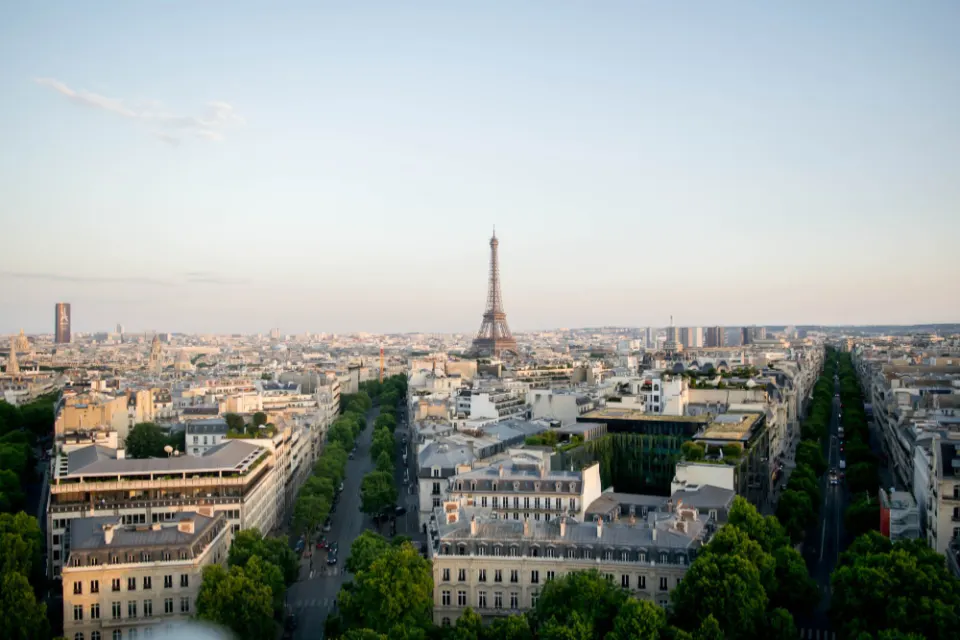
The city is laid out in twenty numbered arrondissements spiraling out from the center like a snail shell, and once that clicks, Paris stops feeling like a maze.
See full guide → Nice
NiceNice
France
The city's most famous seafront promenade is named after the English aristocrats who funded it in the 1820s, not the French — Nice has been a foreign winter retreat for longer than it's been a French tourist destination.
See full guide →Comparing more than one route? See the full transport comparison guide.