Indonesia · Asia
Raja Ampat
Marine biologists consistently rank the waters around Raja Ampat as holding the highest marine biodiversity on Earth, home to roughly 75% of the world's known coral species and over 1,500 fish species, in a stretch of remote West Papua that most divers only reach after two flights and a boat ride.
Marine biologists consistently rank the waters surrounding Raja Ampat as holding the highest marine biodiversity documented anywhere on Earth, home to roughly 75% of the world's known coral species and over 1,500 species of fish within a relatively compact archipelago off the coast of West Papua. That concentration of marine life reflects Raja Ampat's position at the heart of the Coral Triangle, a region where ocean currents and geological history have combined to produce an ecosystem unmatched in its density and variety.
Reaching Raja Ampat takes genuine commitment. Most visitors fly into Sorong via Jakarta or Makassar, then continue by ferry or speedboat to Waisai or directly to a resort or liveaboard dive vessel, a journey that typically consumes a full day or more from Indonesia's major hubs. That remoteness has kept development deliberately limited and helped preserve the reef systems that draw divers here in the first place.
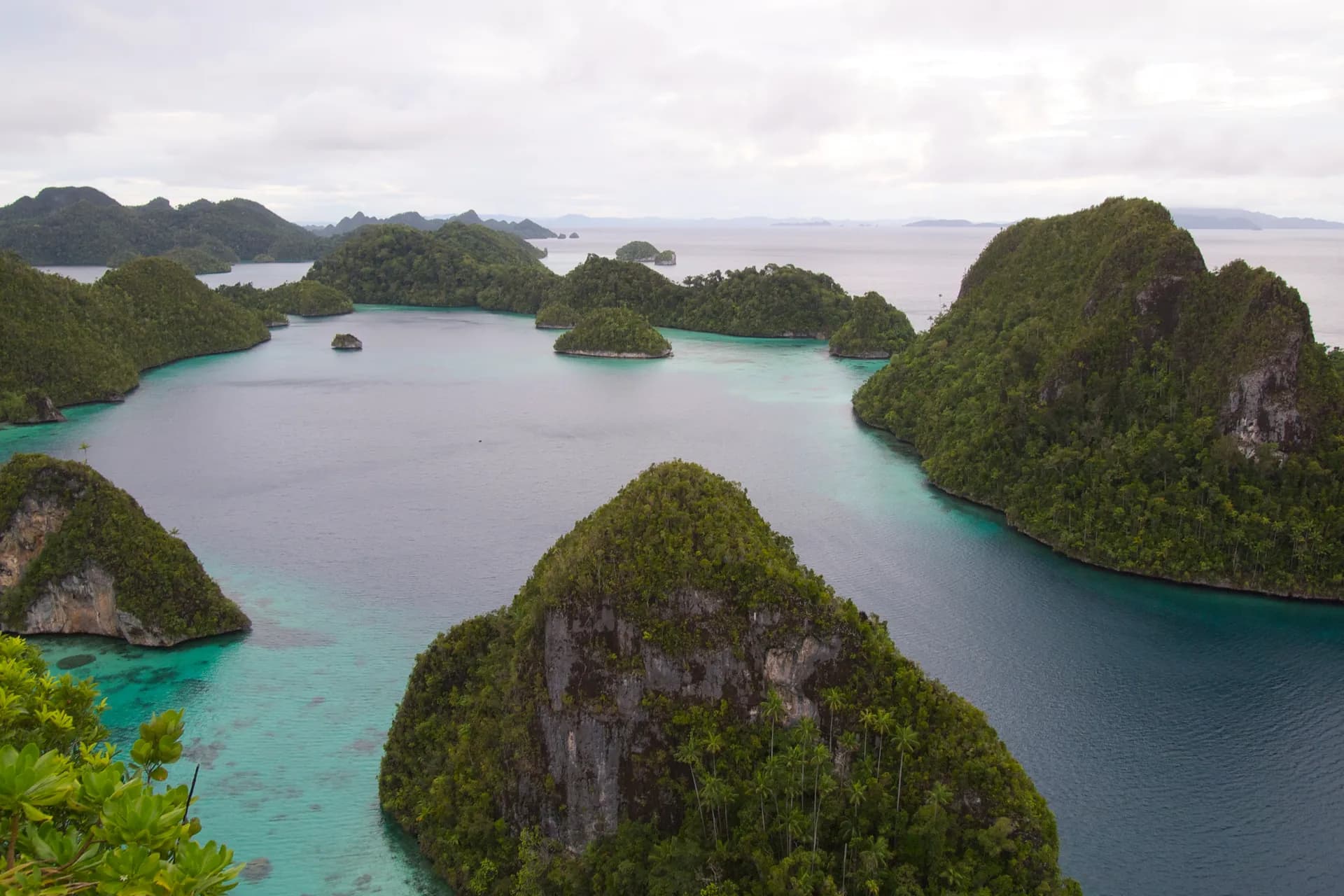
Above the waterline, Raja Ampat's karst limestone islands rise dramatically from the sea in formations comparable to Palawan's Bacuit Archipelago or Vietnam's Ha Long Bay. Piaynemo, reached by climbing a wooden staircase up one such outcrop, offers a viewpoint overlooking a lagoon scattered with small jungle-covered islands, one of the most photographed scenes anywhere in eastern Indonesia and a fixture of the region's tourism imagery.
Manta ray cleaning stations, where the rays gather to have parasites removed by smaller cleaner fish, draw snorkelers and divers specifically for close, reliable encounters with these animals in their natural feeding and social behavior, a genuinely different experience from the more staged manta interactions found at some other dive destinations.
Raja Ampat's isolation keeps costs firmly in the luxury range for most visitors, since running liveaboard vessels and resorts in such a remote area carries real logistical expense, though a small number of homestay-style guesthouses on islands like Waigeo and Arborek offer a more basic, considerably more affordable way to experience the same waters, run directly by local communities rather than larger tourism operators.
What a trip here actually costs
$500 / day avg.
- Liveaboard dive vessel cabin or resort bungalow
- Daily guided dives at multiple sites
- All meals included
- Piaynemo and Wayag viewpoint boat excursions
What to do at this tier
- • Multi-day liveaboard diving covering Raja Ampat's top sites
- • Piaynemo and Wayag viewpoint hikes and boat tours
- • Snorkeling among manta ray cleaning stations
- • Village visits on Arborek or other local islands
These are average estimates for planning purposes, not real-time prices — actual costs vary by season, availability, and how far ahead you book.
How to get there
Click anywhere on the world map — any airport works, not just our main hubs.
Click anywhere on the map above — any airport in the world works — to see estimated travel time and cost from there.
Times and prices are planning estimates, not live fares — always check a booking site before you commit. See the full Transport Comparison guide for the general tradeoffs of each mode.
Best time to visit
October-April brings the calmest seas and best visibility; the wetter, rougher season runs roughly May-September, though diving continues year-round at sheltered sites.
Safety notes
Very safe with low crime; the main practical consideration is the remoteness itself, so confirm transport and accommodation logistics well in advance.
Visa & currency
Indonesian rupiah (IDR). Many nationalities can get a visa on arrival for around 30 days, extendable, or qualify for visa-free entry depending on passport.
Questions people ask before visiting
Is Raja Ampat worth visiting?
Yes for serious divers and snorkelers — Raja Ampat holds the highest marine biodiversity documented anywhere in the world, roughly 75% of known coral species and over 1,500 fish species, alongside limestone karst island scenery comparable to Palawan or Ha Long Bay, though reaching it requires genuine effort and expense.
How do you get to Raja Ampat?
Most visitors fly into Sorong, West Papua, via Jakarta or Makassar, then continue by ferry or speedboat to Waisai or directly to a resort or liveaboard vessel, a journey that typically takes a full day or more from major Indonesian hubs.
What is Piaynemo?
A viewpoint reached by climbing a wooden staircase up a karst limestone outcrop, overlooking a lagoon of small jungle-covered islands scattered across turquoise water. It's one of the most photographed views in Raja Ampat and appears on much of the region's tourism marketing.
Is Raja Ampat expensive to visit?
Yes, generally — its remoteness and the cost of running liveaboard dive boats and resorts in such an isolated area keep prices firmly in the luxury range, though a small number of homestay-style guesthouses on Waigeo and other islands offer a considerably more affordable, if more basic, alternative.
Comparing more than one route? See the full transport comparison guide.