South Africa · Africa
Stellenbosch
Stellenbosch is the second-oldest European settlement in South Africa, founded in 1679, old enough that its oak-lined streets and whitewashed Cape Dutch buildings have had over 300 years to mature into a wine region now considered one of the great historic wine-growing areas of the New World.
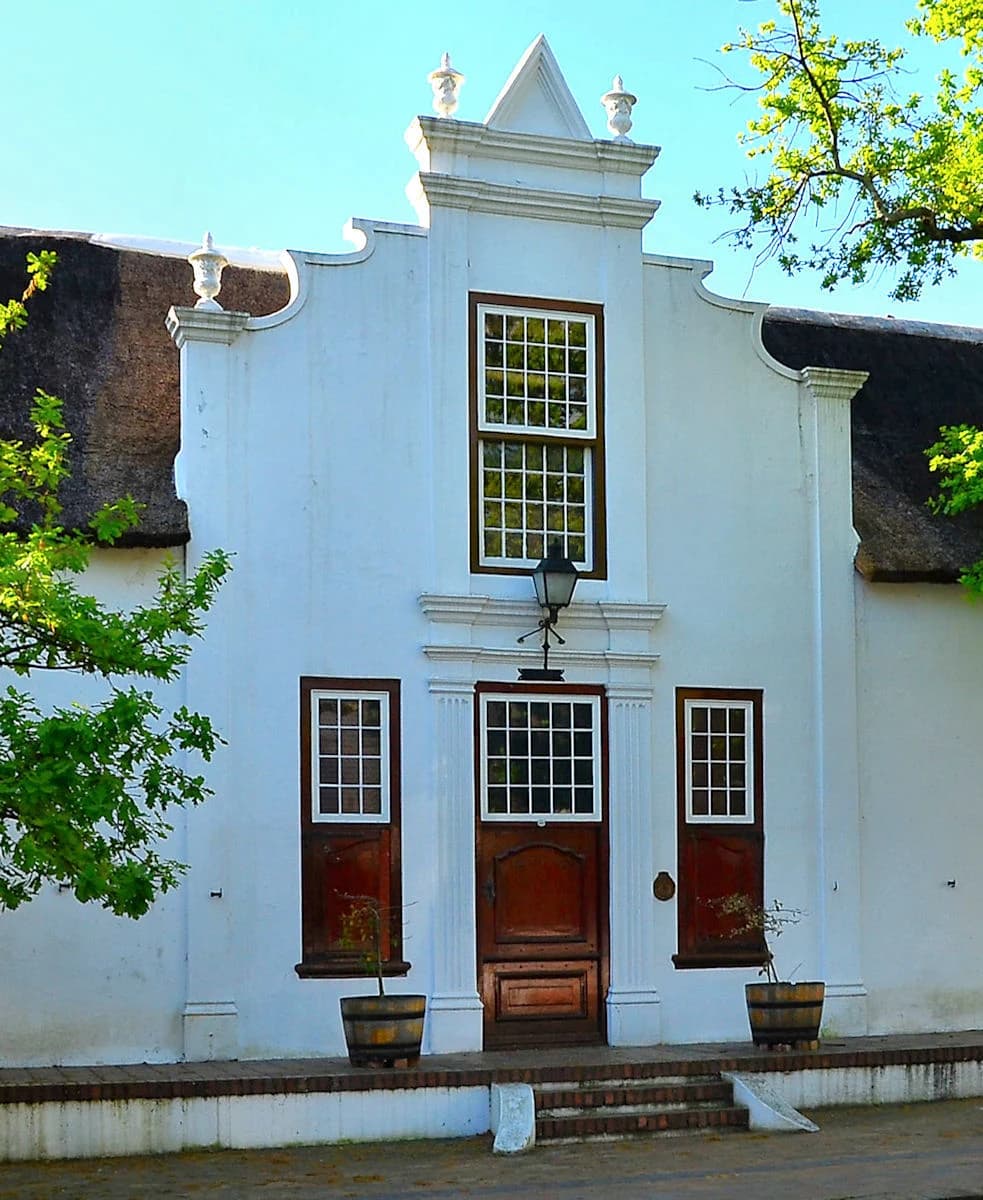
Stellenbosch, founded in 1679 by Dutch colonial governor Simon van der Stel, ranks as the second-oldest European settlement in South Africa after Cape Town itself, and more than 300 years of continuous history have left its historic center with one of the country's densest concentrations of well-preserved Cape Dutch architecture: whitewashed walls, thatched roofs, and distinctively curved gable facades that developed as a genuinely local colonial building style rather than a direct import from the Netherlands.
That long history runs directly through the wine industry the town is now best known for. Stellenbosch sits at the heart of the Cape Winelands, and its wine estates, several dating back over three centuries, have built South Africa's reputation as one of the great historic wine-producing regions of what's often called the New World, alongside California, Chile, and Australia, despite the Cape's winemaking history actually predating most of those regions by well over a century.
The town's oak-lined streets, earning it the Afrikaans nickname "Eikestad," City of Oaks, reflect deliberate early landscaping decisions that have simply had centuries to mature, and walking the historic center today gives a genuine sense of a settlement that grew gradually and organically rather than being built to a modern master plan.
Stellenbosch University, founded in 1918 and one of South Africa's leading academic institutions, gives the town a real contemporary energy alongside its historic character, with student life and academic culture visibly woven into daily life around the same streets that hold centuries-old buildings.
About 45 minutes from Cape Town, Stellenbosch works easily as a day trip, though the density of quality wine estates in the surrounding valley means many visitors choose to stay overnight, freeing up time for a more relaxed multi-estate tasting circuit without the pressure of driving back to the city the same afternoon.
What a trip here actually costs
$100 / day avg.
- 3-star guesthouse in central Stellenbosch
- Rental car for estate-hopping
- Wine tastings at 2-3 estates
- Sit-down lunch at a winery restaurant
What to do at this tier
- • Self-drive wine tasting circuit covering 2-3 established Stellenbosch estates
- • Village Museum, a cluster of restored historic homes spanning different architectural eras
- • Walk the oak-lined streets of the historic center, free
$260 / day avg.
- Boutique wine estate accommodation
- Private guided wine tour with a sommelier
- Multi-course tasting menu at a top Winelands restaurant
- Cellar tour and private tasting at a historic estate
What to do at this tier
- • Private guided wine tour with a sommelier, covering both established and boutique estates
- • Multi-course tasting menu at a leading Winelands restaurant, often paired directly with estate wines
- • Private cellar tour and barrel tasting at a historic wine estate
These are average estimates for planning purposes, not real-time prices — actual costs vary by season, availability, and how far ahead you book.
How to get there
Click anywhere on the world map — any airport works, not just our main hubs.
Click anywhere on the map above — any airport in the world works — to see estimated travel time and cost from there.
Times and prices are planning estimates, not live fares — always check a booking site before you commit. See the full Transport Comparison guide for the general tradeoffs of each mode.
Best time to visit
March-May (harvest season) and September-November bring comfortable temperatures and, in autumn, the added appeal of the vineyards turning color.
Safety notes
Very safe for tourists in the town center and wine estates with standard precautions; arrange a designated driver or tour if tasting at multiple estates.
Visa & currency
South African rand (ZAR). Many Western passport holders can enter visa-free for short stays, worth confirming before booking.
Questions people ask before visiting
Is Stellenbosch worth visiting?
Yes — as South Africa's second-oldest town and the heart of the Cape Winelands, it combines well-preserved Cape Dutch colonial architecture with some of the Southern Hemisphere's oldest and most respected wine estates, all within a genuinely walkable historic center.
How far is Stellenbosch from Cape Town?
About 45 minutes by car, making it a common day trip from Cape Town, though staying overnight allows more relaxed time for wine tastings without needing to drive back the same day.
What is Cape Dutch architecture?
A distinctive colonial building style developed by Dutch settlers at the Cape from the 17th century onward, characterized by whitewashed walls, thatched roofs, and ornately curved gable facades. Stellenbosch holds one of the largest concentrations of well-preserved examples anywhere in South Africa.
How many days do you need in Stellenbosch?
One to two days covers the historic center and a handful of wine estate tastings at a relaxed pace. Many visitors extend into a longer Cape Winelands trip, adding nearby Franschhoek for its own distinct wine and dining scene.
Nearby destinations
Comparing more than one route? See the full transport comparison guide.