Ethiopia · Africa
Lalibela
Lalibela's 11 churches weren't built up from the ground like almost every other church on Earth — they were carved straight down into solid volcanic rock roughly 800 years ago, each one dug out as a single block of stone and hollowed into windows, doors, and columns from the top down.
Lalibela's 11 churches weren't built the way almost every other church on Earth was. Instead of stacking stone upward, builders carved directly down into solid volcanic rock, excavating trenches around each planned structure and then hollowing out windows, doors, and interior columns from what remained, a method that turns each church into a single continuous piece of stone rather than an assembled structure. The scale of labor this required, using tools no more advanced than chisels and hammers, remains a genuine point of scholarly debate and local legend alike.
Ethiopian tradition holds that King Gebre Mesqel Lalibela commissioned the complex in the 12th or 13th century, intending to build a "New Jerusalem" for Ethiopian Christians after Muslim conquests made pilgrimage to the actual Jerusalem increasingly difficult and dangerous. The site carries that symbolism directly: a channel running through the complex is named the River Jordan, and several churches and features borrow names and relative positions from Jerusalem's own geography.
Bete Giyorgis, the Church of St. George, stands apart from the site's two main clusters and is generally considered the finest single example of the complex's craftsmanship. Carved in the precise shape of a Greek cross when viewed from above, and sunk roughly 12 meters into a pit cut around it, it's the most photographed of the 11 churches and often the last one visitors see, a deliberate high point to end a tour on.
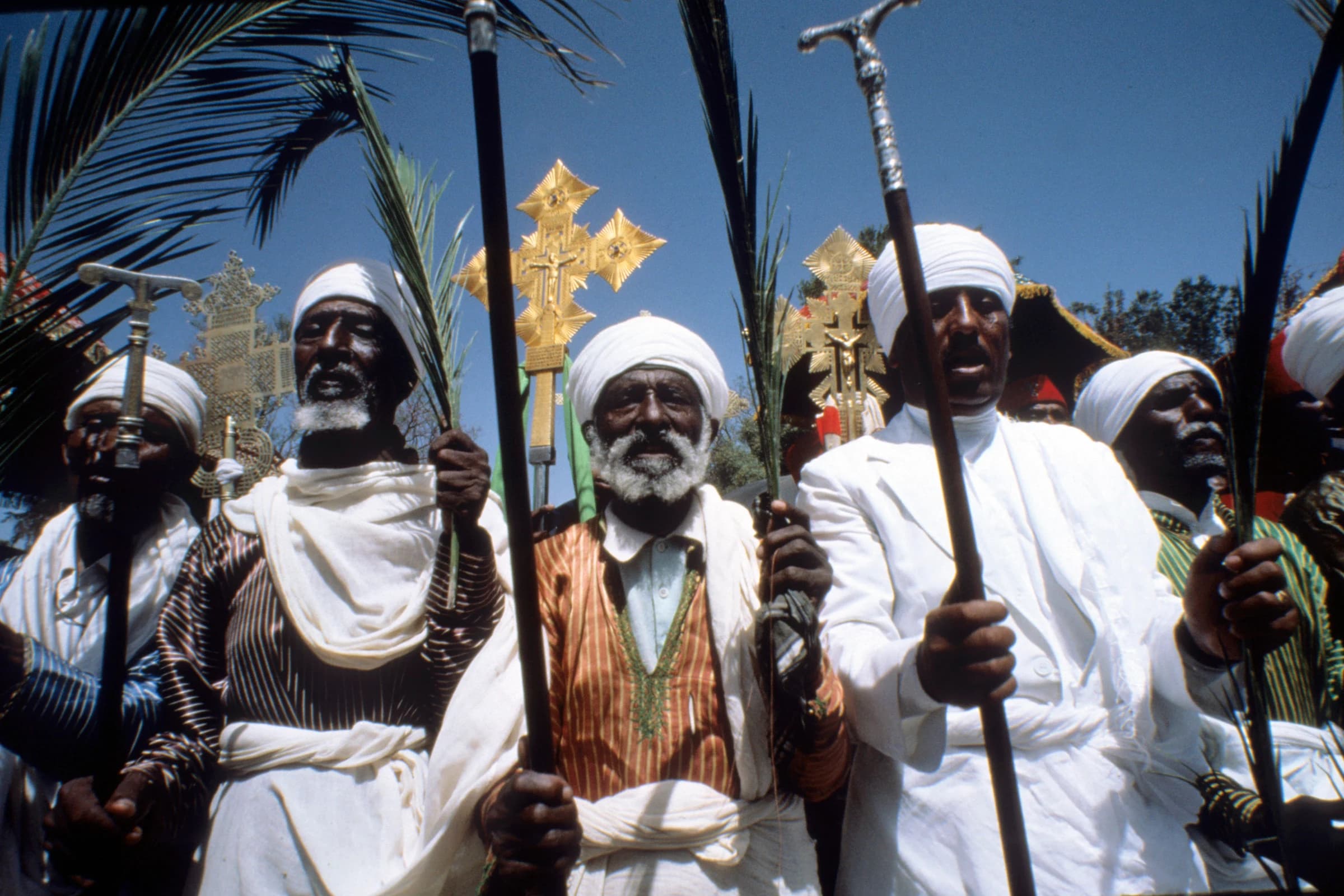
These are not preserved ruins. Lalibela's churches remain active sites of Ethiopian Orthodox worship, with priests conducting regular services and pilgrims, robed in white, visiting year-round. During major festivals, particularly Genna, the Ethiopian Orthodox Christmas on January 7, and Timkat, the Epiphany celebration, the site draws thousands of pilgrims for ceremonies that have continued largely unchanged for centuries, a genuinely different atmosphere from a typical daytime visit.
Ethiopia holds a distinct place in African history as one of only two countries on the continent, alongside Liberia, never subjected to sustained European colonial rule, having successfully defended its independence against Italian invasion at the Battle of Adwa in 1896. That unbroken continuity helps explain why sites like Lalibela survive not as restored monuments but as living religious institutions with an essentially unbroken line back to their medieval origins.
What a trip here actually costs
$30 / day avg.
- Guesthouse near the church complex
- Local transport and church entry ticket
- Casual Ethiopian meals, injera and wat
- Self-guided wander between the two main church clusters
What to do at this tier
- • Self-guided wander through the northern and southern clusters of rock-hewn churches, single entry ticket covers all 11
- • Bete Giyorgis, the cross-shaped Church of St. George, the site's most photographed structure
- • Local market day, held on a rotating schedule, drawing traders from surrounding highland villages
$70 / day avg.
- 3-star hotel with valley views
- Licensed local guide for the full church complex
- Sit-down Ethiopian dinners with a traditional coffee ceremony
- Half-day hike to a nearby monastery
What to do at this tier
- • Full-day guided tour of all 11 churches with a licensed local guide explaining the site's religious and architectural history
- • Traditional Ethiopian coffee ceremony, a genuine daily ritual rather than a tourist performance
- • Half-day hike or mule ride to a nearby rock-hewn monastery in the surrounding hills
These are average estimates for planning purposes, not real-time prices — actual costs vary by season, availability, and how far ahead you book.
How to get there
Click anywhere on the world map — any airport works, not just our main hubs.
Click anywhere on the map above — any airport in the world works — to see estimated travel time and cost from there.
Times and prices are planning estimates, not live fares — always check a booking site before you commit. See the full Transport Comparison guide for the general tradeoffs of each mode.
Best time to visit
October-March avoids the heaviest rains; Lalibela sits at high elevation, so days stay mild and nights can get genuinely cold year-round.
Safety notes
Generally safe for tourists with standard precautions; hire a licensed local guide both for context and because navigating between the church clusters independently is genuinely disorienting.
Visa & currency
Ethiopian birr (ETB). Most nationalities need a visa, available as an e-visa applied for online before arrival — apply at least a few days ahead rather than expecting same-day processing.
Questions people ask before visiting
Is Lalibela worth visiting?
Yes — the 11 monolithic rock-hewn churches, UNESCO-listed and still in active religious use, are among the most singular pieces of religious architecture anywhere in the world, carved downward from solid rock rather than built up in the conventional way.
Why were Lalibela's churches carved into rock?
According to tradition, King Gebre Mesqel Lalibela commissioned the churches in the 12th or 13th century to create a 'New Jerusalem' after Muslim conquests made pilgrimage to the actual Jerusalem increasingly difficult for Ethiopian Christians. The complex even includes a symbolic River Jordan and features named after Jerusalem's own geography.
What is Bete Giyorgis?
The Church of St. George, Lalibela's most famous church, carved in the shape of a perfect cross when viewed from above and set apart from the main clusters. It's generally considered the finest example of the site's rock-hewn craftsmanship and the most photographed of the 11 churches.
How many days do you need in Lalibela?
Two days allows a thorough visit to both main clusters of churches plus Bete Giyorgis. Visiting during a major Ethiopian Orthodox festival, particularly Genna (Christmas, January 7) or Timkat (Epiphany), adds a genuinely different experience but also brings considerably larger crowds.
Nearby destinations
Comparing more than one route? See the full transport comparison guide.