Egypt · Africa
Alexandria
Alexander the Great founded this city in 331 BCE, and it later held two of the ancient world's most extraordinary achievements at once — the Lighthouse of Alexandria, one of the Seven Wonders of the Ancient World, and the Library of Alexandria, whose destruction remains one of history's most mourned losses of knowledge.
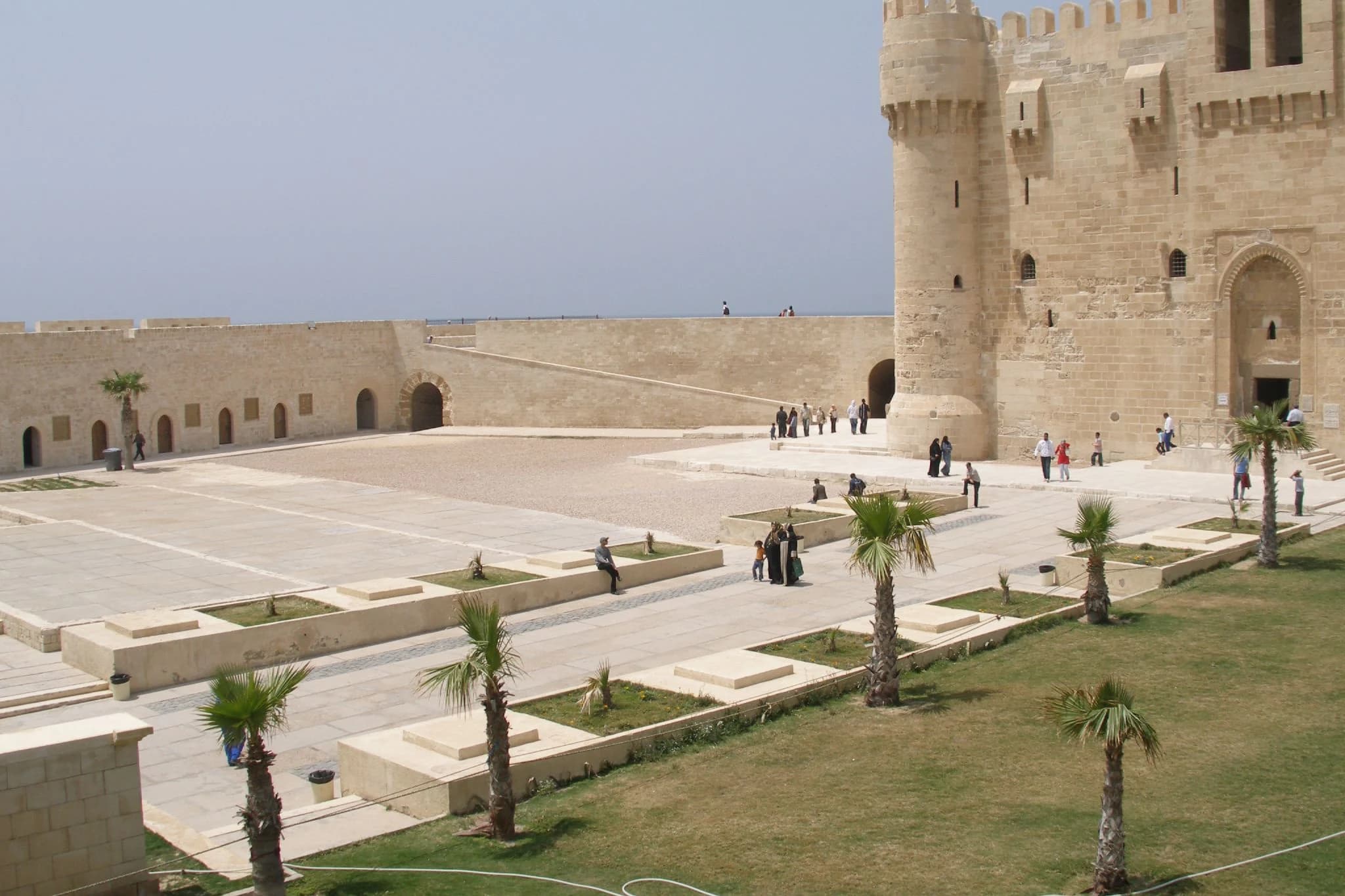
Alexander the Great founded Alexandria in 331 BCE, and within a few centuries the city had become one of the intellectual and engineering centers of the ancient world, home simultaneously to two of its most extraordinary achievements. The Lighthouse of Alexandria, built around 280 BCE and standing well over 100 meters tall, ranked among the Seven Wonders of the Ancient World and guided ships safely into the harbor for more than a millennium before a series of earthquakes between the 10th and 14th centuries finally brought it down. Some of its massive stone blocks were later reused to build the Qaitbay Citadel, a 15th-century fort that still stands directly on the lighthouse's original site today.
The ancient Library of Alexandria, meanwhile, held one of the largest and most significant collections of written knowledge anywhere in the ancient world, drawing scholars from across the Mediterranean and beyond. Its loss, unlike popular legend often suggests, wasn't a single dramatic burning but a gradual decline through fires, political conflict, and simple neglect stretched across several centuries, and historians still debate the precise sequence of events. Regardless of the exact mechanism, the library's destruction remains one of history's most frequently invoked symbols of irretrievably lost knowledge.
The modern Bibliotheca Alexandrina, opened in 2002 on the waterfront near the ancient library's believed location, was built explicitly as a tribute and spiritual successor to that lost institution, and its striking discus-shaped design, exhibits, and planetarium now function as one of Alexandria's central cultural landmarks.
Beneath the modern city, the Catacombs of Kom el Shoqafa preserve a genuinely unusual architectural blend, a Roman-era underground necropolis decorated with a mix of Egyptian, Greek, and Roman religious imagery side by side, a physical record of how thoroughly these different cultural traditions overlapped in Alexandria at the height of its influence.
Set apart from the desert temples and pharaonic sites of Cairo, Luxor, and Aswan further south, Alexandria's Mediterranean coastline and cooler, more temperate climate give it a genuinely different feel within Egypt, closer in spirit to a European port city layered with Greco-Roman history than to the Nile valley's ancient Egyptian monuments.
What a trip here actually costs
$28 / day avg.
- Budget hotel near the corniche
- Local tram fares
- Casual Egyptian and Mediterranean-style meals
- Qaitbay Citadel entry
What to do at this tier
- • Qaitbay Citadel, a 15th-century fort built on the site of the ancient lighthouse, entry fee applies
- • Alexandria corniche waterfront promenade, free
- • Alexandria National Museum, covering the city's layered Greco-Roman, Islamic, and modern history
$65 / day avg.
- 3-star hotel with sea views
- Bibliotheca Alexandrina entry
- Sit-down seafood dinners along the corniche
- Guided Greco-Roman sites tour
What to do at this tier
- • Bibliotheca Alexandrina, the modern library built as a tribute to the ancient original, with exhibits and a planetarium
- • Catacombs of Kom el Shoqafa, a Roman-era underground necropolis blending Egyptian, Greek, and Roman styles
- • Pompey's Pillar, a Roman-era granite column and one of the city's few surviving ancient monuments
$180 / day avg.
- 4-5 star hotel on the corniche
- Private guided city history tour
- Multi-course dinner at a top Alexandria restaurant
- Private transfer to and from Cairo
What to do at this tier
- • Private guided full-day tour covering the Bibliotheca Alexandrina, catacombs, and Qaitbay Citadel
- • Multi-course seafood dinner at a leading Alexandria restaurant overlooking the Mediterranean
- • Private transfer and day trip combining Alexandria with a Cairo-based itinerary
These are average estimates for planning purposes, not real-time prices — actual costs vary by season, availability, and how far ahead you book.
How to get there
Click anywhere on the world map — any airport works, not just our main hubs.
Click anywhere on the map above — any airport in the world works — to see estimated travel time and cost from there.
Times and prices are planning estimates, not live fares — always check a booking site before you commit. See the full Transport Comparison guide for the general tradeoffs of each mode.
Best time to visit
March-May and September-November bring the most comfortable Mediterranean coastal weather, milder and less extreme than Cairo or Upper Egypt's desert heat.
Safety notes
Generally safe for tourists along the corniche and main sites with standard urban caution.
Visa & currency
Egyptian pound (EGP). Most nationalities can obtain an e-visa or visa on arrival for Egypt, worth arranging in advance rather than relying on arrival processing.
Questions people ask before visiting
Is Alexandria worth visiting?
Yes, particularly as a contrast to Cairo, Luxor, and Aswan further south — Alexandria's Mediterranean coastal setting, Greco-Roman history, and the modern Bibliotheca Alexandrina, built as a tribute to the ancient library, give it a genuinely different character from the Nile-valley pharaonic sites elsewhere in Egypt.
What happened to the ancient Library of Alexandria?
The library, one of the largest and most significant collections of knowledge in the ancient world, was lost gradually rather than in a single dramatic event, through a combination of fires, political conflict, and neglect spanning several centuries. Historians still debate the exact sequence, but its loss remains one of history's most cited symbols of destroyed knowledge.
What happened to the Lighthouse of Alexandria?
Built around 280 BCE and standing well over 100 meters tall, the Pharos of Alexandria was one of the Seven Wonders of the Ancient World and functioned for over a thousand years before a series of earthquakes destroyed it between the 10th and 14th centuries CE. Some of its stone blocks were later reused in the nearby Qaitbay Citadel, built directly on the lighthouse's original site.
How many days do you need in Alexandria?
Two days covers the Bibliotheca Alexandrina, Qaitbay Citadel, and the city's Greco-Roman sites. Alexandria is commonly combined with a Cairo-based trip as a day or overnight excursion given the roughly 3-hour drive between the two cities.
Nearby destinations
Comparing more than one route? See the full transport comparison guide.